

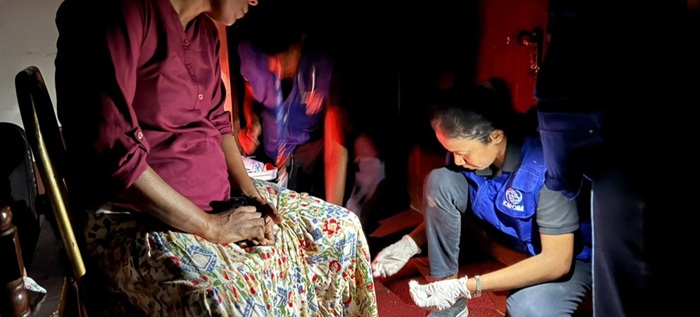
The International Organization for Migration (IOM) says it is expanding its support to Sri Lanka’s appeal for international aid as the death toll from Cyclone Ditwah has risen to more than 350, with over 360 more reported missing.
Issuing a statement, the IOM said that Sri Lanka has declared a state of emergency as severe flooding, landslides, and damage to infrastructure have affected nearly 1 million people and displaced over 209,000 individuals.
“The people of Sri Lanka have not seen such widespread destruction in years,” said Kristin Parco, IOM Chief of Mission in Sri Lanka. “Communities have been uprooted, and many families are now sheltering in overcrowded, temporary spaces while facing immense uncertainty. We are entering a critical phase of this emergency, and mobilizing humanitarian assistance is essential to reduce the suffering of those displaced by Cyclone Ditwah and to ensure their safety, dignity, and access to basic services during this difficult time.”
IOM teams are on the ground strengthening the emergency response by providing non-food items, shelter, and other critical supplies, in close coordination with the Sri Lankan Disaster Management Centre (DMC), other United Nations agencies, and international partners. To reinforce these efforts, IOM is exploring its local networks and prepositioned goods in nearby countries to ensure efficient and timely distribution of assistance, particularly as access challenges continue to emerge in flood-affected and remote areas.
The priority for the next 48 hours to one week will remain search-and-rescue operations and providing urgent humanitarian relief to remote areas and hard-to-reach populations. IOM is also supporting authorities through volunteer deployments, coordination assistance, and joint needs assessments to ensure accurate and timely information for response planning.
Tropical Cyclone Ditwah has inundated all 25 districts of Sri Lanka with 150–500 mm of continuous heavy rainfall and winds reaching 70–90 km/h over three days. Power outages, major road blockages, and significant disruptions to communications networks have been reported across the country.
Several high-risk areas, including the districts of Batticaloa, Ampara, Puttalam, Polonnaruwa, Gampaha, Badulla, Kegalle, Kurunegala, Nuwara Eliya, Kandy, Matale, and Colombo, have been placed on red alert, with the highest number of people affected and emergency evacuation orders issued for communities along vulnerable river basins and landslide-prone slopes. The storm made landfall on 28 November and caused some of the most severe flooding the country has experienced in nearly two decades.
IOM urges the public to continue following official advisories and to remain prepared for further flooding, landslides, strong winds, extended power outages, and possible disruptions to essential services as Cyclone Ditwah’s impacts continue. (Newswire)