

Cyclone Ditwah’s floods sparked a volunteer-driven rescue network that operated alongside emergency agencies across Sri Lanka, with youth groups, volunteer platforms, civil organizations and defence units forming a rapid response system within hours of the disaster.
One of the most active hubs was floodsupport.org, an emergency-response platform founded and developed by Ranga Dayawansha to connect people in distress with responders who could provide immediate help. Volunteer teams working with the platform said it became a central system for coordinating boat deployments, vehicle assistance, food distribution and medical aid, functioning as an informal control room that linked callers to real-time support.
Members of Sri Lanka’s startup founder community said their collaboration with the platform, together with external volunteer groups, enabled school-leavers aged 18 and above, university students and youth contributors to collectively support decision-making, guide the platform’s technical updates and form a functional workforce in less than 24 hours.
Rescue missions relied on a wide network that included the Ministry of Defence, supporting organizations, and individual civilians who stepped forward using their own personal resources. Officials said this cooperation enabled rapid mobilization of boats, medical supplies and transportation to flooded communities, at times reaching areas that formal operations struggled to access. Community kitchen groups operating across the country simultaneously provided cooked meals to households cut off from food supplies.
“The community demonstrated a level of collective effort I have rarely witnessed in any rescue operation since my service in the Navy. Their rescue system and rapid response should be well-recognised because it helped both streamline our operations and enable the Forces to carry out their missions more effectively,” said Lieutenant Commander Nalaka Wijesinghe of the Special Boat Squadron, who served as a liaison officer to the Navy at the Disaster Management Centre.
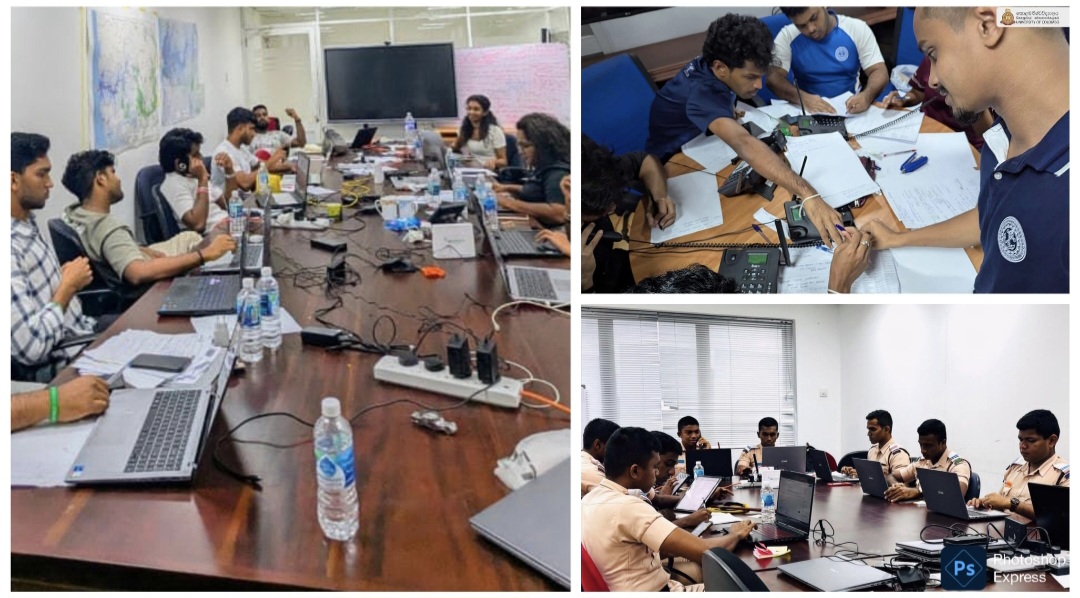
At the Disaster Management Centre, university volunteers assisted the 177 emergency hotline, with teams from the University of Colombo handling calls, verifying information and entering data for rescue deployment. Volunteers said they effectively ran the call centre during peak flooding, answering distress calls continuously and routing urgent cases to the right rescue teams, boat operators, medical support units and district officials. Several volunteers noted that, at times, they even used their personal mobile phones to make follow-up calls when official lines were congested, to ensure families were not left without help.
To maintain continuity as the volunteer network shifted, an online training session was conducted on December 3 for the emergency unit of the Kotelawala Defence University. Organizers said that 40 KDU cadets assumed operational responsibility from December 4, foregoing their scheduled leave to maintain uninterrupted support for affected families.
Organizers also said missions spanned 30 November to 4 December, with many operations challenged by limited resources, rapidly rising water levels and difficulty reaching callers in time.
They said the volunteer network remains active beyond the height of the crisis as teams continue to coordinate meal distribution, essential supplies and post-flood support. (Newswire)