

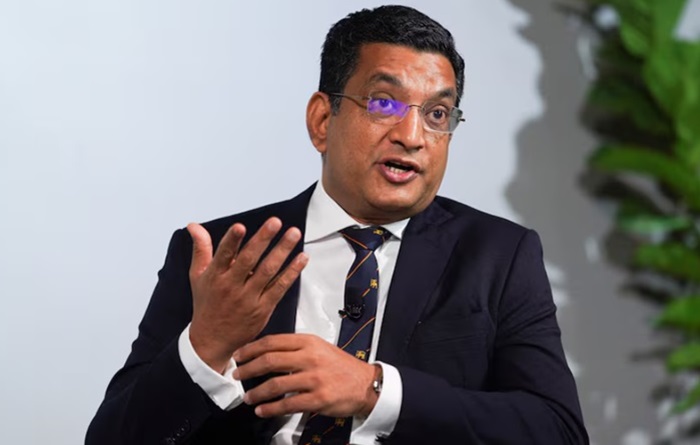
Former Foreign Minister Ali Sabry has criticised the government’s decision to cancel pension entitlements for former Members of Parliament, describing it as a symbolic move driven by political optics rather than economic necessity.
In a detailed statement, Sabry said the amounts involved in MP pensions are negligible and would not meaningfully contribute to fixing the economy, reducing the budget deficit, or improving public services.
“The decision serves no real economic purpose. It is designed to satisfy short-term political optics and play to public anger,” he said.
Sabry warned that the move would cause real harm, noting that some former MPs depended on the pension as their only means of securing a dignified retirement after years of public service.
“Removing it does not punish corruption. It punishes those who did not enrich themselves in office,” he said.
He argued that the decision sends a dangerous signal about who can realistically participate in politics in Sri Lanka, effectively limiting public life to the ultra-wealthy, those with inherited wealth, or individuals supported indefinitely by party machinery.
According to Sabry, capable and independent citizens without financial privilege would be discouraged from entering politics, undermining democratic participation rather than strengthening reform.
“Those who abused power don’t need a pension. Those who are gainfully employed don’t need it. Those protected by party structures don’t need it. But those who served honestly, and left office with little, do,” he said.
Sabry also cautioned that the move could contribute to a narrowing of political space and the quiet encouragement of a one-party-dominant culture, which he said would be incompatible with Sri Lanka’s democratic traditions.
“Sri Lanka is one of the oldest democracies in Asia. Reform should strengthen democracy, not hollow it out. Justice should be targeted, not theatrical,” he added.
He said a more reasonable approach would have been to make the pension optional and subject to application and scrutiny, rather than imposing a blanket abolition.
In a postscript, Sabry clarified that he has never applied for a parliamentary pension and was not entitled to one, as his term in Parliament was less than five years.
He called for serious public debate on the issue, warning against what he described as blind celebration of a decision with long-term democratic consequences. (Newswire)