


Rising debt, shrinking budgets and deepening Chinese influence leave Bangladesh facing a familiar South Asian dilemma, as officials warn the country is slipping into a dangerous debt trap.
Bangladesh is confronting an uncomfortable economic reckoning as rising debt repayments, much of them linked to Chinese loans, squeeze public finances and limit policy choices. Senior officials now openly acknowledge that the country has slipped into what they describe as a debt trap — a warning that echoes experiences elsewhere in South Asia.
The admission came recently from M Abdur Rahman Khan, Chairman of Bangladesh’s National Board of Revenue, who told a seminar that debt pressures had reached a critical point. “We have already fallen into a debt trap,” he said, adding that without recognising the scale of the problem, recovery would be impossible.
Debt servicing overtakes development priorities
Debt servicing has emerged as the second-largest item in Bangladesh’s national budget, overtaking long-standing priorities such as agriculture and education. The country’s debt-to-GDP ratio has climbed beyond 39 per cent, up from around 34 per cent in 2017–18, reflecting years of heavy borrowing to finance infrastructure and development projects.
Finance Secretary M Khairuzzaman Mozumdar underscored the severity of the situation, noting that the current budget is smaller than the previous year — a first in Bangladesh’s history. He likened the condition of the economy to “a thin man being asked to lose even more weight”, a phrase that has since been widely quoted in policy circles.
Economists warn that shrinking fiscal space will inevitably affect social spending and long-term growth prospects, even as the government struggles to meet rising repayment obligations.
The World Bank’s International Debt Report 2025 paints a stark picture. Bangladesh’s external debt has jumped by 42 per cent over the past five years, reaching nearly $105 billion by the end of 2024, compared with just $26 billion in 2010.
External debt now amounts to almost 192 per cent of Bangladesh’s export earnings, while debt servicing consumes around 16 per cent of exports — a level analysts say signals mounting repayment stress and growing vulnerability to external shocks.
Lessons from Sri Lanka and Pakistan
Bangladesh’s predicament has revived comparisons with Sri Lanka, which defaulted on its sovereign debt in 2022 after years of unsustainable borrowing, much of it linked to Chinese-funded projects. Pakistan, meanwhile, has sought a $7 billion IMF bailout to stabilise its economy while grappling with nearly $30 billion in liabilities under the China–Pakistan Economic Corridor.
Analysts say Bangladesh risks following a similar trajectory unless borrowing patterns change and greater transparency is imposed on loan terms and project viability.
Since joining China’s Belt and Road Initiative (BRI) in 2016, Bangladesh has steadily expanded its exposure to Chinese financing. Dhaka now expects total Chinese commitments to reach about $40 billion, including $14 billion in joint ventures.
Debt to China alone has risen from roughly $4 billion in 2022 to around $7 billion within just three years. Even former finance minister Mustafa Kamal had publicly expressed concern over Chinese lending practices and the risks of excessive dependence.
Shift under interim leadership
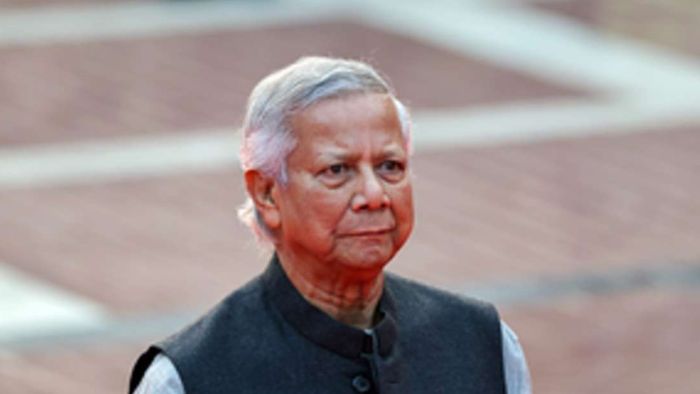
Under the interim government led by Chief Adviser Muhammad Yunus, ties with Beijing have deepened further. China was the destination of Yunus’s first overseas visit in March 2025, resulting in $1.2 billion in fresh investments and grants. Total Chinese investments in Bangladesh are now estimated to exceed $42 billion.
During meetings with President Xi Jinping, Yunus even suggested that Chinese manufacturers relocate production facilities to Bangladesh — a signal of Dhaka’s eagerness to attract capital amid economic strain.
Beijing courts multiple political actors
China has also broadened its engagement beyond the interim government. In recent months, Beijing has quietly cultivated ties with Islamist political groups, including Jamaat-e-Islami, which has consistently avoided criticising China’s treatment of Uighur minorities.
Senior Jamaat leaders have visited China at the invitation of the Chinese Communist Party, while Chinese diplomats have held meetings with Islamist figures in Dhaka — moves seen by analysts as Beijing hedging its bets in a fluid political landscape.
Strategic projects raise regional concerns
Chinese-backed proposals such as the Teesta River Comprehensive Management Project and loans for port development at Mongla have triggered regional anxieties, particularly in India. The Teesta project lies close to the sensitive Siliguri Corridor, while speculation continues over whether Chittagong Port could one day form part of China’s “string of pearls” strategy in the Indian Ocean.
Academic studies have warned that while Chinese investments accelerate infrastructure development, their strategic placement suggests broader geopolitical ambitions alongside economic interests.