

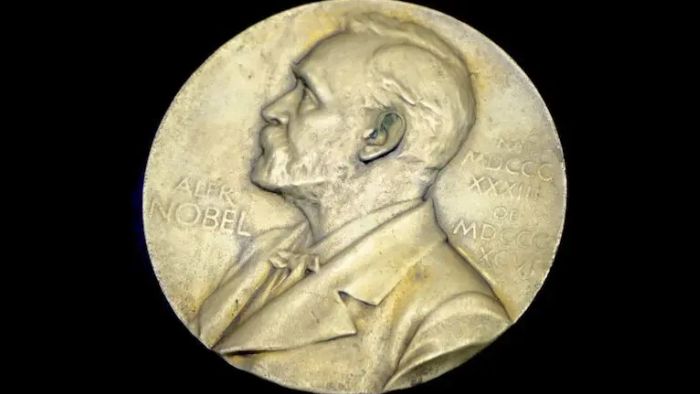
Gone are the days when the Nobel Peace Prize signified humanity, compassion and morality. In the past the world regarded the prize as the highest seal of moral legitimacy. But in recent decades, questions have emerged- is this award merely a recognition of humanitarian efforts, or has it been reduced to an effective tool to advance global political interest? Relevance of these questions has grabbed spotlight more than ever in relation to the controversial role of Nobel Peace Prize recipients to pursue the geopolitical interests of the United States, abdicating morality. This article will seek answers to these questions in detail-how the US-aligned Nobel Peace Prize winners can sometimes become an alternative for creating “puppet” or subservient leadership, and this discussion will bring in the contexts of Bangladesh, Venezuela, and Myanmar.
Many are drawing parallels between the events in Venezuela and the recent turmoil in Bangladesh. For them, Bangladesh’s former prime minister Sheikh Hasina has been the victim of regime change orchestrated by foreign powers including U.S. Accusations against the U.S. of orchestrating plot to remove Nicolás Maduro and establish a puppet government in Venezuela have been swirling for a long time. In this context, a new discussion has begun regarding the use of the façade of Nobel Peace Prize.
Like Bangladesh’s highly controversial and unelected interim regime leader Dr Muhammad Yunus, who also bagged the prize, Venezuela also has a Nobel Peace Prize laureate-who has not been able to win public mandate in her country. Her name is Maria Corina Machado. Critics claim that the U.S. wants to pave the way for installing a compliant government in Venezuela by helping her win the prize. The truth or falsehood of these claims is not the main point; rather, what is important is how the award has lost its veneer and weaponized for exerting moral pressure in shaping public opinion by western countries.
In this context, the role of Bangladesh’s Yunus has become a perfect test case example. His reign, over the past seventeen months, has faced extensive criticism, ridicule, and mockery. He has been most frequently called a darling of the West. Are western backers of Yunus so naïve? Many Bangladeshis called him, in harsh terms, a puppet. On top of that, before the fall of Hasina led government on August 5th, the famed microcredit lender Yunus had not been able to court any mass support. Suddenly, he became the head of government, embraced by the west. It is no secret that the U.S. embassy provided assistance behind the ouster of Sheikh Hasina under Joe Biden administration, as several U.S. academics already has pointed out.
Importantly, public rejection to Yunus’s political ambition has been well documented.
Decade back, after he got the prize, Yunus wrote an open letter seeking public support for his bid to form a political party in 2007.
In the face of outright failure to garner public support, Yunus backtracked from his plan to float the party. But that botched out effort to open a party and the backing from the U.S. government exposed his loyalty to foreign power.
Let’s draw a fair assessment to Yunus’s stint.
Upon assuming power as the interim head, Yunus said, “We will not go to foreigners; foreigners will come to us.” In reality, the situation has turned out to be the opposite. Many of the promises regarding foreign investment, public welfare, post-flood relief funds among others have not been materialized. The gap between promises and reality is also evident in the matter of Rohingya repatriation. Critics argue that no significant diplomatic success has been observed during Yunus’s stint except for publicly stunt during the UN Secretary-General’s visit. Even after that visit, the Rohingyas did not receive any particular benefits. Bangladesh did not get anything.
Within days after Yunus took charge, allegations of conflict of interest surfaced due to the rapid approvals that empowered government benefits to institutions associated with Grameen, which he founded. The waiver of hundreds of crores of taka in taxes for his Grameen Bank, long-term tax exemptions, reduction of government shareholding, and licensing approvals for various Grameen-related institutions—were made very quickly, creating the perception of bias, abuse of state power and preferential treatment.
Furthermore, many legal experts consider it questionable that the labor law violation and money laundering cases against him and his associates were dismissed without completing the trials shortly after he assumed office. At the same time, the decision to reduce government control over Grameen Bank and abolish the state’s role in appointing the chairman through a new ordinance is also being criticized as untimely.
Yunus’s primary responsibility as the head of the interim government was to organize a credible election. However, it is alleged that, deviating from that goal, he prioritized foreign interests allegedly selling out national sovereignty and strategic decisions. Initiatives to hand over profitable seaports like Chittagong Port to foreign control, or risky geopolitical plans under the guise of a humanitarian corridor stood out among a raft of moves that led observers to call him a puppet who has been running the country not to serve countrymen, rather to appease foreign masters.
But in the wake of Machado’s brazen effort to appease U.S. president with offer to share her prize after Maduro was taken out of the country, many Bangladeshis putting Yunus at per with her: the tactic to serve foreign power to run the country dodging election, instead of serving the countrymen.
This connection between the Nobel Peace Prize and US geopolitical interests is not limited to Bangladesh or Venezuela. The example of Aung San Suu Kyi of Myanmar is also widely discussed. At one time, she was a symbol of democracy for the Western world. The Nobel Peace Prize gave her international moral legitimacy. But after the Rohingya crisis, that moral aura quickly faded. Even when China and America plundered the country’s billion-dollar resources, Suu Kyi says nothing. It is clear that a Nobel Prize does not provide a leader with a permanent moral shield.
In this reality, the question arises: is the Nobel Peace Prize truly a symbol of peace, or is it a form of soft power? Is creating an environment for regime change through moral pressure, international recognition, and shaping public opinion—instead of direct military intervention—the new strategy of modern imperialism? According to many analysts, the answer is yes. The Nobel Prize here is an alternative to “hard power,” but the objective remains the same—to exert influence.
Drawing on the history of 1971, some claim that many members of the Nobel Peace Committee secretly assisted the Bangladeshi freedom fighters. This comparison is used to suggest that even though Yunus received the Nobel Prize on the recommendation of the United States, he is silently protecting his homeland without blindly implementing agenda of his foreign backers. Whether this narrative is credible or not is for the reader to judge. However, one thing is clear—the Nobel Peace Prize is no more a neutral entity, separated from politics.
The fear and anger that many felt upon hearing the news of a potential US attack on Venezuela is at the heart of this discussion. The plea, “Please, someone stop this man,” is not directed solely at one individual; it is an expression of anger against a global system where awards are given in the name of peace, while behind the scenes, plans for war, intervention, and the creation of puppet governments are being hatched.
In conclusion, the Nobel Peace Prize itself is neither good nor bad. But we cannot ignore who receives it, in what context, and how the award is being used politically. History will judge the personal qualities of Yunus, Machado, or Aung San Suu Kyi, unlike another Nobel laureate Mother Teresa. However, there should not be any denial to the growing public perception that the Nobel Prize has emerged a geopolitical weapon of the United States and other superpowers. Understanding this reality is the greatest awareness needed in today’s politics. (Eurasia Review)