

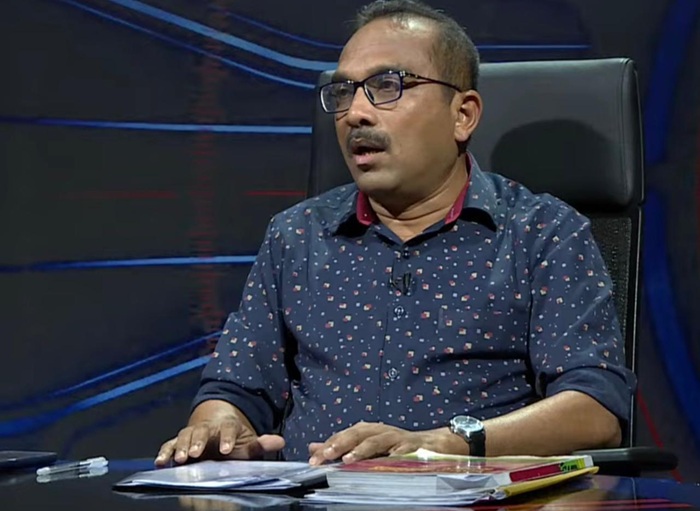
Minister Bimal Ratnayake defended the government’s approach to implementing education reforms, asserting that adequate discussions were held with key stakeholders, including trade unions.
Responding to criticism over a lack of public consultation, Ratnayake said that while the public and stakeholders were provided opportunities to share their views, the current level of disagreement had not previously been expressed.
He expressed these views during a televised interview.
According to the Minister, the government has engaged with trade unions on four separate occasions regarding the reforms, citing Prime Minister Harini Amarasuriya, who is also the Minister of Education.
He stressed that Sri Lanka has historically invested significantly in education, framing the government’s focus on human development as a national priority.
However, Ratnayake acknowledged existing disparities in access and quality across the country. He stressed the need to increase educational opportunities, aligning reforms with a long-term vision for 2050. “Sri Lanka is far behind relative to other countries,” he said.
Ratnayake noted that although the current government entered midway, the reform process had begun in 2015.
He highlighted the complexity of education reform, contrasting it with infrastructure projects. “When building a bridge, you can plan, simulate, and test. But with education and economic reforms, outcomes only become visible after 10 to 15 years,” he said.
He also noted the need for foundational infrastructure in schools, stating that digital infrastructure should be considered a basic necessity, on par with electricity and water, and reaffirmed the government’s commitment to ensuring its availability. (Newswire)