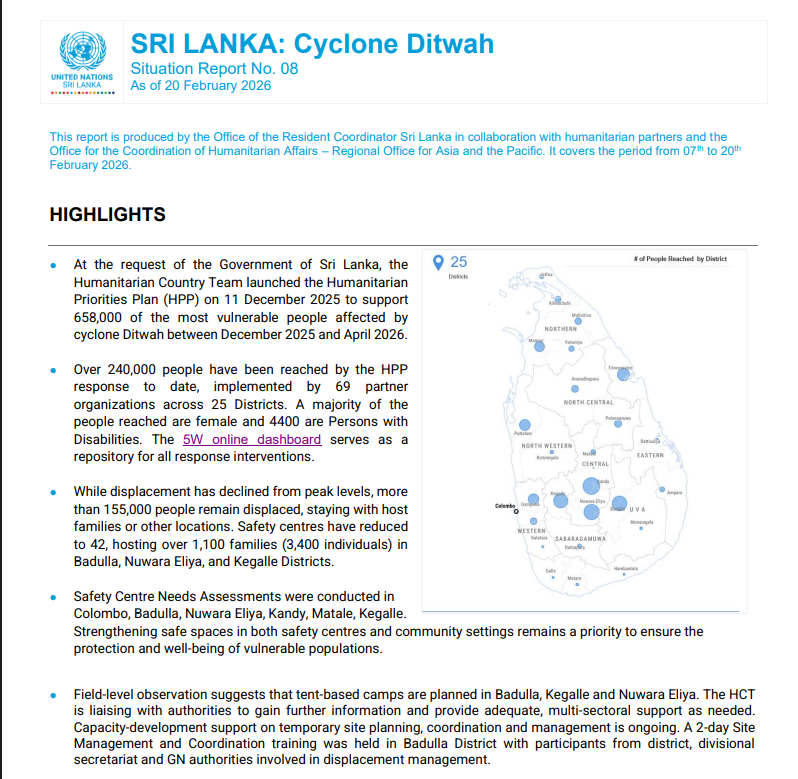

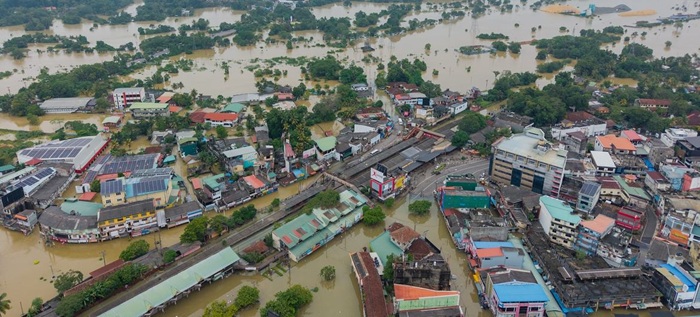
The United Nations has reported that more than 240,000 people have been assisted under the Humanitarian Priorities Plan (HPP) launched to support those affected by Cyclone Ditwah.
The Humanitarian Country Team (HCT) initiated the plan on Dec. 11, 2025, at the request of the Government of Sri Lanka. The HPP aims to assist 658,000 of the most vulnerable people between December 2025 and April 2026.
According to the report, the response is being implemented by 69 partner organizations across 25 districts. A majority of those reached are women, while 4,400 persons with disabilities have also received assistance. All response activities are recorded through the 5W online dashboard.
Although displacement has declined from peak levels, more than 155,000 individuals remain displaced, living with host families or in alternative locations. The number of safety centres has decreased to 42, currently accommodating over 1,100 families, or approximately 3,400 people, in Badulla, Nuwara Eliya and Kegalle districts.
Needs assessments have been conducted at safety centres in Colombo, Badulla, Nuwara Eliya, Kandy, Matale and Kegalle. The report identifies strengthening safe spaces in both centres and communities as a continuing priority to protect vulnerable groups.
Field observations indicate that tent-based camps are being planned in Badulla, Kegalle and Nuwara Eliya. The HCT is coordinating with authorities to obtain further details and to ensure multi-sectoral support where required. Capacity development on temporary site planning, coordination and management is ongoing. A two-day Site Management and Coordination training programme was recently held in Badulla district, with participation from district and divisional secretariat officials and Grama Niladhari officers involved in displacement management.
The Accountability to Affected Populations (AAP) Working Group also conducted a capacity-building session for government officials and HPP partners on integrating AAP throughout the emergency programme cycle. The session included experience-sharing by government representatives and presented findings from a rapid review of existing AAP mechanisms.
The report states that US$22.4 million has been received out of the US$35.3 million required to implement the plan. Health, agriculture, early recovery, nutrition and education sectors remain underfunded. (Newswire)