

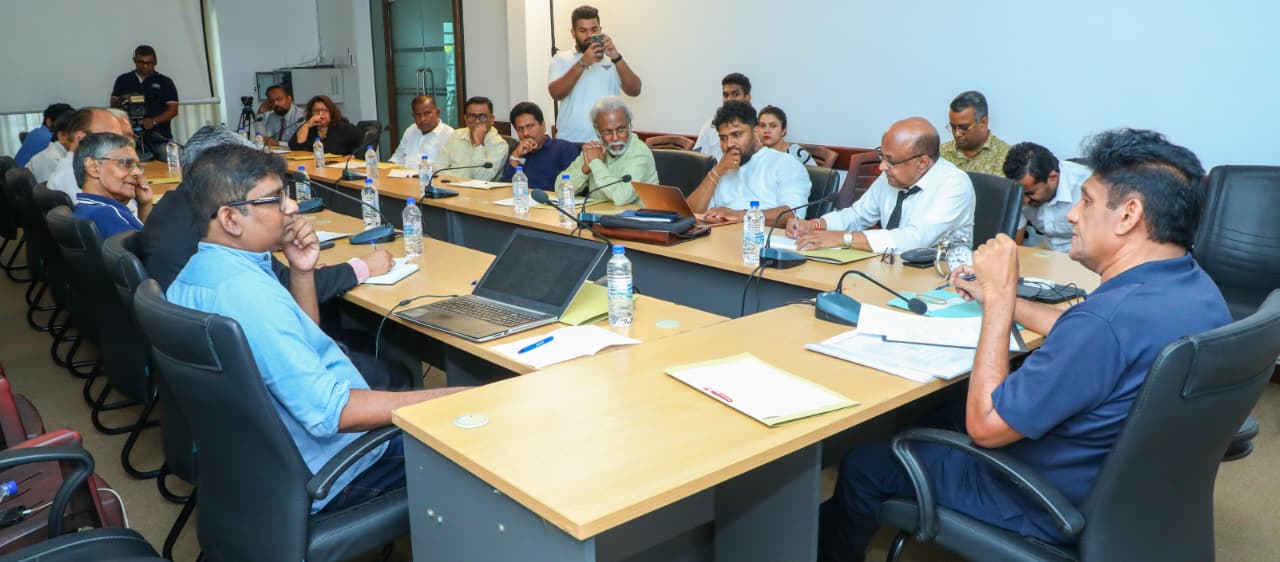
Opposition Leader Sajith Premadasa convened an urgent meeting with foreign policy experts, former diplomatic officials and academics to discuss the national security and economic implications of the escalating crisis in the Middle East.
During the discussion, Premadasa noted that Sri Lanka is still navigating a fragile recovery following the damage caused by Cyclone Ditwah, which he said resulted in economic losses exceeding USD 4.1 billion and affected nearly four percent of the country’s GDP.
He warned that the intensifying tensions in the Middle East are increasingly affecting the Indian Ocean region. Premadasa said that on March 4 a United States submarine sank the Iranian warship IRIS Dena about 19 nautical miles off the coast of Galle, bringing the conflict close to Sri Lanka.
In response to the evolving situation, Premadasa announced the launch of the PSOP (Peace and Security, Stability, Order, Prosperity) initiative. Under the framework, he outlined four priorities that he said require immediate government attention.
1. Declaring a National Energy Emergency
Sri Lanka currently holds only about one month of refined fuel reserves, leaving the country highly exposed to potential supply disruptions as tensions threaten shipping routes through the Strait of Hormuz. Mr. Premadasa stressed the need to fast-track large-scale solar and wind energy projects to reduce dependence on volatile global fossil fuel markets.
2. Protecting Expatriate Workers and Remittances
More than 1.5 million Sri Lankans work in the Middle East, sending home a record USD 8.076 billion in remittances in 2025. Mr. Premadasa urged the establishment of a secure, technology-enabled backup financial system to ensure expatriate workers can safely remit their earnings even if regional banking networks are disrupted.
3. Safeguarding the Export Economy
Global shipping costs remain 115 percent above pre-pandemic levels, while maritime war-risk insurance premiums have surged to nearly USD 750,000 per vessel following the sinking of the IRIS Dena. Mr. Premadasa proposed creating a state-backed maritime insurance pool to support exporters, particularly in the tea and apparel sectors, and maintain Sri Lanka’s competitiveness.
4. Upholding Diplomatic Neutrality and Regional Stability
While commending the Sri Lanka Navy for rescuing 32 Iranian sailors from the sunken vessel in accordance with international maritime law, Mr. Premadasa emphasised that Sri Lanka must take a more proactive diplomatic role. He suggested using the country’s position within the Indian Ocean Rim Association to advocate for the demilitarisation of commercial shipping lanes.
Premadasa stressed that the opposition’s objective through the PSOP initiative is to provide constructive solutions during a period of global uncertainty.
“The responsibility of leadership at this moment is to protect our people, our economy, and our national stability,” he stated, noting that rising imported energy costs and upcoming fiscal measures such as the 18 percent digital VAT scheduled for April 2026 must not place additional pressure on working families.