

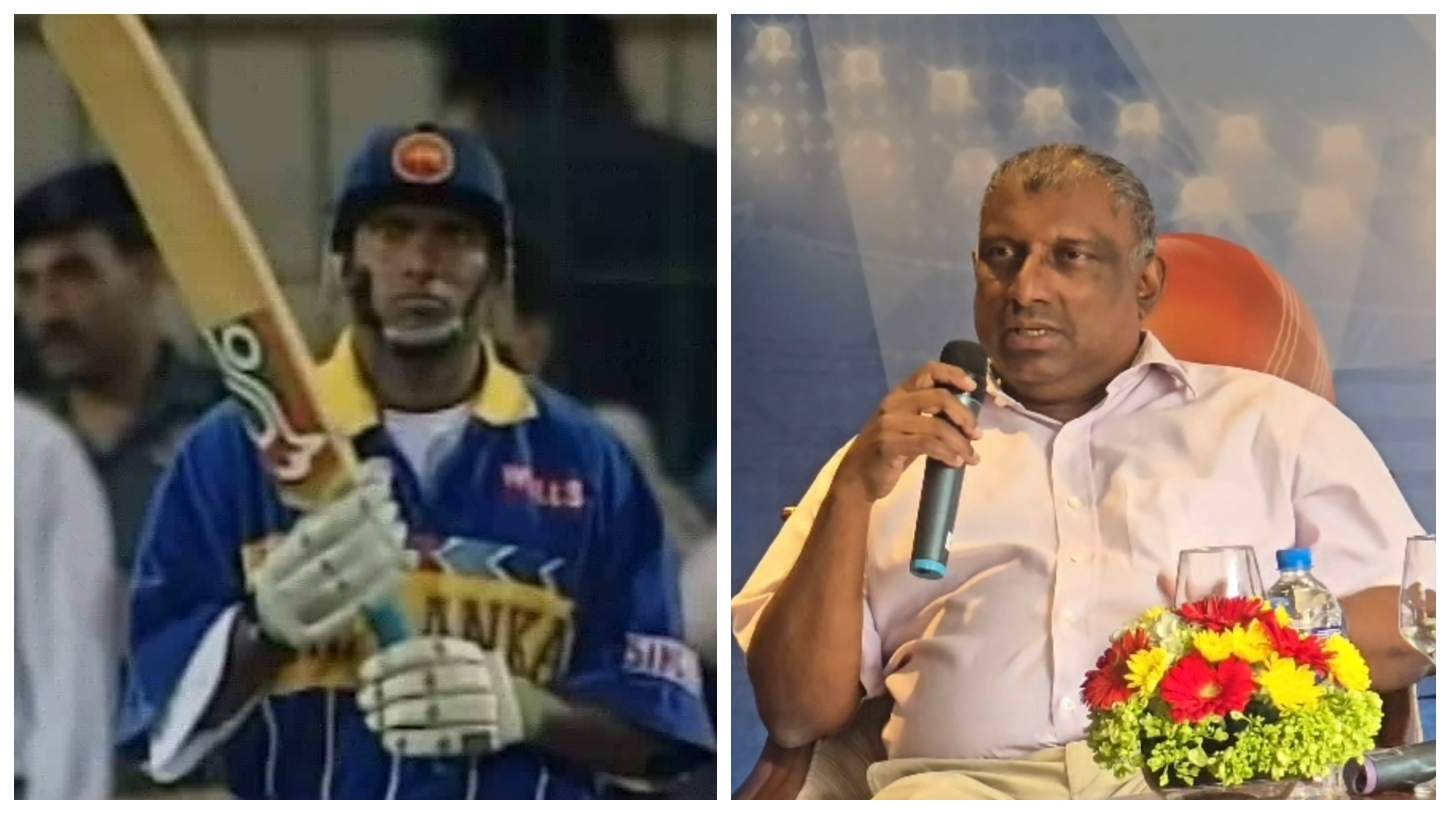
As Sri Lanka marks the 30th anniversary of its historic 1996 Cricket World Cup victory, match-winner Aravinda de Silva has reflected on the pressure, strategy and unique mindset that helped the team secure its first global title.
Speaking about the semi-final against India in Calcutta, Aravinda said the atmosphere at the packed Eden Gardens stadium remains one of the most unforgettable experiences of his career.
“When I came into the ground there were about 100,000 people outside, and when you walk in you see another 100,000 inside. That really got my adrenaline pumping,” he recalled.
For many players, such an environment could be intimidating, but Aravinda said it energized him.
“That is the kind of situation I really cherish. I enjoy pressure. If you enjoy pressure it becomes much easier to perform under pressure,” he said.
However, the innings that helped Sri Lanka seize control of the semi-final came under difficult circumstances, as Aravinda had been unwell in the days leading up to the match.
“I wasn’t well the previous couple of days, so my warm-up was cut short and I was asked to rest,” he said.
His arrival at the crease came suddenly after Sri Lanka lost quick wickets.
“One of the reserves came running and said we had lost a wicket. Not even two minutes later he came again and said another wicket had fallen and I had to go in. I quickly put on my pads and walked out,” he recalled.
Despite the illness and the immense pressure from the crowd, Aravinda counter-attacked with a brilliant 66 off 47 balls after Sri Lanka’s usually dominant openers had fallen early.
“That really got my adrenaline pumping.” 🇱🇰🔥
30 years since the 1996 World Cup win, Aravinda de Silva recalls the semi-final at Eden Gardens — with 100,000 outside and another 100,000 inside.
“I enjoy pressure. If you enjoy it, it becomes much easier to perform.”
Unwell. Two… pic.twitter.com/Xdyb3OFo2d
— NewsWire 🇱🇰 (@NewsWireLK) March 17, 2026
Reflecting on the psychological battles in cricket, Aravinda also recalled how comments made about Australian leg-spinner Shane Warne by Sri Lanka captain Arjuna Ranatunga before the final affected the bowler.
“Just before the final Arjuna mentioned that Shane Warne was not a great bowler and that he didn’t know why people talked so much about him,” Aravinda said.
He later learned how those remarks had unsettled Warne.
“Warne told me much later that he was very upset about it. He said he couldn’t control his bowling when he was bowling at Arjuna because all he wanted to do was get him out,” he said.
“He said he was not focused on what he had to do, and that is how sometimes you get under the skin of great players.”
Despite the magnitude of the World Cup final against Australia in Lahore, Aravinda said the Sri Lankan team maintained a remarkably relaxed atmosphere.
“The match was to start at 2.30 in the afternoon, but in the morning some of our players were missing,” he said.
“When we finally found them, they were out shopping for carpets. That was the kind of relaxed cricket we played.”
Aravinda also recalled a personal moment that gave him added confidence ahead of the final.
His father and his former school principal from D. S. Senanayake College, R.I.T. Alles, had travelled unexpectedly to Pakistan to watch the match.
“One of my friends had brought them and I was shocked when they knocked on my door ahead of the game,” he said.
“I had to give them my bed that night because they had nowhere to sleep, but seeing them gave me huge belief before the final.”
Aravinda also highlighted the tactical decisions that shaped Sri Lanka’s campaign, particularly the aggressive approach adopted by openers Sanath Jayasuriya and Romesh Kaluwitharana.
“We told Sanath and Kalu to go out and bat without worrying about getting out in the first two balls,” he said.
“The pressure was totally taken off them. They were asked to go out and play the cricket they knew best.”
The rest of the batting order was structured to absorb pressure if early wickets fell.
“We had experienced players like Asanka, Arjuna, Roshan and Hashan who could take control once the field restrictions were over,” he said.
In the final, Aravinda produced one of the greatest performances in World Cup history, scoring an unbeaten 107, taking three wickets and holding two crucial catches as Sri Lanka defeated Australia to lift the trophy.
Three decades on, Sri Lanka’s 1996 World Cup triumph remains one of the most iconic moments in the country’s sporting history, transforming the island nation into a global cricketing force.
Reflecting on the victory, Aravinda said the team’s fearless approach and unity ultimately made the difference.
“We went out there and played a brand of cricket that everyone enjoyed,” he said.
“But most of all, the players enjoyed it themselves. That is why we won the World Cup.” (Newswire)