

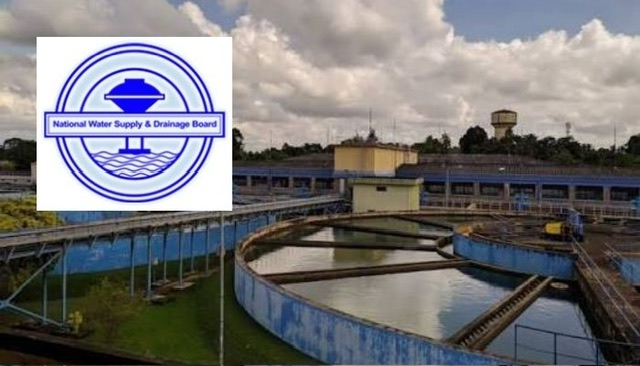
Chairman of the National Water Supply and Drainage Board (NWSDB) has urged the public to use water sparingly amid the prevailing dry weather conditions.
He noted that water consumption has increased significantly due to the dry conditions across the island, prompting authorities to call for more careful usage.
He warned that continued dry weather could lead to restrictions in water distribution if demand continues to rise.
“Consumer demand has increased with the dry weather. In the Western Province, particularly in the Colombo District, treatment plants can only supply water up to a limited capacity,” he said.
He also noted that facilities such as Ambatale can produce up to 560,000 cubic metres of water per day, while Labugama has a capacity of 150,000 cubic metres, adding that production is already operating at maximum levels.
“We are producing and distributing water at full capacity across the country. If the drought persists and demand keeps rising, there could be difficulties in maintaining supply,” he said.
He urged the public to practise careful usage rather than strict limitation.
“We are not asking people to stop using water, but to use it carefully. Minimise wastage. Otherwise, areas at higher elevations and the tail-end of pipelines may experience low pressure,” Bandara said.
The Chairman of the NWSDB warned that reservoir water levels are dropping rapidly, increasing the likelihood of supply constraints in the coming weeks. He also highlighted growing concern over saltwater intrusion into rivers, particularly at river mouths.
“Saltwater mixing has increased significantly and has become a major issue. Human activities such as sand mining have worsened the situation, along with rising temperatures,” he said.
He added that plans are underway to construct salinity barriers across major rivers, with work already in progress on a barrier along the Kelani River.
“Every river that flows into the sea experiences some level of saltwater mixing, but the situation has now intensified. We are taking steps to address this through salinity barriers,” he said. (NewsWire)