

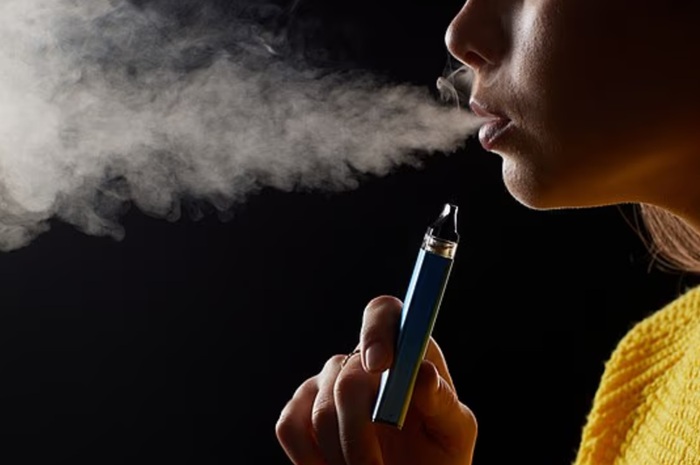
Despite being positioned as a tool for quitting smoking, vaping is as potentially harmful as cigarettes – and can cause both mouth and lung cancer.
Despite health chiefs across the world saying that e-cigarettes are less damaging to the body than traditional smoking products, Australian researchers have made the strongest link yet between the gadgets and the disease.
A team based out of the University of New South Wales in Sydney reviewed all the available literature into the potential harms of vaping that were published between 2017 and 2025.
The most concerning studies, they noted, are the ones that show that vaping can cause changes to a user’s DNA, increasing the risk of cell malfunction linked to cancer.
They concluded that vaping is not risk free. It causes tissue damage to the respiratory tract, which has been linked to the development of lung cancer, and it also causes changes to the oral microbiome. This drives inflammation and increases the risk of oral cancer.
The risks are highest for those who smoke both traditional cigarettes and use vapes, approximately half of the smoking population; the toxic combination increases their risk of lung cancer fourfold.
Professor Bernard Stewart, study lead author, said: ‘The research shows vaping is not an alternative to smoking or illicit drugs. It is not an alternative to anything in the context of being safer.
‘It’s dangerous and that’s the message.’
To support their claims, the researchers highlighted the case of a 19-year-old boy with an extensive history of vaping, who despite his young age, developed an aggressive form of mouth cancer.
The teenager was diagnosed with squamous cell carcinoma of the oral cavity, which is extremely rare in the absence of a HPV infection, leading them to deduce that vaping may lead to oral cavity cancer.
The inflammation and oxidative stress in the mouth and along the respiratory tract caused by vaping has also been linked to chronic obstructive pulmonary disease (COPD) – a lung condition that can trigger organ failure – heart disease, narrowing of arteries and neural changes in the brain.
However, definitive evidence that vaping causes oral and lung cancer is still lacking – given that it is a fairly new technology and there is currently not enough studies focusing on people who have only vaped to make a quantitative assessment.
But the experts’ message is clear.
Professor Freddy Sitas, an expert in future health systems at the university and study co-author said: ‘Delayed findings have played right into the hands of tobacco companies who don’t mind whether they make their money though vapes or cigarettes.
‘We know that there is a significant group of people who both vape and smoke, despite the former being marketed as an effective means to stop smoking.
‘We’ve always assumed that vapes are safer than cigarettes, but what we’re showing is that they might be as safe after all.
‘It’s like saying that knives are less dangerous than machine guns because they can kill fewer people in a given time. That notion is absurd and it’s absurd to approach vaping in reference to the safety of smoking.
Smoking is also the leading cause of progressive lung condition Chronic Obstructive Pulmonary Disease (COPD), which affects around 1.7million people in the UK and claims 30,000 lives every year.
Whilst cigarettes contain dozens of toxic chemicals, including nicotine, the most dangerous of them is tar which damages the lungs and leads to cancerous changes in the cells.
Vapes, in contrast, don’t contain tar or carbon monoxide which experts previously thought were behind cigarettes’ sinister health impacts.
However, they do contain low levels of toxic chemicals such as formaldehyde which drive inflammation, oxidative stress and DNA changes that have been linked to cancer.
It’s for these reasons that, since 2023, vapes have been offered on the NHS to patients attempting to kick cigarettes. However, evidence now suggests that vaping is not as nearly as ‘safe’ as once thought and could be driving cancer rates in young people.
Research shows that head and neck cancers – including those affecting the mouth and throat – have surged by more than a third in Britain since the early 90s.
Experts say the surge is mostly driven by diagnoses of younger people in their 40s and 50s.
Smoking, alcohol and human papillomavirus (HPV) – a normally harmless virus that is spread sexually and through skin contact – are the primary causes.
And now it’s thought that vaping could be adding to the disease burden. (Daily Mail)