

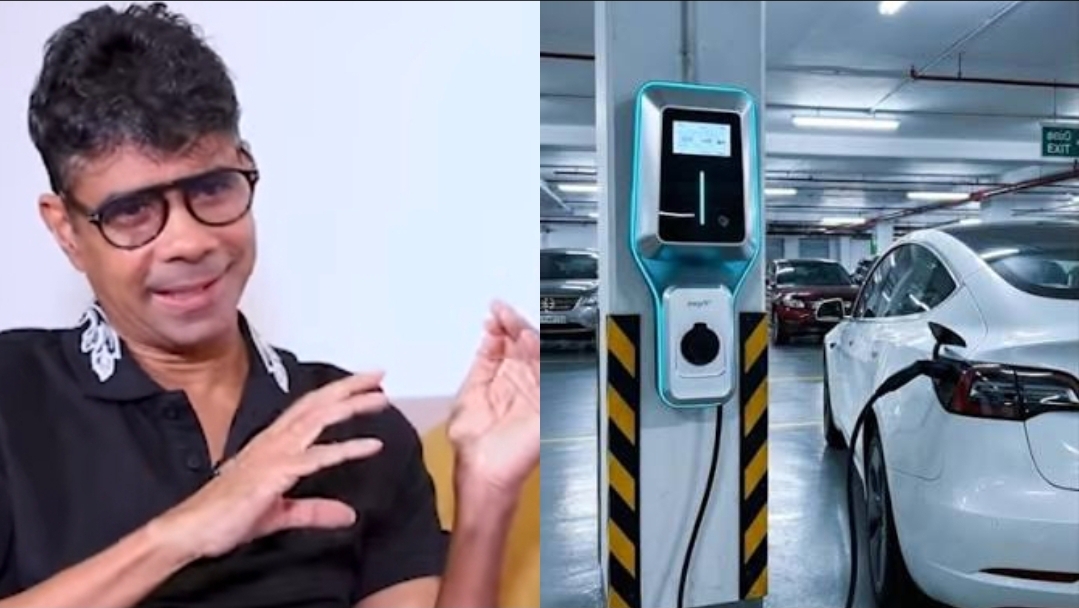
Energy expert Dr. Vidura Ralapanawe has dismissed claims that electric vehicles (EVs) are contributing to Sri Lanka’s power shortages, describing such assertions as “scientifically baseless myths.”
Speaking during a recent in-depth interview, Dr. Ralapanawe said the growing narrative blaming EVs for grid strain is not supported by data or energy science.
He explained that internal combustion engine vehicles are significantly less efficient compared to EVs, noting that petrol and diesel vehicles lose a large portion of energy through heat and mechanical friction due to their complex engine systems.
In contrast, EVs rely on simpler battery and motor systems that retain a higher percentage of energy, making them more efficient even when electricity is generated using fossil fuels.
“Even when emissions from coal-powered electricity are considered, EVs remain more energy-efficient. The fuel required for a traditional vehicle to travel 100 kilometres contains enough energy to generate more electricity than an EV needs to travel the same distance,” he said.
Dr. Ralapanawe also rejected claims that EV charging adds a 250–300 megawatt burden to Sri Lanka’s power grid.
He pointed to historical demand data from 2024 to 2026, which shows a recurring seasonal increase in electricity demand between January and March, driven primarily by increased air conditioning usage during heatwaves.
According to him, the approximately 300 MW surge in demand during this period is linked to cooling requirements rather than EV charging.
He further stated that even if all EVs in the country were charged simultaneously, the total demand would still remain below the 300 MW figure often cited in public discussions.
Dr. Ralapanawe also warned against what he described as fear-based narratives aimed at slowing the adoption of electric vehicles, claiming that certain stakeholders are exaggerating risks to maintain reliance on fossil fuels.
He added that advances in EV battery technology now allow users to charge vehicles less frequently and during off-peak hours, further reducing potential strain on the grid.
Dr. Ralapanawe said promoting electric vehicles based on scientific evidence would support Sri Lanka’s economic recovery while reducing dependence on imported fuel. (Newswire)