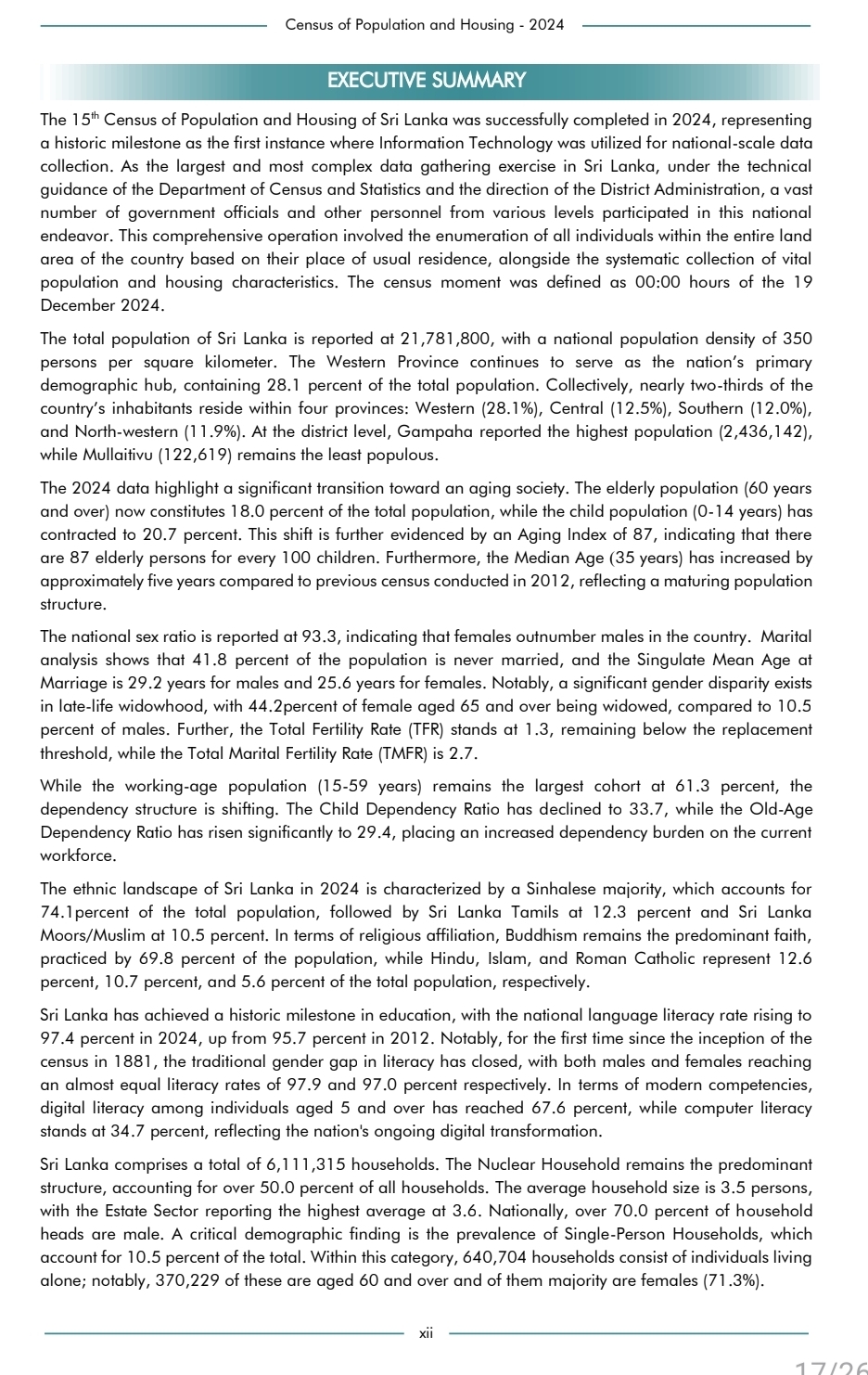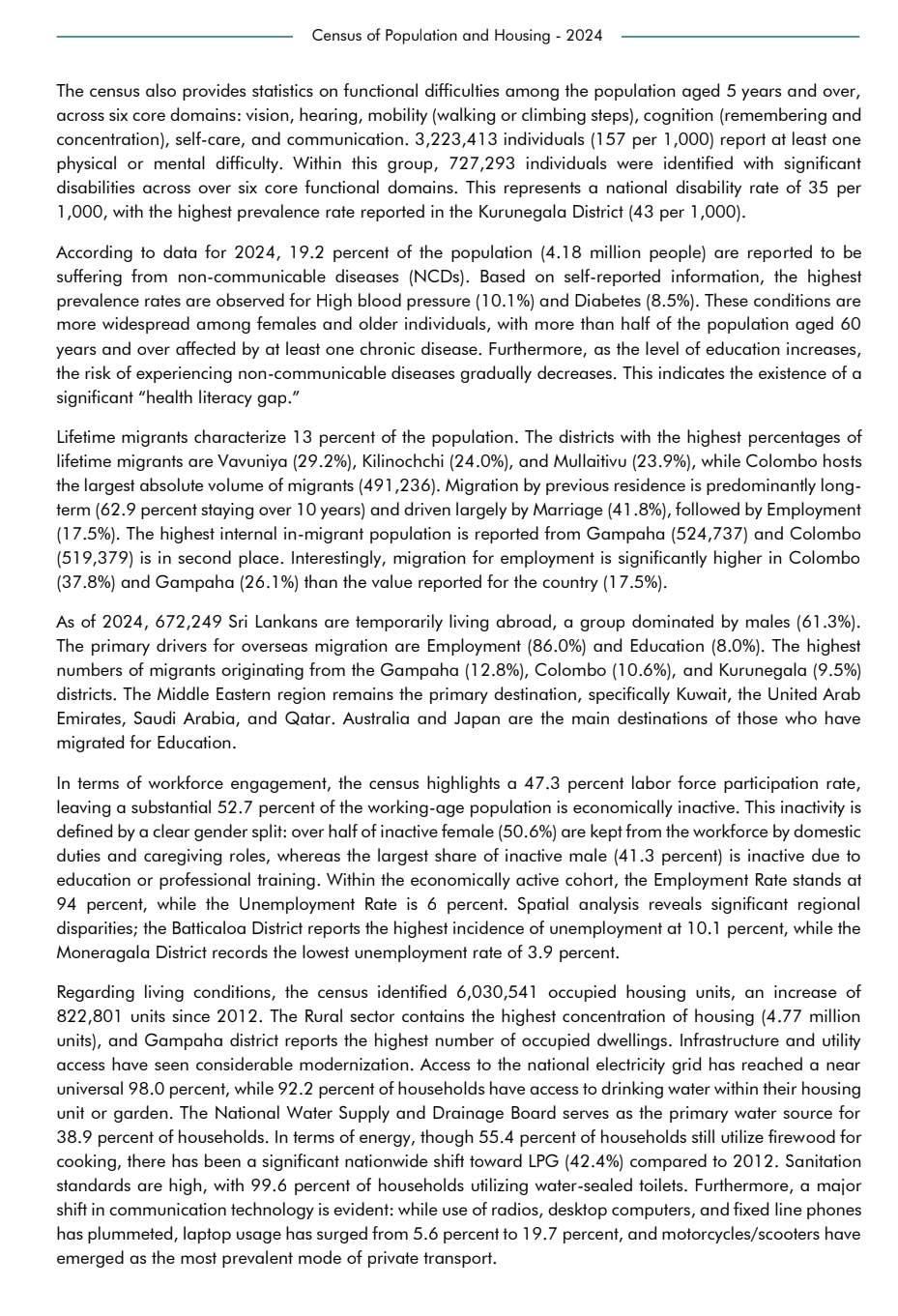

Sri Lanka’s population has reached 21.78 million, with the country rapidly ageing, literacy improving, and migration patterns shifting, according to the Final Report of the 2024 Census of Population and Housing released by the Department of Census and Statistics.
Here are 13 key updates from the 2024 Census:
1. Population reaches 21.78 million
Sri Lanka’s total population stands at 21,781,800, with a population density of 350 persons per square kilometre. The Western Province remains the most populated, accounting for 28.1% of the population, while Gampaha is the most populated district and Mullaitivu the least populated.
2. Sri Lanka becoming an ageing society
The elderly population (60+) now accounts for 18% of the population, while children (0–14 years) make up 20.7%. The median age has increased to 35 years, highlighting a rapidly ageing population.
3. Fertility remains below replacement level
Sri Lanka’s Total Fertility Rate stands at 1.3, below replacement level, indicating long-term demographic shifts and slower population growth.
4. Literacy reaches historic high
Language literacy has increased to 97.4%, with the gender gap nearly eliminated. Digital literacy reached 67.6% while computer literacy stands at 34.7%.
5. Disability and functional difficulties
A total of 3.22 million people reported at least one physical or mental difficulty, while 727,293 persons were identified with significant disabilities. The national disability rate stands at 35 per 1,000, with Kurunegala reporting the highest rate.
6. One in five Sri Lankans has chronic disease
About 19.2% of the population (4.18 million people) reported non-communicable diseases. High blood pressure (10.1%) and diabetes (8.5%) were the most common conditions, particularly among older populations and females.
7. Migration patterns shifting
Lifetime migrants account for 13% of the population, with Vavuniya, Kilinochchi, and Mullaitivu recording the highest percentages. Colombo hosts the largest number of migrants, while marriage remains the main reason for migration.
8. Over 670,000 Sri Lankans living abroad
A total of 672,249 Sri Lankans are temporarily living overseas, mainly for employment (86%). The Middle East remains the top destination, followed by Australia and Japan for education.
9. Labour force participation remains low
Labour force participation stands at 47.3%, with 52.7% economically inactive. Domestic responsibilities account for over half of inactive females, while education is the main reason for inactive males.
10. Housing and infrastructure improving
Sri Lanka recorded 6.03 million occupied housing units, with 98% electricity access and 92.2% access to drinking water. Water-sealed toilets are used by 99.6% of households.
11. Households shrinking, more elderly living alone
Sri Lanka has 6.1 million households with an average size of 3.5 persons. Single-person households account for 10.5%, with the majority being elderly females living alone.
12. Marriage age increasing
The Singulate Mean Age at Marriage stands at 29.2 years for males and 25.6 years for females, reflecting delayed marriages. Meanwhile, 41.8% of the population has never married.
13. Women outnumber men
Sri Lanka’s sex ratio stands at 93.3, indicating females outnumber males. A significant gender gap is also seen in widowhood, with 44.2% of women aged 65 and above widowed compared to 10.5% of men.
The 2024 Census marks Sri Lanka’s first fully digital census and provides comprehensive demographic, social and economic data to support future national planning and policy decisions. (Newswire)