

US Treasury Secretary Scott Bessent said on Tuesday China had been an unreliable global partner during the Middle East war by hoarding oil supplies and limiting exports of some goods, mirroring its actions with medical goods during the Covid-19 pandemic.
Bessent told reporters he had spoken with Chinese officials about the issue.
He declined to answer a question about whether the dispute would derail US President Donald Trump’s plan to visit Beijing in mid-May, but said Trump and Chinese President Xi Jinping had a very good working relationship.
“I think the message for the visit is stability. We’ve had great stability in the relationship since last summer; that emanates from the top down,” he said.
“I think that communication is the key.”
But Bessent took China to task for its actions during the US-Israeli war with Iran, which has sent oil prices up by as much as 50 per cent and triggered supply chain disruptions.
“China has been an unreliable global partner three times in the past five years; once during Covid-19, when they hoarded healthcare products, second on rare earth,” Bessent said, referring to Beijing’s threat last year to curb rare earth exports.
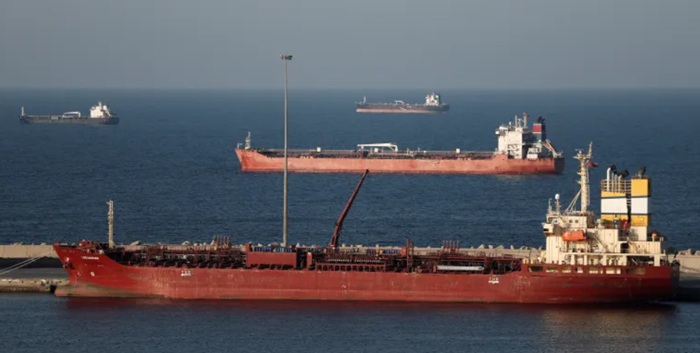
Now it was stockpiling more oil instead of helping to ease the global demand shortage caused by Iran’s closure of the Strait of Hormuz, which carries 20 per cent of the world’s oil, he said.
China already had a strategic petroleum reserve that was roughly the same size as that of the entire reserve held by the 32-member International Energy Agency, but it was continuing to purchase oil.
“They continued buying, and they’ve been hoarding, and they have cut off exports of many products,” Bessent said.
Liu Pengyu, a spokesperson for the Chinese embassy in Washington, said the shortages facing the global energy market were rooted in “the tense situation in the Middle East” and called for an immediate end to military operations there.
“The pressing task is to put an end to military operations at once and prevent the turmoil in the Middle East from further impacting the global economy,” Liu said, adding that China had been working actively to end the conflict and would “continue playing a constructive role.”
The International Monetary Fund, World Bank and International Energy Agency on Monday urged countries to avoid hoarding energy supplies and imposing export controls that could worsen what they called the biggest shock ever to the global energy market. They did not identify specific countries.
The US military on Monday began a blockade of ships leaving Iran’s ports and Teheran threatened to retaliate against its Gulf neighbours’ ports, after weekend talks in Islamabad on ending the war broke down.
Oil prices jumped back over US$100 (RM395) per barrel, with no sign of a swift reopening of the strait.
Bessent told reporters earlier that the blockade would ensure that no Chinese ships or others would be allowed to pass the strait.
“So they’re not going to be able to get their oil. They can get oil. Not Iranian oil,” Bessent said, adding that China had been buying more than 90 per cent of Iranian oil, which constituted about eight per cent of its annual purchases. (New Straits Times)