

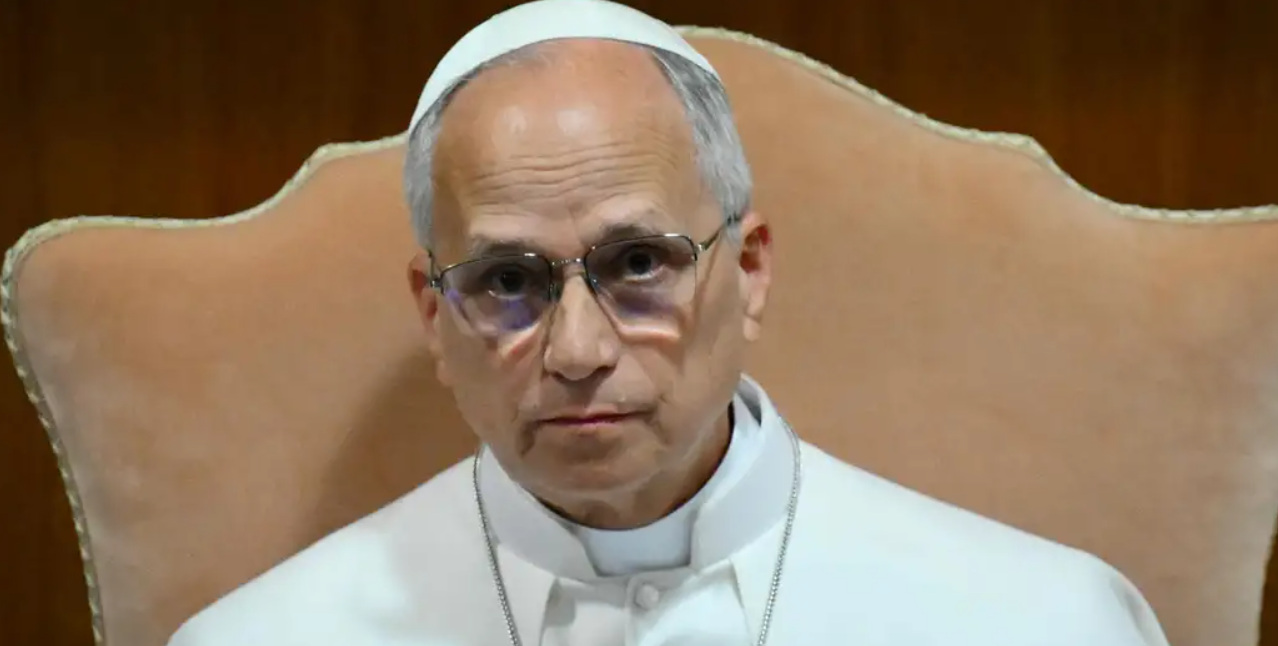
Pope Leo XIV used his first major manifesto, published Monday, to urge governments to “disarm” artificial intelligence and be guided by the common good rather than power or profit.
The first US pontiff stressed that while AI can be a valuable tool, it also poses many dangers to humanity.
“Artificial Intelligence now demands to be disarmed, freed from logics that turn it into an instrument of domination, exclusion and death,” the pope told a special Vatican presentation of the document, known as an encyclical.
Encyclicals are seen as an authoritative form of teaching from a pope to the Catholic Church’s 1.4 billion members.
Leo’s first encyclical, titled “Magnifica Humanitas” (Magnificent Humanity), follows several years of study by the church on AI-related technologies.
What else did the pope address in the document?
In the text, the pontiff was particularly critical of the role of the fast-moving technology in conflicts, arguing that AI-supported autonomous weapons systems have made war “more feasible.”
He said any use of AI in warfare “must be subject to the most rigorous ethical constraints” and said it was “not permissible” to entrust lethal decisions to AI systems.
Leo stressed, however, that “to disarm does not mean rejecting technology, but preventing it from dominating humanity.”
AI should be “human-friendly,” accessible to all and opened to discussion and debate, he added, lamenting that power was often concentrated in the hands of a few.
This means that “small but highly influential groups can shape information and consumption patterns, influence democratic processes and steer economic dynamics to their own advantage,” he wrote.
For that reason, it is essential that AI be strictly regulated and face “robust legal frameworks, independent oversight, informed users and a political system that does not abdicate its responsibility,” the pope said.
The presentation at the Vatican was attended by AI experts, including Chris Olah, the co-founder of US-based AI giant Anthropic. The company is currently locked in a legal battle with the Trump administration over its refusal to allow access to its AI models.
At the presentation, Olah acknowledged that AI companies operate “inside a set of incentives and constraints that can sometimes conflict with doing the right thing.”
He said he welcomed input from outside sources such as the Catholic Church, to “push events in a better direction.” (DW)