

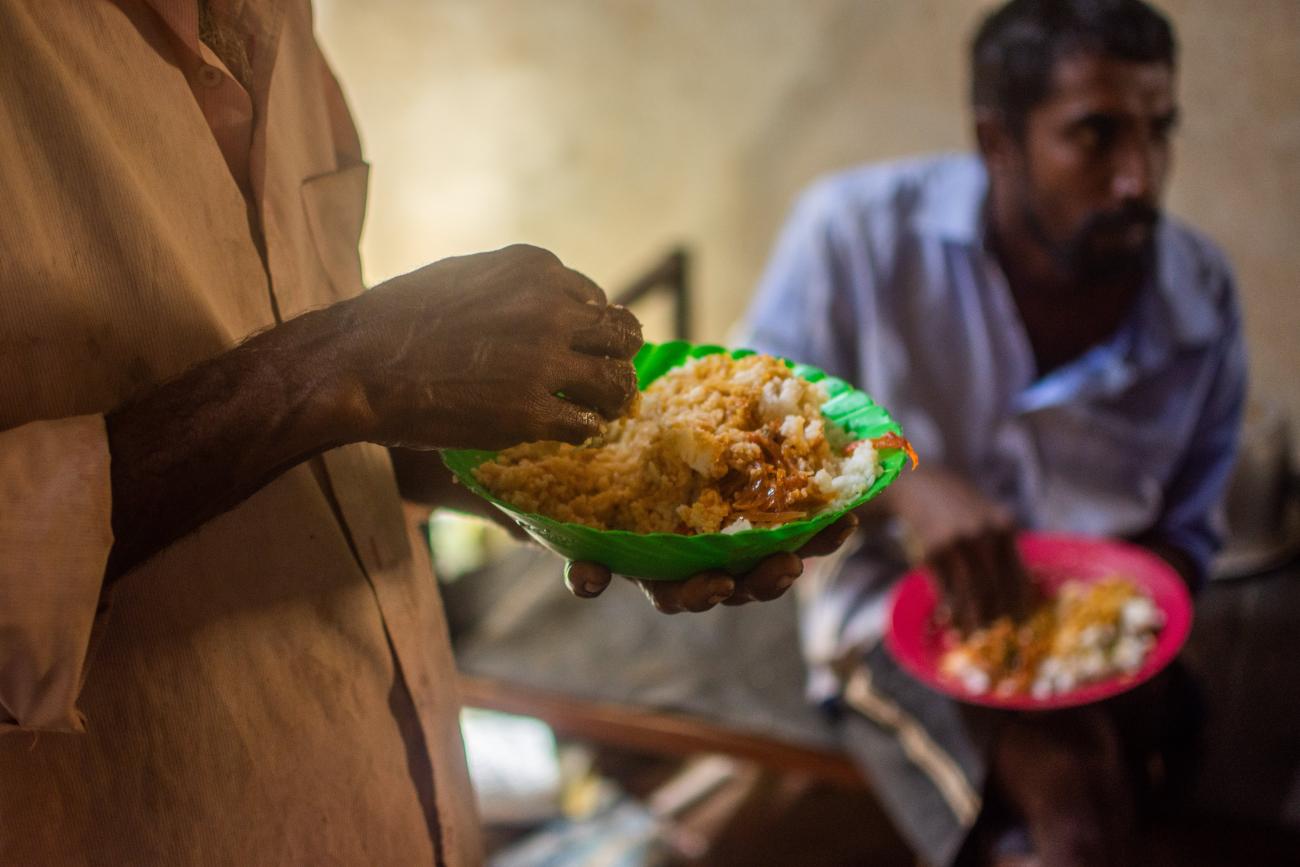
The economic fallout from the escalating Middle East conflict is pushing more Sri Lankan families toward food insecurity, with a new United Nations World Food Programme (WFP) analysis warning that up to 1.3 million additional people could struggle to meet their basic food needs.
The report says rising food, fuel and fertilizer costs linked to the crisis are worsening pressures on households still recovering from Sri Lanka’s recent economic downturn, highlighting the country’s vulnerability due to its reliance on Middle Eastern energy imports, remittances and export markets.
In March, WFP projected that 45 million people could fall into acute food insecurity if the conflict continued and oil prices remained around US$100 per barrel through the end of June. This scenario is now unfolding.
The new WFP report found that 1.3 million in Sri Lanka are struggling to meet basic food needs and, in some cases, being pushed into acute hunger due to the crisis.
“Early warnings only matter if the world acts on them,” said Jean-Martin Bauer, Director of WFP’s Food Security and Nutrition Analysis Service. “We warned that this crisis could push millions more people into hunger; now we are watching it happen in real time. In many cases, the poorest families around the world, far from the center of the crisis, are being hit the hardest.”
Countries already facing conflict, climate shocks and economic hardship, or highly dependent on imports, are among the most exposed to the crisis as fuel, fertilizer, food, and humanitarian costs continue to soar. In many countries, food is available in markets, but many families simply can’t afford the products on the shelves.
WFP’s analysis also suggests that new population groups in these countries are falling into food insecurity, particularly ultra-poor urban populations and marginalized rural groups such as pastoralists in Somalia.
These impacts are expected to intensify in the coming months, even if the crisis in the Middle East de-escalates. In parts of the world, farmers are going through planting seasons amid severe fertilizer shortages and high fuel prices. This is expected to have a devastating impact on crop yields and, consequently, on food prices months down the line.
“One of the biggest concerns is that the full impact of this crisis has yet to be felt,” said Mr Bauer. “Even if the conflict were to end today, irreversible damage has been done and the impact on prices, livelihoods and humanitarian operations will continue to be felt for a long time.”
The report also shows how the conflict in the Middle East is placing the global humanitarian system under growing strain. WFP is now facing a triple squeeze with rising needs, increased delivery costs and shrinking funding all culminating in devastating consequences. WFP estimates it will now serve 1.5 million fewer people than originally planned in 2026.
If the conflict continues in the coming months, more than 9 million people could lose assistance. WFP is calling for increased resources to match the growing humanitarian needs. Without urgent action, vulnerable families will be driven toward a catastrophic hunger emergency.
The report also profiled Somalia and Afghanistan, alongside Sri Lanka, chosen due to their different contexts and exposure to the Middle East.
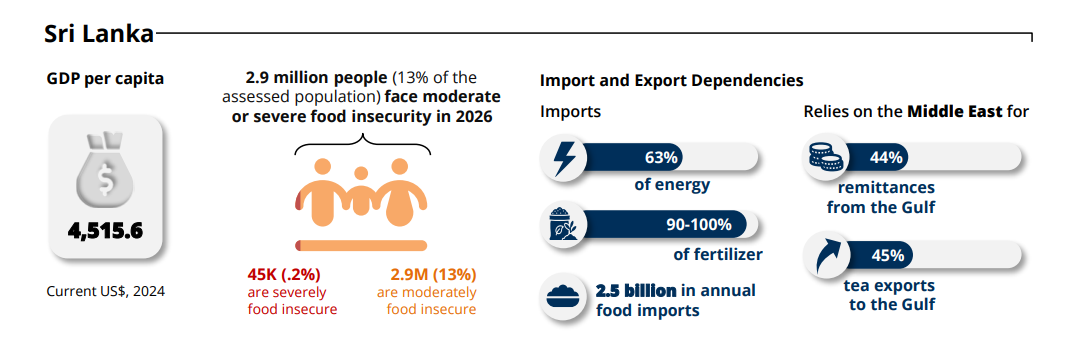
In Sri Lanka, where households remain under pressure as the country recovers from a prolonged economic crisis, up to 1.3 million additional people may be at risk of being unable to meet their basic food needs. This is on top of a baseline of 4.7 million people in 2026, the report said.
The country relies on the Middle East for 63 percent of its energy, while 44 percent of remittances come from the Gulf and 45 percent of tea exports go to the Gulf, exposing workers and households to shocks in energy prices, trade and income, the report said,
Wages are increasingly stretched as food, fuel, and fertilizer costs soar, meaning families are increasingly unable to afford the quality and quantity of food needed, it added. (Newswire)