

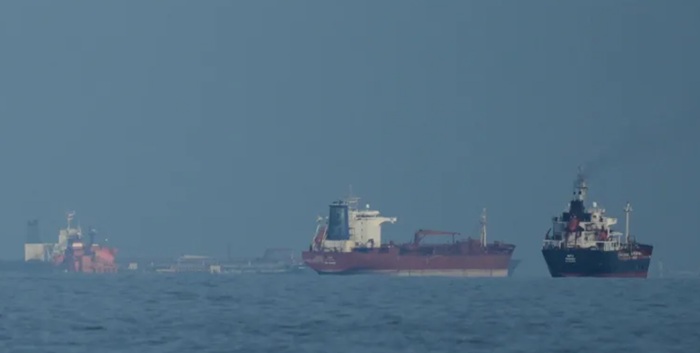
Global oil prices surged on Wednesday after the United States launched a series of military strikes against Iran, escalating tensions in West Asia and raising fresh concerns over the security of shipping through the Strait of Hormuz, one of the world’s most critical energy chokepoints.
Brent crude, the global benchmark, jumped 5.49 per cent to $75.94 a barrel, while US West Texas Intermediate (WTI) crude rose 2.84 per cent to $72.44 a barrel in early trade, extending strong gains from the previous session.
The rally came after the US military carried out strikes against Iranian targets in response to attacks on three commercial vessels transiting the Strait of Hormuz, according to US Central Command.
The latest escalation has renewed fears that hostilities could disrupt oil and liquefied natural gas (LNG) shipments through the narrow waterway, which handles nearly a fifth of the world’s oil trade.
On Tuesday, WTI crude had already settled 2.8 per cent higher after Washington revoked the general licence that had authorised the sale of Iranian crude, adding another layer of pressure on global energy markets.
The security situation deteriorated further after Qatar accused Iran of attacking three commercial vessels in the Gulf. Among them was the Al Rekayyat, a large Qatari LNG tanker, which was reportedly struck by a drone, triggering a fire in its engine room. The vessel’s crew was reported safe and was being evacuated.
Separately, maritime security sources said a Saudi-flagged crude oil tanker, believed to be the supertanker Wedyan, was also damaged off the coast of Oman. The exact cause of the damage remains unclear.
The attacks have intensified concerns over the safety of maritime traffic through the Strait of Hormuz, a narrow passage connecting the Persian Gulf with the Gulf of Oman and the Arabian Sea. The route is used daily by millions of barrels of crude oil and refined petroleum products destined for Asia, Europe and North America.
Any prolonged disruption to shipping through the strait could tighten global oil supplies and increase transportation costs, analysts said.
Energy markets have remained highly sensitive to geopolitical developments in the region, with traders closely watching for any signs that the conflict could spread further or lead to restrictions on tanker movements. (First Post)