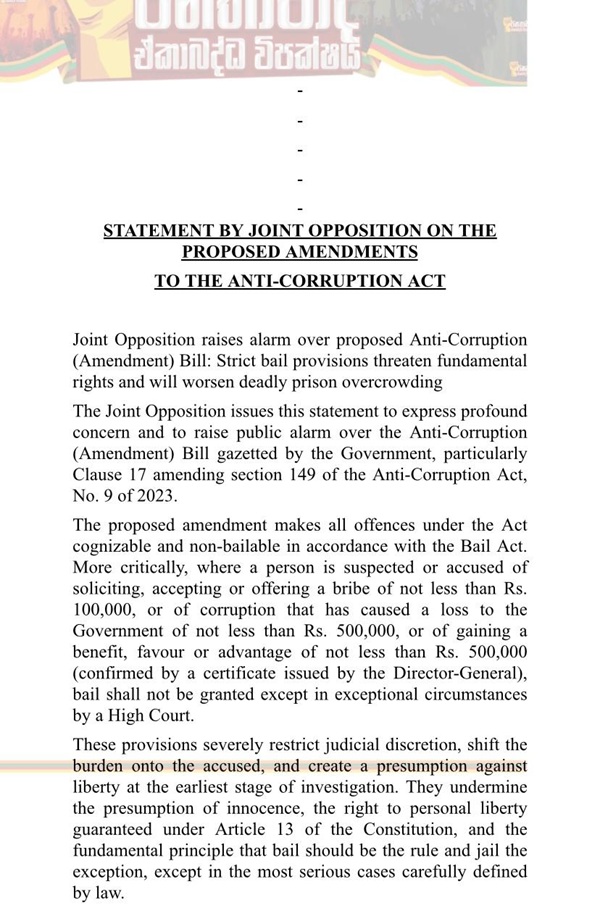


The Joint Opposition has raised concerns over the Government’s proposed Anti‑Corruption (Amendment) Bill, warning that strict bail provisions could undermine fundamental rights and worsen Sri Lanka’s already dire prison overcrowding.
In a statement issued today, the Opposition highlighted Clause 17, which seeks to amend Section 149 of the Anti‑Corruption Act, No. 9 of 2023. The amendment would make all offences under the Act cognizable and non‑bailable, with bail denied except in exceptional circumstances by a High Court when offences involve bribes of Rs. 100,000 or more, or corruption causing losses or benefits of Rs. 500,000 or more.
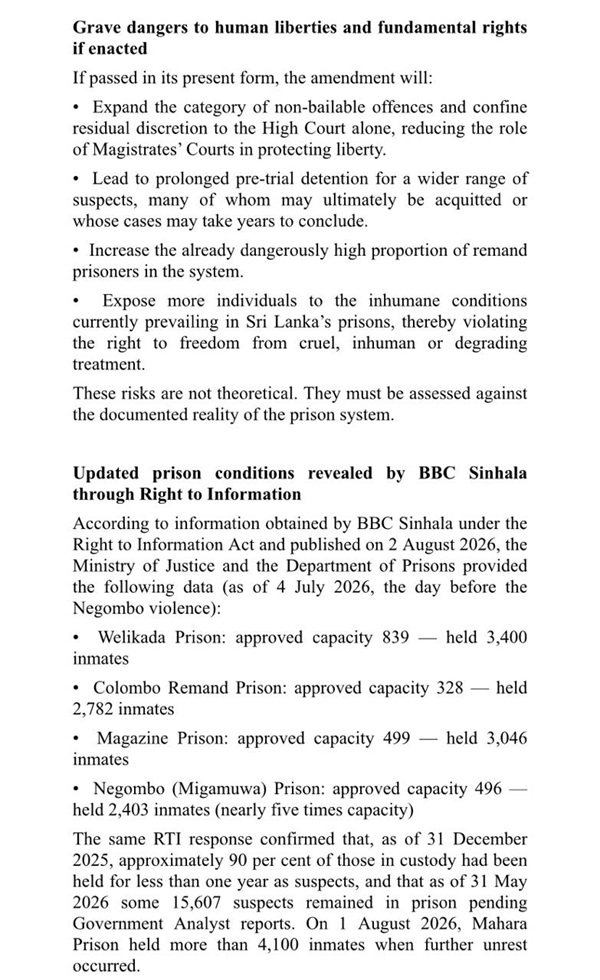
The Opposition argued that the provisions severely restrict judicial discretion, erode the presumption of innocence, and violate the constitutional right to personal liberty under Article 13. They warned that the changes would expand non‑bailable offences, prolong pre‑trial detention, and expose more suspects to inhumane prison conditions.
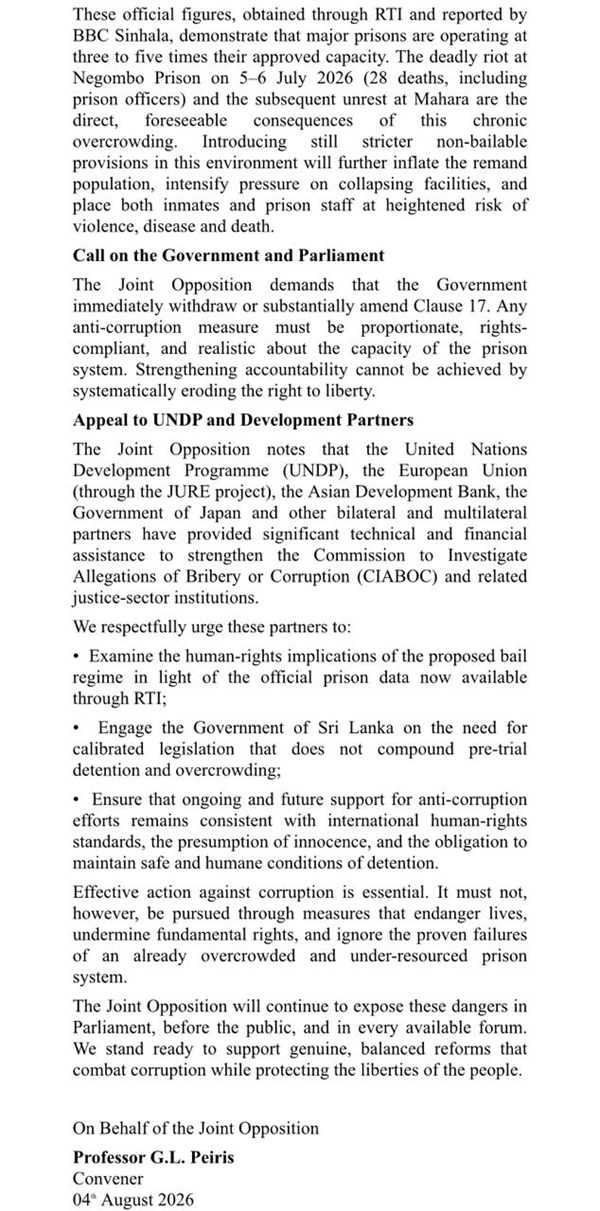
Citing Right to Information (RTI) data published by BBC Sinhala on August 2, the statement noted that major prisons are operating at three to five times capacity. For example, Negombo Prison held 2,403 inmates against an approved capacity of 496, while Welikada, Colombo Remand, and Magazine Prisons were similarly overcrowded. The Opposition linked these conditions directly to the deadly Negombo Prison riot on July 5–6, which left 28 dead, and unrest at Mahara Prison on August 1.
The Joint Opposition demanded that the Government withdraw or amend Clause 17, stressing that anti‑corruption measures must be proportionate and rights‑compliant.
They also appealed to international partners including the UNDP, EU, ADB, and Government of Japan to examine the human‑rights implications of the proposed bail regime and ensure support for reforms consistent with international standards.
“Effective action against corruption is essential,” the statement concluded. “It must not be pursued through measures that endanger lives, undermine fundamental rights, and ignore the proven failures of an already overcrowded prison system.” (Newswire)