

The Government of Sri Lanka has unveiled plans to transform Delft Island into the country’s first Zero Emission eco‑tourism destination, with a strong emphasis on sustainability, environmental conservation, and the preservation of its unique natural and cultural heritage.
A special site inspection and stakeholder discussion on the proposed development was held under the leadership of Deputy Minister of Tourism Ruwan Ranasinghe recently.
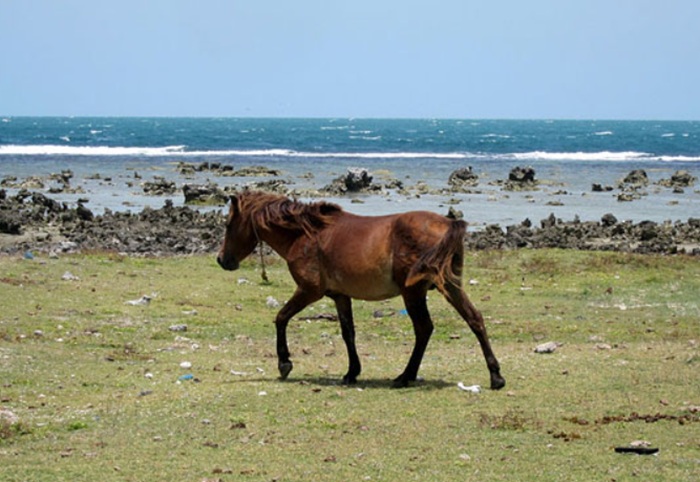
The island, renowned for its Dutch‑era ruins, numerous archaeological landmarks, and iconic wild horses, is seen as possessing exceptional tourism potential.
Deputy Minister Ranasinghe told participants that Delft Island should be experienced not only by international visitors but also by domestic tourists. Despite its extraordinary attractions, he noted, the island has so far made only a limited contribution to Sri Lanka’s tourism industry.
He emphasized the Government’s commitment to unlocking Delft’s full potential through sustainable and environmentally responsible development.
Discussions focused on identifying priority infrastructure to position Delft Island as a premier tourism destination, with key areas including water supply, road infrastructure, transportation and accessibility. Strengthening community participation was also highlighted, with plans to enhance the knowledge and hospitality skills of local residents to enable them to benefit directly from tourism development.
The Deputy Minister stressed that environmental sustainability will remain the cornerstone of the development strategy. The Government’s vision is to establish Delft Island as a flagship Zero Emission tourism destination, showcasing responsible tourism practices, promoting renewable and sustainable solutions, and serving as a model for eco‑friendly tourism development in Sri Lanka.
The programme was attended by Jaffna District MP Ilankumaran Karunanathan, Dr. Sribavanadarajah Shanmuganathan, Rajeevan Jeyachandramoorthy, representatives of local political authorities, the Divisional Secretary of Delft, government officials, and members of the local community, who actively shared their views on the island’s future development.
Officials from the Sri Lanka Tourism Development Authority (SLTDA) and the Sri Lanka Tourism Promotion Bureau (SLTPB) also participated in the visit and discussions.
The initiative marks an important step towards positioning Delft Island as one of Sri Lanka’s most distinctive sustainable tourism destinations, where environmental conservation, cultural heritage preservation, and community‑based tourism development work together to create a world‑class visitor experience. (Newswire)