

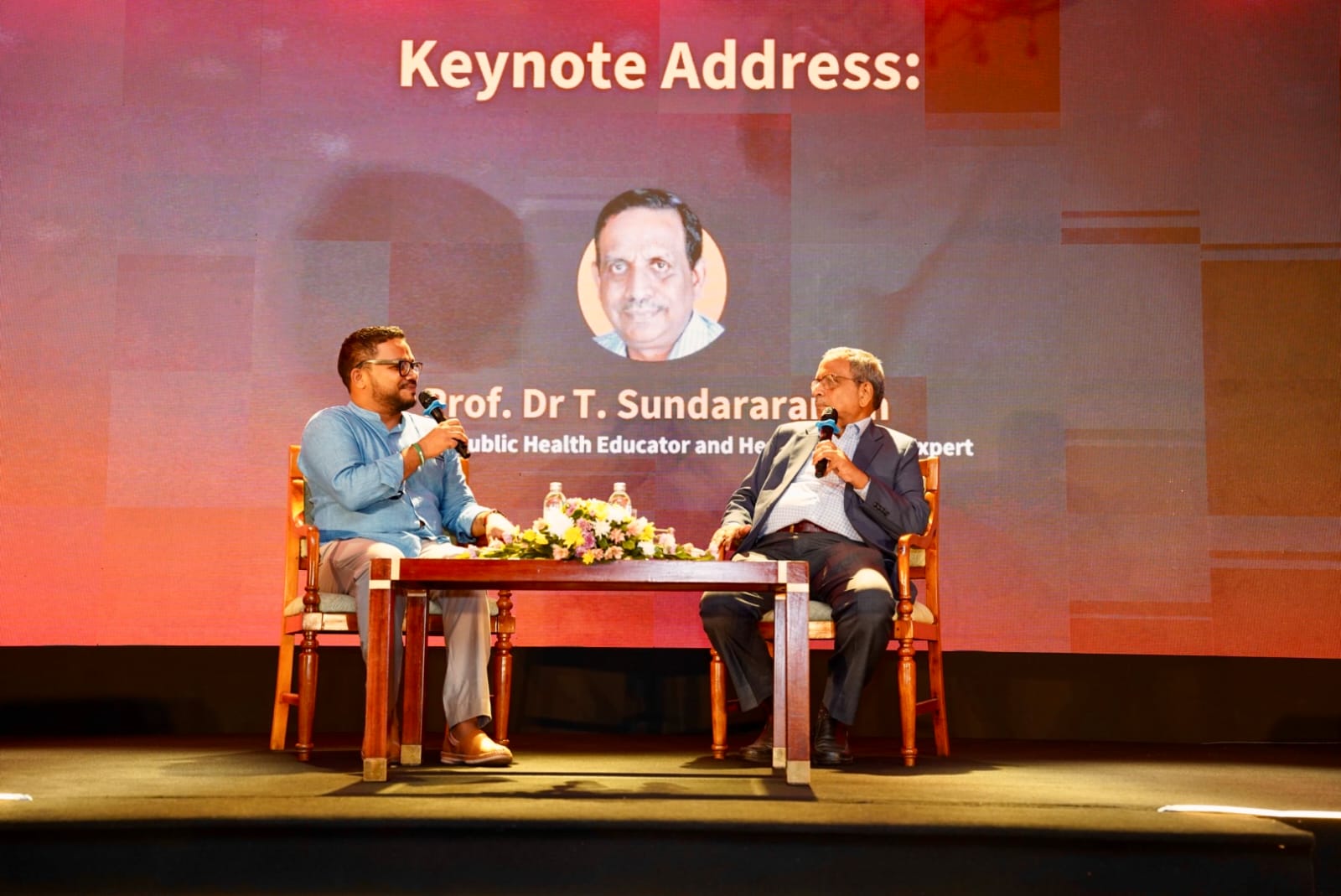
Doctors Without Borders/Médecins Sans Frontières (MSF) South Asia held the fourth edition of its Health and Humanity Summit in Colombo, bringing together policymakers, health experts, humanitarian practitioners and civil society representatives to discuss the future of humanitarian action.
Held under the theme “Envisioning the Future of Humanitarianism,” the 2026 summit focused on how humanitarian responses can adapt to geopolitical shifts, climate emergencies, inequality and changing global health priorities while maintaining the principles of neutrality, independence and impartiality.
Opening the summit, MSF South Asia Executive Director Parthesarathy Rajendran said humanitarian action was at a “defining moment,” with significant changes taking place in how crises unfold, how responses are financed and who influences them.
“Yet amidst these transitions, one principle must remain unwavering: every person has the right to timely, quality healthcare, regardless of politics, geography, or circumstance,” Rajendran said.
He called for a humanitarian system that is more inclusive, locally led and gender-responsive, with greater emphasis on global solidarity.
The summit focused on three main areas: the future of humanitarian and health architecture, women’s leadership in global health and humanitarianism, and healthcare sovereignty and access.
Discussions examined humanitarian financing and governance, the role of emerging Global South economies, barriers to women’s leadership, and regional cooperation to improve access to medicines, vaccines, diagnostics and health technologies.
The event also featured accounts from MSF international mobile staff Dr. Roshni Changalath, Imtiaz Wadud and Dr. Karan Kamble, who shared their experiences working in conflict and crisis settings.
Among the speakers were global health systems expert Prof. Dr. T. Sundararaman, WHO Representative to Sri Lanka Dr. Rajesh Sambhajirao Pandav, Prof. Imtiaz Hussein of the Independent University, Bangladesh, Sisterhood Initiative founder Nabeela Iqbal and Prakriti Dhakal, under secretary to the Prime Minister of Nepal.
Panel discussions also addressed intellectual property, technology transfer, regional manufacturing, migration and displacement, community-led responses and South-South cooperation.
MSF South Asia also launched the local chapter of its “Friends of MSF” initiative, a student-led university programme aimed at engaging young people on humanitarian action, global health, social justice and emergency response.
According to MSF, the summit sought to identify ways of developing a humanitarian system that is more representative, accountable and responsive to changing global challenges. (Newswire)