

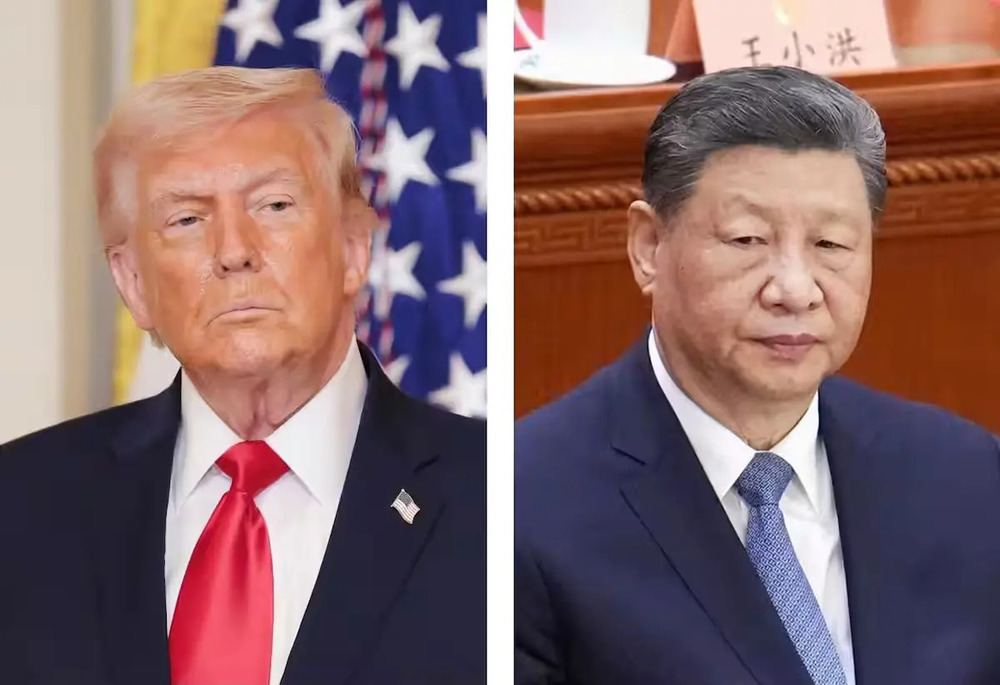
Xi Jinping’s arrival in Washington on September 24 was watched closely across Asia, but not simply because it brought the leaders of the world’s two largest economies back to the negotiating table.
His visit came after months of tariff negotiations, renewed tensions over Taiwan and critical minerals, and a broader effort by Washington and Beijing to prevent their rivalry from becoming an open-ended confrontation.
Four months after Donald Trump’s visit to Beijing, both sides had an interest in keeping the relationship stable. The meeting delivered that stability in limited form, but stopped well short of resolving the disputes that have come to define the relationship.
The summit centered on trade, rare earths, artificial intelligence, Taiwan, and China’s relationship with Iran. Xi arrived emphasizing that China and the United States should be “partners, not rivals,” while Trump sought economic gains and greater predictability from Beijing.
The two sides extended their existing trade truce, giving them additional time to negotiate, but there was little indication of a broader political settlement. Maritime security in the Indo-Pacific, meanwhile, remained largely outside the center of the discussions, despite growing concerns over China’s activities in the South China Sea and around Taiwan.
For Washington and Beijing, the immediate priority was managing their bilateral relationship. For many countries in Asia, however, the more consequential question is what that relationship means for their own security and economic choices. The meeting demonstrated that both powers can manage some of the sharper edges of their rivalry. It also showed how much remains outside the bargain.
A Truce But Hardly a Settlement
The current US-China relationship is best described as a period of controlled instability rather than a genuine rapprochement. The two governments have prevented their trade dispute from returning to its most damaging phase.
However, several commitments reached earlier this year remain incomplete. China’s promised purchases of American agricultural products have fallen short of the US$30 billion target, while its commitment to purchase 200 Boeing aircraft remains unrealized. Progress on a proposed bilateral Board of Investment has also been slow, reflecting continuing suspicion over national-security concerns.
The summit nevertheless gave both leaders reasons to continue with the existing arrangement. Trump can point to the extended trade truce as evidence that pressure on Beijing has produced results, while a renewed trade confrontation would risk adding to economic and political pressures at home.
Xi, meanwhile, has little incentive to provoke another round of tariffs when China’s export sector remains an important source of economic strength. Chinese exports have continued to expand despite American tariff measures, giving Beijing greater confidence in its economic position than Washington may have anticipated.
The extension of the trade truce is therefore significant, but it should not be mistaken for a resolution of the underlying dispute. It gives both sides additional time to negotiate while postponing harder decisions over tariffs, technology and market access.
Rare Earths and the Leverage Problem
Critical minerals remain one of the most important sources of leverage. China’s dominant position in rare-earth processing has shown how an apparently commercial supply chain can gain strategic significance.
Washington wants greater predictability in Chinese exports, while Beijing retains considerable leverage because alternative processing capacity remains limited. Disruptions following China’s rare-earth export restrictions have already affected manufacturers in the United States, Japan and Europe.
For countries such as Japan, India, South Korea and Australia, the lesson has already been absorbed. Each has pursued some form of supply-chain diversification because excessive dependence on a single supplier creates vulnerabilities during periods of geopolitical tension.
A US-China agreement on rare earths may reduce immediate uncertainty, but it is unlikely to eliminate the incentive for these countries to develop alternatives.
Taiwan Stays Outside the Bargain
The more difficult part of the relationship remains Taiwan. Beijing continues to regard Taiwan as a core sovereignty issue and has been pressing Washington to limit military support for Taipei.
Ahead of the meeting, Chinese officials were expected to raise US arms sales to Taiwan, including a proposed package worth around US$14 billion. Trump had previously described the arms package as a potential “negotiating chip,” adding another layer of uncertainty for Taiwan and America’s Asian allies.
That is essential because the concern across the region is not necessarily that Washington will abandon Taiwan. Rather, changes in the language or scale of US support could alter how other Asian governments assess American commitments.
Why Japan and the Philippines Are Watching Closely
Japan has become particularly attentive to developments in the Taiwan Strait because of Taiwan’s proximity to Japan’s southwestern islands and the importance of surrounding sea lanes.
The Philippines faces an overlapping concern. Its geography places it close to both Taiwan and the South China Sea, while Manila’s expanding defense relationship with Washington has made it an increasingly important part of the American regional security network.
Washington has therefore continued to reassure its allies while engaging with Beijing. Secretary of State Marco Rubio’s meetings with Japanese and South Korean officials before the summit included renewed discussion of defense commitments and economic-security cooperation. Taiwan has also publicly acknowledged continued US support.
For Beijing, however, Taiwan is unlikely to be treated as another bargaining item alongside trade or technology. This makes a grand settlement improbable. The more realistic outcome remains establishing limits around the dispute: clearer signals about military activity, continued communication, and efforts to prevent competition from becoming accidental conflict.
The same logic applies to the South China Sea. China’s territorial claims overlap with those of the Philippines, Vietnam, Malaysia and Brunei, while Indonesia has also faced tensions with Beijing over maritime claims around the Natuna Islands. China has expanded its coast guard and maritime presence across disputed waters, while the Philippines has increasingly relied on American and allied support to contest Chinese activity.
Yet maritime issues occupied relatively little space in the Trump-Xi discussions. Analysts warned before the meeting that leaving maritime disputes outside the main US-China dialogue could allow some of Asia’s most dangerous points of friction to continue without adequate mechanisms to manage them.
For Southeast Asia, this remains a familiar dilemma. China is the region’s largest trading partner, while the United States remains an important security partner and source of investment. Governments in Hanoi, Manila, Jakarta and Singapore have consequently avoided choosing one side outright.
The Philippines has strengthened military cooperation with Washington while maintaining economic relations with Beijing. Vietnam has expanded partnerships with the United States, Japan, India and Australia without abandoning its diplomatic engagement with China.
Singapore has consistently argued for an open regional order in which Southeast Asian countries retain the freedom to work with both powers.
Their objective is not to prevent US-China cooperation. It is to ensure that cooperation does not come at the expense of their own interests.
Stability Without a US-China Condominium
The Trump-Xi meeting did not resolve the fundamental disputes between Washington and Beijing. Taiwan, technology restrictions, critical minerals, and maritime competition are structural issues that cannot be settled through a single presidential meeting.
Instead, the two leaders showed that some of these disputes can be managed without derailing the entire relationship. The extended trade truce is one example. Continued communication over AI and other sensitive areas offers another. These arrangements may not alter the broader rivalry, but they can make it more predictable.
That may ultimately be the most important outcome for the Indo-Pacific. The region has little interest in another cycle of tariffs, export restrictions and military signaling. At the same time, countries across Asia have spent years strengthening their own partnerships precisely because they do not want their security and economic choices to depend entirely on the state of US-China relations.
For Washington and Beijing, managed competition may be the most practical way to prevent their rivalry from becoming destabilizing. For the Indo-Pacific, however, stability will have to mean more than an absence of confrontation between the two powers. It will also have to leave room for Japan, India, Australia, ASEAN and smaller regional states to pursue their own interests.
The significance of the September meeting therefore lies less in any single announcement than in the limits it exposed. The trade truce has been extended, but the underlying economic dispute remains.
Taiwan remains a point of contention, while critical minerals continue to expose the strategic vulnerabilities created by China’s dominance of important supply chains. Maritime competition, meanwhile, remains largely outside the central bargain.
The deeper competition will therefore continue even if the rhetoric becomes less confrontational. The real test of the Trump-Xi relationship is whether Washington and Beijing can manage their rivalry without forcing the rest of Asia to adjust to decisions made between them.
For the Indo-Pacific, a more stable US-China relationship may be preferable to confrontation. But stability will matter more if it gives regional countries more room to shape their own strategic choices, rather than narrowing that space through another great-power bargain. (Japan Forward)