

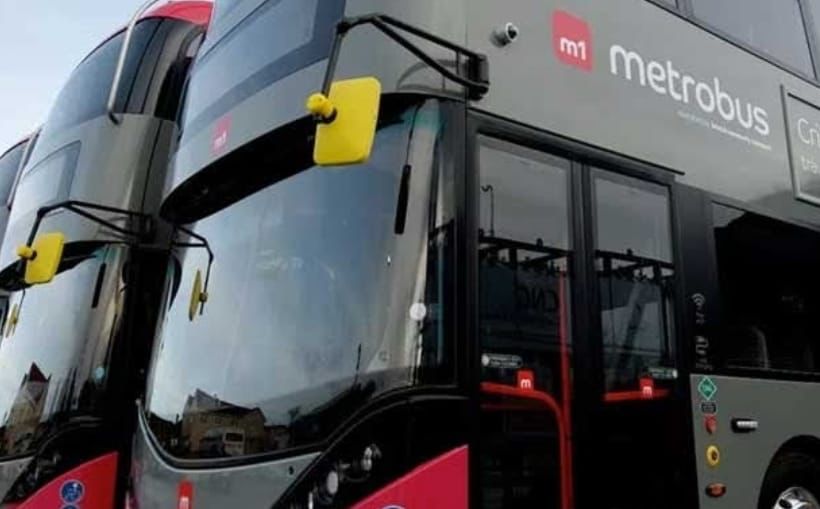
The Ministry of Transport has announced plans to introduce the Lanka Metro Transit bus service as a solution to the severe traffic congestion currently prevailing in Colombo city, during a meeting with President Anura Kumara Disassanayake.
The necessary infrastructure for the project is already being prepared, and buses are expected to arrive in the country by August this year.
The pilot project will initially operate along six main roads around Colombo, beginning in the Western Province, before expanding to Galle and Kandy districts, and within three years to eight major cities.
The initiative aims to reduce the number of private vehicles entering Colombo daily and attract more passengers to public transport.
The President emphasized the importance of identifying bus priority lanes and maintaining their efficiency.
President Anura Kumara Dissanayake further stated that the entire transport system must undergo rapid transformation to provide the public with an efficient, safe, and technologically modern service that is dignified and trustworthy.
The President made this observation during a discussion held this morning (12 Feb) at the Presidential Secretariat with officials of the Ministry of Transport, Highways, and Urban Development.
The President was briefed on the strategic plan prepared by the Ministry under five pillars: economic competitiveness, environmental sustainability, digital transformation, social equity and accessibility, and safety and security, for the revival of the transport sector.
To provide quality service to the public, the President pointed out that the current fragmented bus services should be reorganized into transport companies (clusters). He said, “What people want is a good transport service; how it is delivered does not matter to them.”
The President noted that since the cities have grown over time rather than being systematically planned, transport management must be handled carefully within the existing urban structure, and establishing bus clusters is the best solution.
Under this system, a company will be formed to deploy buses owned by bus operators. If profitability issues arise, the government can provide relief to the company. The President stressed the importance of agreements between bus owners and the company, as well as between the government and the company, to ensure continuous service, noting that this would be more practical than importing new buses at high cost.
He also highlighted the importance of planning multi‑modal transport hubs centered on rail services, integrating other modes of transport around them.
Discussions also covered the modernization of the Kelani Valley railway line and the introduction of an electronic system for expressways.
Special attention was paid to the welfare of workers in the transport sector. The President emphasized that service conditions must ensure respect and security for workers, particularly in the private sector, by providing formal appointment letters and structured welfare services.
Attention was also drawn to the current state of the on‑site fine system and the demerit point system. Although driver’s licenses with chips have been issued for ten years, no software system has been developed to implement the demerit point system, which was revealed to be a mere deception. It was noted that GovPay now provides the capability to correct this, and a proper system can be established within six to seven months.
A regulatory framework has been prepared for three‑wheelers, taxis, and school vans, which will be presented after discussions with all stakeholders.
Issues relating to the student bus pass program were also discussed. It was revealed that Rs. 2,200 million had been allocated by the government for the program in 2025, of which Rs. 500 million was unused and reallocated. Discussions focused on making the program more efficient and ensuring direct benefits to students.
Plans were also discussed to establish a National Transport Research and Development Centre by bringing all institutions in the transport sector under one platform.
The meeting was attended by Minister of Transport and Highways Bimal Ratnayake, Deputy Minister Prasanna Gunasena, Ministry Secretary Senior Professor Kapila Perera, senior officials of the ministry, and heads and senior officials of institutions under the ministry, including Sri Lanka Railways, Department of Motor Traffic, National Transport Commission, and Sri Lanka Transport Board. (Newswire)