

Logos used to be fixed signatures—imprinted onto packaging, embroidered into uniforms, or printed onto billboards. But in a world where screens never sleep and digital engagement is omnipresent, a logo doesn’t need to be fixed. It can throb like a pulse, shine like sunlight on water, or change with every new encounter. These are living logos: brand marks that are meant to respond in real time, based on context, mood, or even the viewer’s presence.
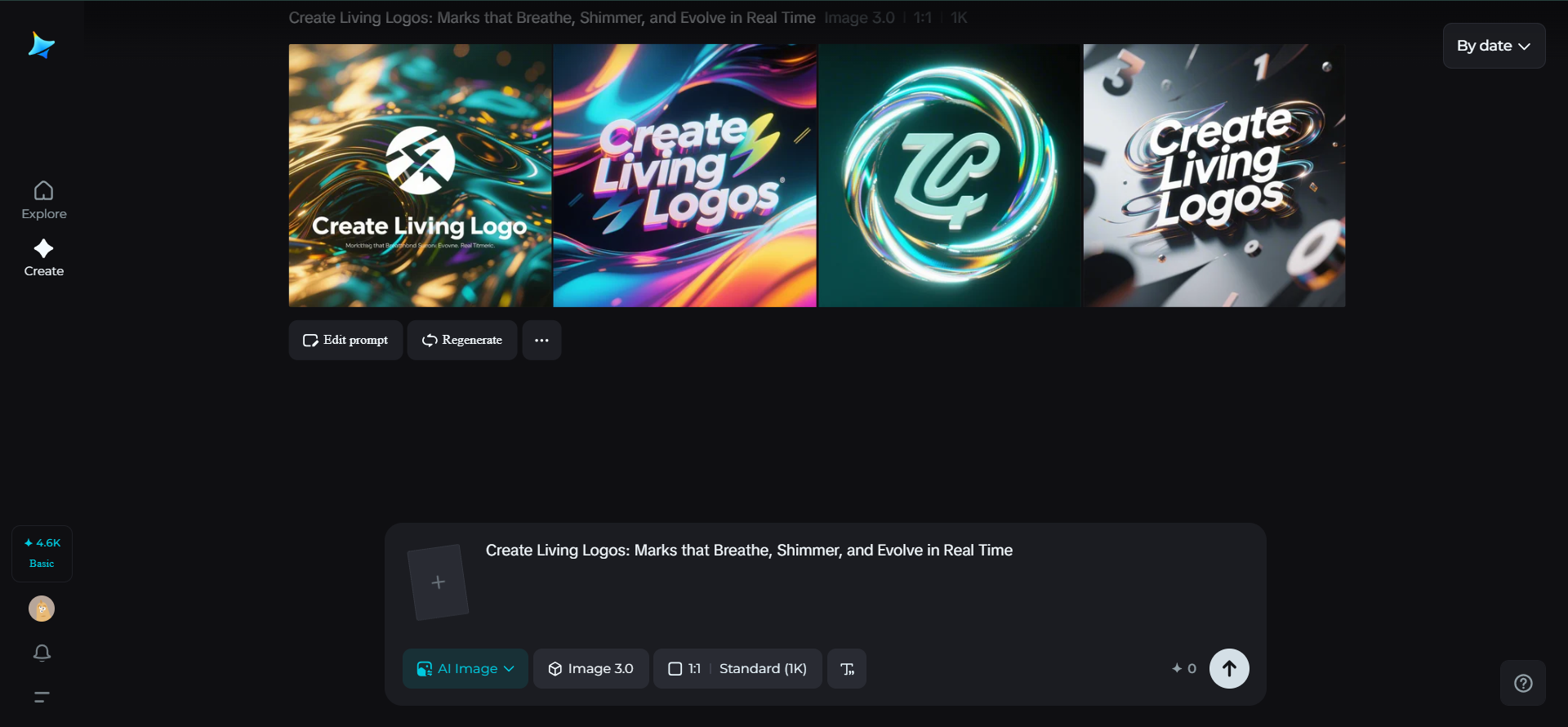
It is already being done. With Dreamina and the power of an AI logo generator, companies can prototype personalities that are no longer static badges; they become living, breathing entities. A coffee shop might have its logo shift during the day: sunny and energetic in the morning, peaceful and relaxing at night; a sports logo that waves like a banner in the wind on the airwaves when broadcast live. A nonprofit brand can come alive in color when dollars flow in.
This rethinking of identity design can lead to opening up to something deeply human: an emblem that feels alive to it, shifting based on the way the brand evolves and the people that are around it.
Logos that shift to moods and moments
Suppose your brand icon could feel. Imagine an app icon that glows gently when you finish a daily task, or a logo that pulsates when your favorite artist releases a new album. Living logos aren’t aesthetic flourishes; they’re feedback systems, embroidered into the rhythm of digital life.
- A weather app might have its logo transform to reflect current skies—sunbursts, raindrops, or migrating clouds.
- A meditation brand might have its logo slowly inflate and deflate in the manner of a breathing exercise.
- Retail websites could update their marks with seasonal sales, so that purchasing is entering a living show.
The enchantment of these designs is that they are intuitive. Individuals already expect their digital gadgets to return to them, so why logos?
Interweaving storytelling into evolving marks
A living logo is more than a gimmick: it’s a narrative tool. By making a brand identity dynamic, which can change shape, color, or texture, it’s a small unfolding story in the hand of the user. For marketers, that creates infinite possibilities.
Picture a travel site whose logo cycles around an icon—a wave, a curved road, a mountain—when the page is reloaded. Or a music site on which the logo dances to the beat of the music being played. Every touch is a mini-tale, turning something as boring as a fleeting glance at a brand icon into an experience of magic.
And here’s the twist: tales imparted through living logos never stay constant. They evolve with the user’s journey, so no two experiences will be the same.
Painting logos with Dreamina’s adaptive brush
Dreamina is less about making pictures and more about crafting experiences that move with imagination. Making a living logo is playful when you think of yourself as painting with light that can move and change. Instead of being trapped in one static look, you get to have fun with kinetic marks that spread, distort, and ripple as they respond to context.
Dreamina’s versatility lends itself to experimentation. A logo may be developed in a number of versions and styles, each with its own moodiness—blazing, peaceful, progressive, or down-to-earth. Such flexibility is such that brands no longer have to choose one locked-in face; they may see and develop a whole wardrobe of personas that refresh in sync with their campaigns or moods.
Dreamina’s symphony of moving marks
Step 1: Compose a text prompt
To design a living logo, begin by visiting Dreamina and entering a descriptive prompt that sets the mood. Describe the textures, moods, and adaptive qualities you want. The more descriptive the specifications, the more fluid and adaptive the result will be.
Such as: A geometric logo with glowing edges of soft pulsating light that shifts like liquid metal, shining between silver and blue dark color tones.

Step 2: Switch parameters and generate
When your prompt is prepared, modify Dreamina’s parameters—indicating your model, aspect ratio, size, and 1k or 2k resolution. Each choice tunes how you balance sharp detail with flowing displacement. Once you refine your parameters, click on the Dreamina icon and you will see a series of imagined logos flash in screens and shimmer with promise.
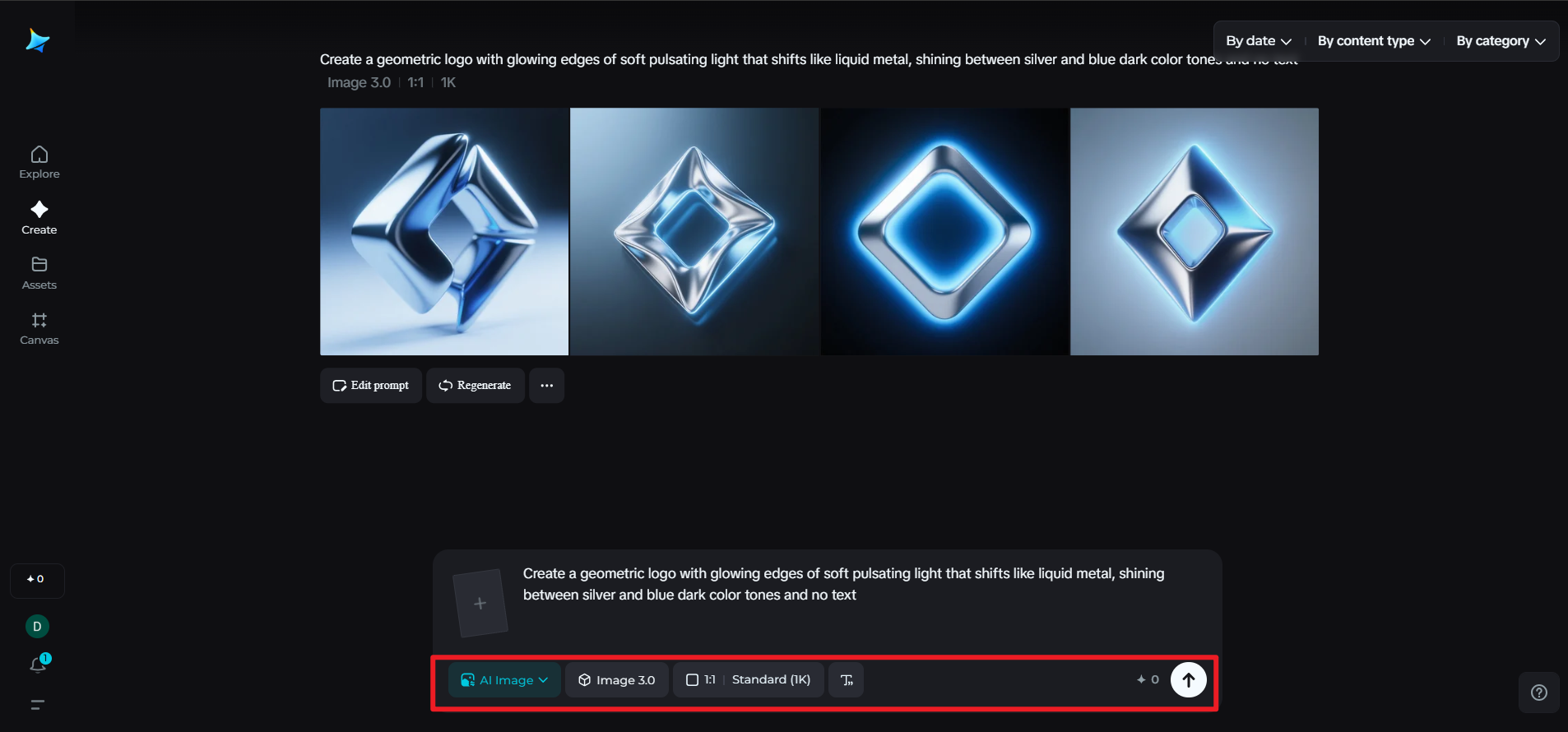
Step 3: Personalize and download
Having received your results, you can begin customizing them to refine the parameters to your liking. Use inpaint to modify items, use expand to produce glowing variations, use remove to eliminate distractions, or use retouch to refine effects like shine or motion. Once you are happy with this evolving look, you can download the mark that feels alive and ready to breathe across your channels.

Living logos as cultural interfaces
Brands now are not just companies—they’re cultural agents. Living logos take this relationship even further by serving as cultural interfaces, reacting to conversation, trends, and even moods. Imagine a festival brand that pulses in sync with real-time DJ sets, or a logo for charity that gently flickers each time someone makes a donation in real-time.
Through adaptive marks, brands aren’t merely looked at—they’re felt. And as audiences become increasingly drawn to interactivity, these logos provide resonance so much richer than static graphics. It’s a branding that behaves like a buddy, not just a sig.
Blending adaptive marks with greater systems
A living logo doesn’t stand in isolation—it becomes part of a brand’s overall design system. Active marks work well when supported by complementary utilities like Dreamina’s AI photo generator, which can extend the look and feel of a logo to campaign imagery. From packaging to commercials to phone wallpapers, every touchpoint can share the same buzzing, shimmering life.
This creates unity without boredom. Instead of splattering the same stasis logo all over the place, brands can develop stacked identities where the core design lives, moves, and resonates across their creative world.
Impenetrable hands driving malleable design
Behind the sparkle of living logos is craftsmanship. Programs like Dreamina’s AI image editor allow designers to hone and optimize adaptive marks so that not only do they look alive, but they are not defective either. A logo that becomes too variable risks losing recognition, so editing programs hold expression in clarity.
It’s that coexistence—between evolution and acknowledgment—that gives a living logo its power. Not about ongoing motion for the sake of motion, but motion with meaning, confirming brand values while sparking joy.
Conclusion: identities that breathe with us
The era of static logos is coming to a close. As human interactions with brands become more dynamic and emotional, so too must the signs that represent them. Living logos invite us to imagine identities that don’t just exist on paper but that live in movement, radiating life, changing with each new moment.
With Dreamina, this future becomes real. It allows creators to design marks that evolve and shine, bringing storytelling, responsiveness, and interactivity together in something as familiar but as amazing as a logo. Whether glowing changes or mood-shifting alternations, the possibilities are endless.
Future logos won’t just be viewed. They’ll be felt—alive, breathing, and developing in tandem with us!