

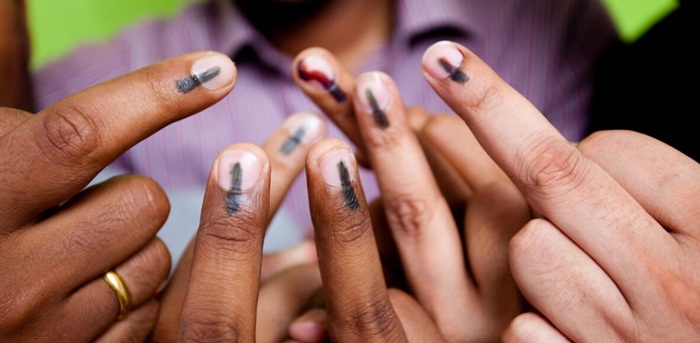
Voters in Tamil Nadu will take part in an unprecedented triangular contest on Thursday, 23 April, in the 2026 Assembly elections. Polling will be held in a single phase across all 234 constituencies, from 7 am to 6 pm, at 75,064 booths across the state.
Following the Special Intensive Revision (SIR) of electoral rolls conducted by the Election Commission of India late last year, 5,73,43,291 electors are enrolled to vote. This includes 2,80,30,658 men, 2,93,04,905 women, and 7,728 third gender electors.
Tamil Nadu Chief Electoral Officer Archana Patnaik said 14,59,039 new voters have been added, along with 68,501 service electors. Authorities have received 4,18,541 postal ballots so far.
As per the ECI’s instructions under Section 135B of the Representation of the People Act, 1951, poll day has been declared a public holiday.
It applies to every person employed in any business, trade, industrial undertaking or other establishment, including those working outside their constituency.
Voters will not be allowed to carry mobile phones inside polling booths.
Arrangements have been made outside polling stations to store devices safely.
Dry days have been notified across Tamil Nadu and in border areas of neighbouring states and union territories from 21 April to 23 April, and again on 4 May, when the votes will be counted.
A repeat of 2006?
The principal contenders are the DMK-led Secular Progressive Alliance, which includes over 20 parties and community organisations; the AIADMK-led National Democratic Alliance; Tamilaga Vettri Kazhagam, led by actor Vijay; and Naam Tamilar Katchi, led by Seeman.
Some political observers expect no party to win a clear majority. Others say anti-DMK votes may not consolidate behind the AIADMK but shift to Vijay. That shift would split the opposition vote further and could allow the DMK to retain power without a unified challenge.
Such a result has precedent. In 2006, no party won a majority, but the ruling AIADMK secured 61 seats, rising to 69 with allies. The DMK, then in opposition, emerged as the single largest party with 96 seats, still short of the 117 required.
With support from the Congress (34 seats), along with Left parties and other allies, the DMK formed a minority government. That election is considered the last “broken mandate” in the state. The question now is whether the 2026 election will produce another fractured verdict.
Polling infrastructure and security
Across the state, 75,064 polling stations have been set up at 33,133 locations with 1,06,408 EVMs, 75,064 control units and 75,064 VVPAT machines. Additionally, 20 percent of machines are kept as reserve. There will be 63 counting centres and four control rooms established.
Special polling stations include:
249 model polling stations
325 all-women polling stations
71 polling stations managed by persons with disabilities
79 polling stations run by young staff
Select locations will also have green polling stations
A total of 3,60,068 polling personnel, 83,875 police personnel and 40,427 non-police personnel are involved in the polling process. In addition, 300 companies of Central Armed Police Forces, allotted by the Ministry of Home Affairs, have been deployed across all districts.
Authorities have identified 5,949 polling stations as sensitive. Through the cVIGIL app, they have received 5,634 complaints, which are being addressed.
Thus far, in enforcement of the Model Code of Conduct, officials have seized ₹1,262 crore worth of cash and gift items, including ₹543 crore in cash. (South First)