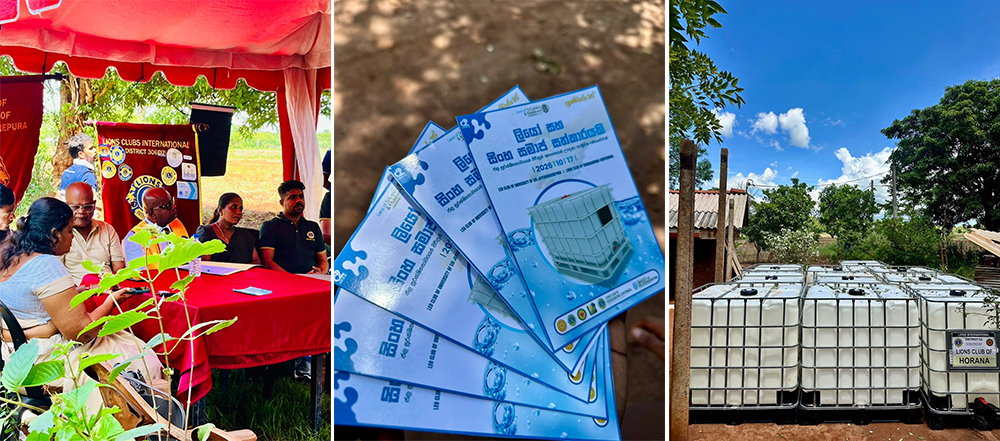

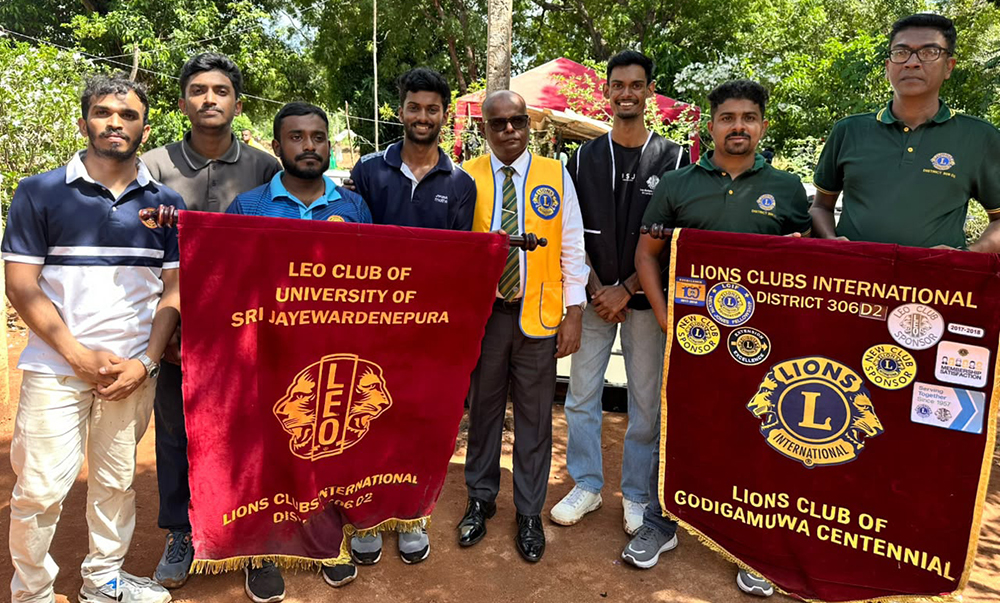
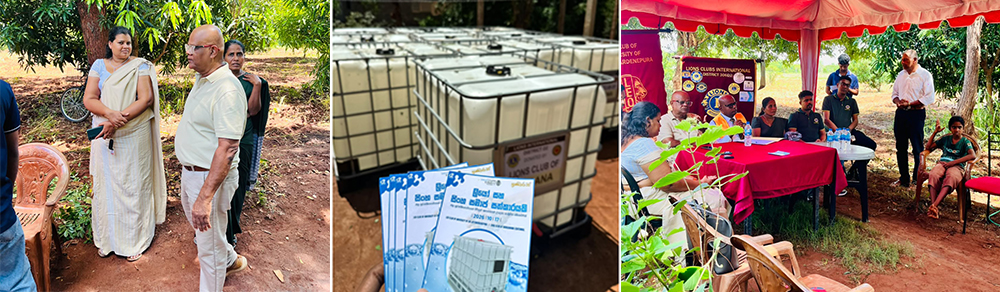
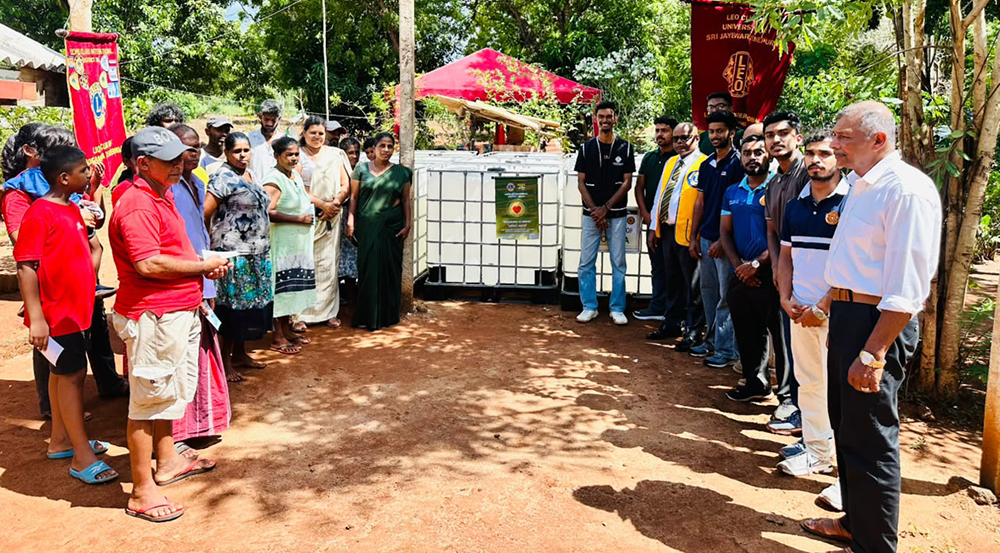
The Leo Club of the University of Sri Jayewardenepura has completed the second phase of its ‘Pranadhara ’26’ water security project, providing 10 water storage tanks to residents of Sewanagama in Habarana as part of an initiative to support families facing difficulties in accessing water.
The project was carried out in collaboration with the Lions Club of Godigamuwa Centennial, bringing together university youth leadership and community service to address an everyday challenge faced by residents in the area.
The donated tanks are intended to help households store water for drinking and other essential domestic needs, providing families with greater flexibility during periods when access to water is limited.
Water security remains an important issue for many rural communities in Sri Lanka’s Dry Zone. The United Nations Development Programme has previously highlighted the impact of prolonged droughts and climate variability on communities in the Dry Zone, including the importance of strengthening local water storage and community-managed drinking water infrastructure.
Against that background, ‘Pranadhara ’26’ focuses on a relatively simple but practical intervention helping families improve their ability to store water close to home.
The distribution programme was attended by a local council representative, the area’s Grama Niladhari and development officers, who joined Leo and Lions representatives in supporting the community initiative.
The University of Sri Jayewardenepura’s Leo Club has a longstanding relationship with the Lions Club of Godigamuwa Centennial. The university’s official website identifies the club as being sponsored by the Lions Club of Godigamuwa Centennial and says its purpose includes developing young leaders while encouraging service activities within communities.
That emphasis on youth-led community service is reflected in the latest phase of Pranadhara, where university students have moved beyond awareness-building to provide a practical resource directly to residents.
The initiative also highlights the value of smaller community projects in addressing local needs. While large-scale water supply infrastructure remains essential, household-level storage can offer additional support to families dealing with irregular access, particularly in areas vulnerable to dry conditions.
Sri Lanka continues to face wider challenges in extending safe and reliable drinking water to rural communities. In June 2026, the Government approved plans for a new small towns and rural water supply programme aimed at improving access to safe drinking water for around 60 families, reflecting the scale of the issue nationally.
For the Leo Club of the University of Sri Jayewardenepura, however, ‘Pranadhara ’26’ demonstrates how young people can contribute at community level while developing leadership, social responsibility and an understanding of challenges beyond the university environment.
With its second phase now completed, the project has delivered a clear message alongside the water tanks themselves: meaningful community service does not always require a large intervention — sometimes, meeting a basic need in the right place can make an immediate difference to everyday life.