


20 questions with the Sri Lankan javelin star


Sri Lanka’s world No. 1 javelin thrower, Rumesh Tharanga, has emerged as one of the country’s biggest sporting success stories following a remarkable rise on the international athletics stage.
From carrying his javelins on a motorcycle to competing against the world’s best, Tharanga’s journey has been shaped by sacrifice, determination and support from those who believed in his potential.
In an exclusive interview with NewsWire’s Azzam Ameen at the LOLC headquarters in Colombo, where he had arrived to sign another sponsorship agreement, Tharanga spoke about becoming world No. 1, his Olympic gold medal ambitions, the influence of India’s Neeraj Chopra, his love for cricket, corporate sponsorship and the challenges facing Sri Lankan athletics.
He also spoke candidly about criticism of athletes, the role of the armed forces, why he does not believe in simply complaining about financial difficulties, and the importance of giving children outside Colombo access to sporting facilities.
Tharanga also made a striking prediction: Sri Lanka could produce a javelin thrower even better than him within the next four years.
Here are 20 questions from the interview.
1. I have had the opportunity to interview several world No. 1 cricketers, including Kumar Sangakkara, Muttiah Muralitharan, Sanath Jayasuriya, Rohit Sharma, Dale Steyn and Steve Smith. But interviewing a Sri Lankan who is world No. 1 in javelin is something special. How does it feel to hear that title?
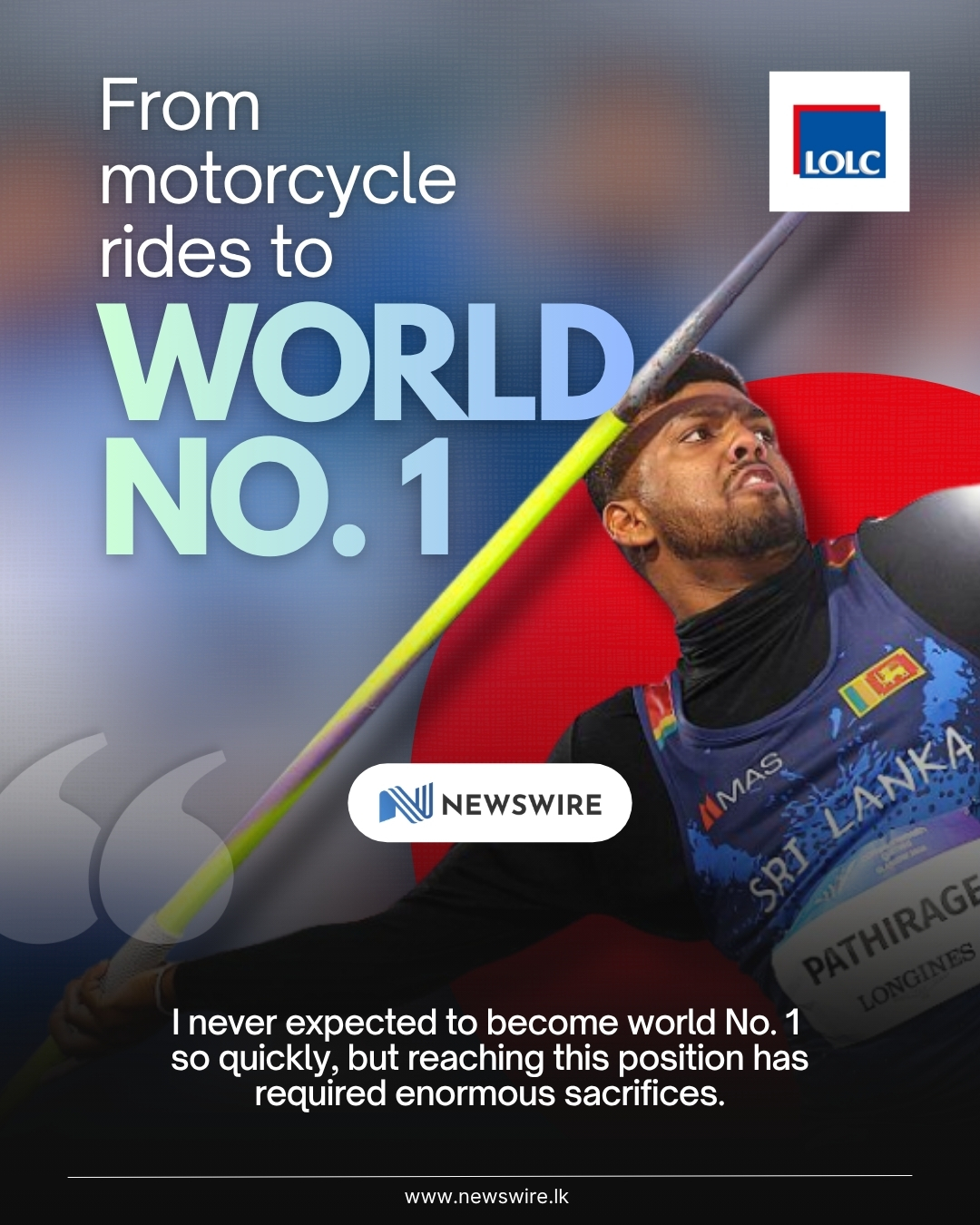
Rumesh Tharanga: I am extremely happy because I have made enormous sacrifices to reach this position. I never expected to become world No. 1 so quickly. Everything happened much better than I imagined. Based on the ranking points I have accumulated, I believe I can remain world No. 1 for around a year and a half, possibly even two and a half years. What makes me particularly happy is that I achieved this much earlier than expected. It is an incredible feeling.
2. Sri Lankans really started hearing your name in 2024 and 2025. Within a relatively short period, you became world No. 1. What is the secret behind your success?
Rumesh Tharanga: The biggest secret is sacrifice. I gave up almost everything that a normal 20- or 21-year-old would enjoy and focused entirely on my event. That was the most important thing I did. I dedicated myself to javelin rather than doing the things that many other young people my age were doing.
Even when it comes to food, I mostly eat traditional Sri Lankan food. We have been eating certain types of food since childhood, and our bodies have become accustomed to that system. If we suddenly change everything, it can affect the body. So instead of completely changing my diet, I make adjustments gradually. I have reduced oily foods and follow a nutrition plan. We have to pay attention to all those things because nutrition is an important part of an athlete’s performance.

3. Neeraj Chopra became a national sensation in India after winning Olympic gold. Did his achievement inspire you to believe that a South Asian athlete could dominate world javelin?
Rumesh Tharanga: Absolutely. Neeraj Chopra’s Olympic gold medal was a huge inspiration. It showed us that someone from South Asia could achieve something extraordinary in javelin. Then Pakistan’s Arshad Nadeem also achieved great success. Both are South Asian athletes, and that gave us a lot of confidence. If you look at India today, the competition in javelin is extremely strong. Neeraj Chopra’s success encouraged many young athletes to take up the event. India has developed a strong group of javelin throwers over the past few years. I believe we can create something similar in Sri Lanka. My next ambition is to win an Olympic medal for Sri Lanka.
4. You narrowly missed qualifying for the 2024 Paris Olympics. How disappointing was that, and do you believe participating in Paris could have changed your career?
Rumesh Tharanga: I was not extremely disappointed because, at the beginning of 2024, I was not even expecting to qualify for the Olympics. My performances improved significantly that year. Before my breakthrough, I was throwing around 77 metres, which was nowhere near the level required to qualify for the Olympics. Then I produced a throw of around 85 metres and suddenly found myself very close to qualifying. I missed the Olympic qualification standard by just five centimetres, which was disappointing, but I was also happy because I had never imagined reaching that level so quickly. If I had produced that throw earlier in the season, perhaps in January or February, I could have competed in another four meets, collected more ranking points and potentially qualified for the Olympics. I believe participating in Paris would have given me valuable international experience. At the World Championships the following year, I was capable of producing medal-winning throws, but I lacked the experience needed to deliver my best performance. I believe that if I had competed at the Olympics, I could have won a medal at the World Championships. Experience is extremely important at this level.
5. Your best performances seem to come during major competitions rather than training. What happens when you enter a stadium with thousands of spectators?
Rumesh Tharanga: That is something special about me. Normally, many athletes perform better during training and then struggle to produce the same performances in competitions. For me, it is the opposite. In training, most of my throws are around 85 to 88 metres. I have occasionally thrown around 91 metres. But when I compete, my performance improves significantly. It is not just about beating another athlete. The atmosphere makes a big difference. When there is a large crowd cheering, a beautiful stadium and an exciting competition, I feel motivated to throw further. The crowd gives me energy, and I enjoy performing in that environment.
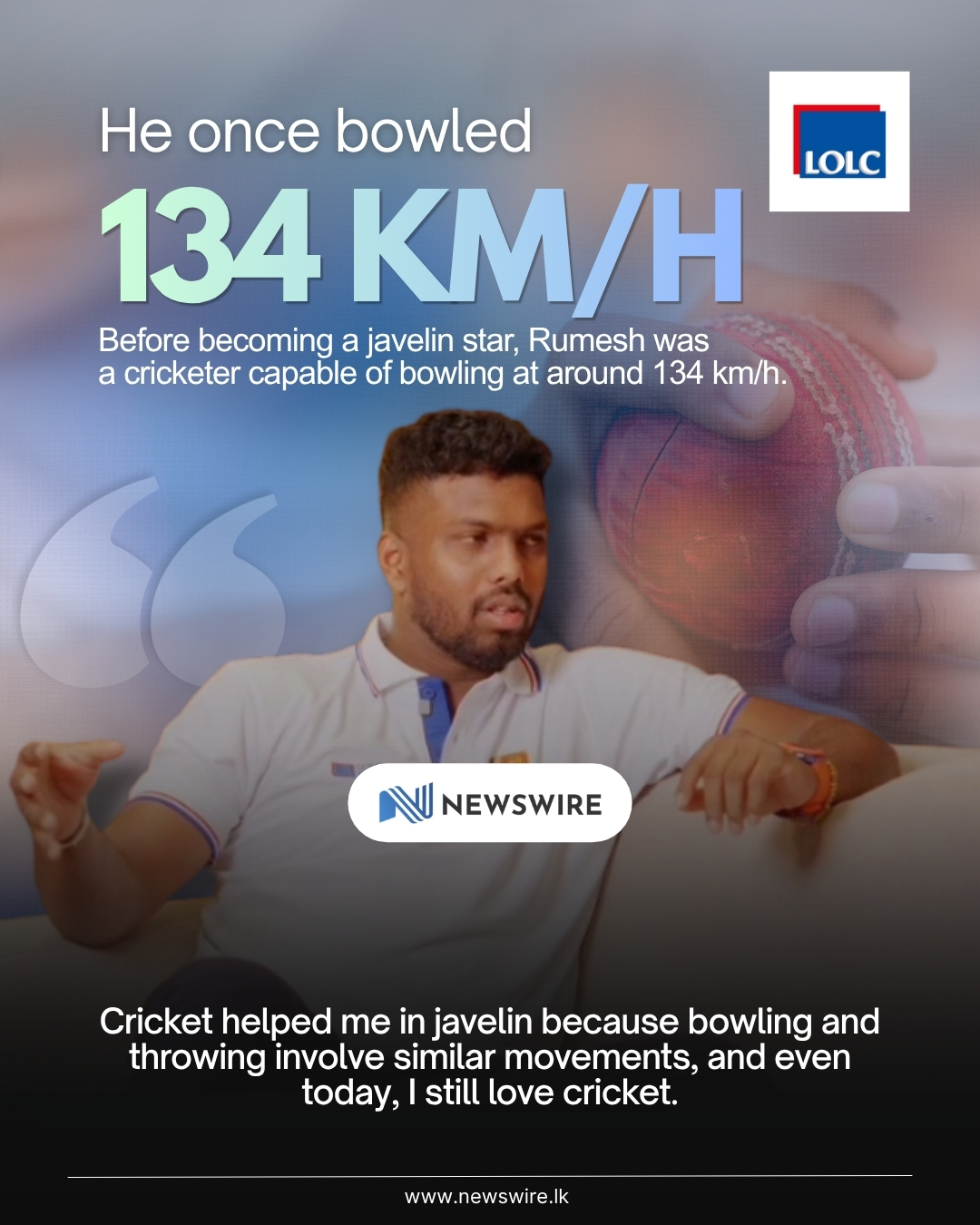
6. You were once a cricketer capable of bowling at around 134 km/h. Did you ever seriously consider pursuing cricket instead of javelin?
Rumesh Tharanga: Yes, I have always loved cricket, and I still enjoy playing it. When I was younger, I played cricket while also participating in athletics events such as discus, shot put and long jump. Cricket helped me with javelin because bowling and throwing involve certain similar movements. But there are differences, particularly in the release angle. I eventually decided to focus on an individual sport because my performance depends mainly on me. When you win a medal in an individual event, it is something you have achieved through your own performance. In cricket, you are part of a team, and other players also influence the result. With javelin, I can concentrate entirely on myself and improving my own ability. But even today, I still love cricket.
7. You have been quite outspoken about the lack of facilities for Sri Lankan athletes.
Rumesh Tharanga: People often criticise Sri Lankan athletes, saying we are not winning medals at the South Asian Games, Asian Games or Olympics. Some even question why we cannot qualify for the Olympics. But I believe they have no right to criticise athletes like that when we are not provided with the necessary facilities. If you take cricket, people criticise cricketers when they lose matches, get out for low scores or fail to perform. I believe people have a right to criticise cricketers because they are provided with the facilities they need. They have grounds, coaches and other resources necessary to perform at the highest level. But athletics is completely different. We do not have proper facilities. We do not have enough grounds or tracks. There is hardly anywhere for athletes to train properly. How can you expect us to win international medals under those circumstances? Sri Lanka needs to build at least two or three proper athletics tracks initially and gradually expand those facilities across the country. Ideally, there should be at least one proper track in every province. A child from Jaffna cannot be expected to travel all the way to Colombo just to train. We need to make athletics accessible to children across the country.
You cannot expect someone who trains on an ordinary grass field to suddenly go and win a medal at the Asian Games or Olympics. That is one of the main reasons Sri Lanka has struggled to win medals in athletics. If you want international medals, first provide athletes with the facilities they need. Then you can expect results. I genuinely believe Sri Lanka has the talent to win not just one medal, but two or three medals at major international competitions if we develop the proper infrastructure.

8. You have spoken about taking athletics to villages and encouraging more children to participate. What should Sri Lanka do to make that happen?
Rumesh Tharanga: The first thing is to provide children with the equipment and facilities they need. Not every child will become a javelin thrower. Some children might be good at the 100 metres, while others might be good at the 200 metres or another event. They need an opportunity to discover what they are capable of doing. If you give a 15-year-old child a bat and ball, that child will try playing cricket to see whether they can do it. In the same way, if you build a proper athletics track, children will go there and try running. They will want to see how fast they can run. That is how they discover their abilities. You cannot simply go to a village and tell a child to take up athletics and travel to Colombo for training. That child has to take a major risk. To become a serious athlete, you have to make sacrifices, and sometimes you cannot even continue a normal job alongside your training. Unless the facilities are available closer to home, many talented children will not take that risk. We must first create an environment where children can try different sports and discover their talents.
9. Rumesh, you have received support from several individuals and organisations throughout your journey. Even today, you signed a new sponsorship agreement with LOLC.
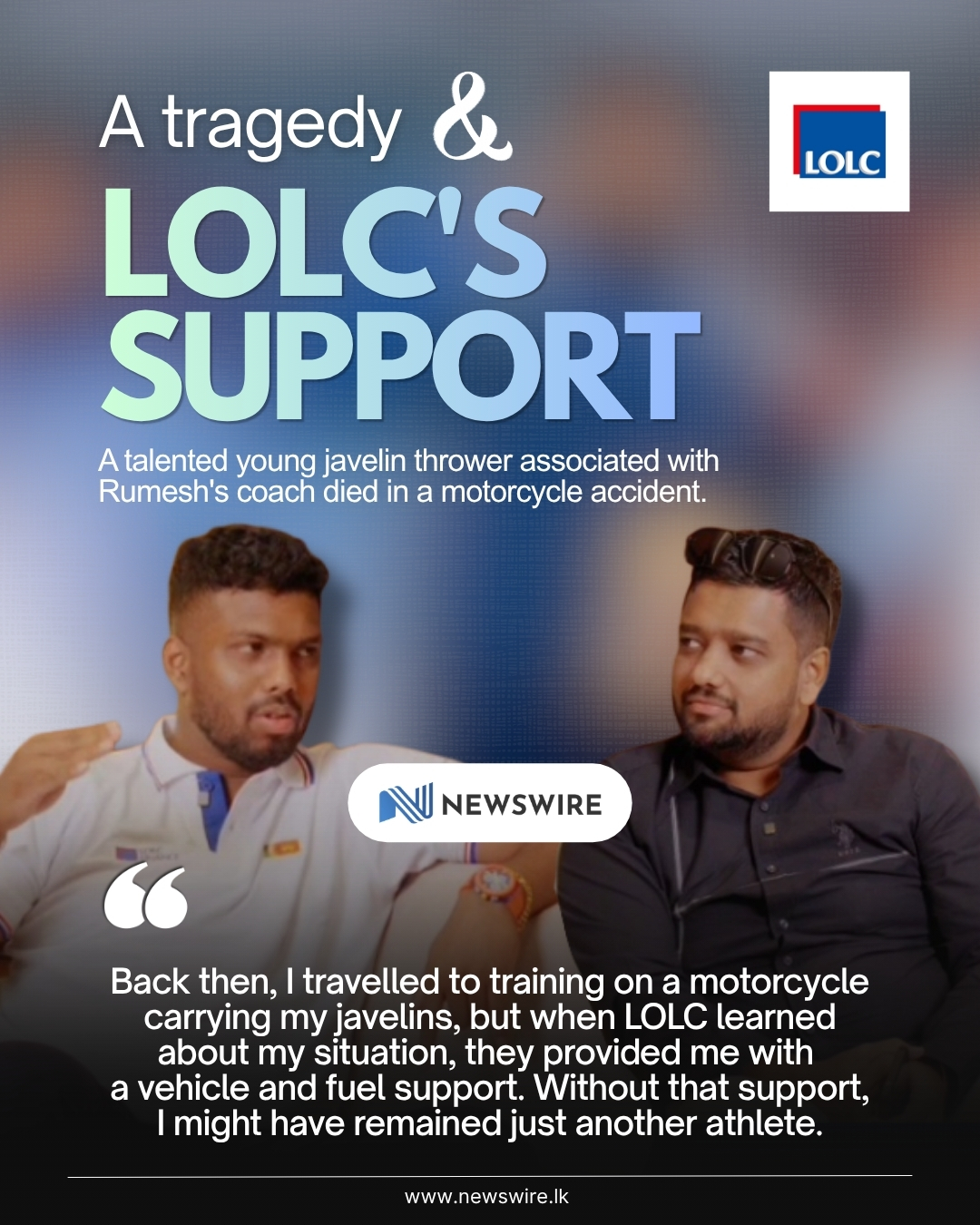
Rumesh Tharanga: I first became associated with LOLC after the South Asian Championships in 2025. At that time, I was travelling to training on a motorcycle with my javelins. I remember that one of the young throwers associated with our coach, a very talented athlete, had died in a motorcycle accident at a young age. When LOLC learned about my situation, they arranged a vehicle for me and provided fuel support. That made a huge difference to my daily life and training. As my performances improved, their support also increased. They continued to upgrade the assistance they provided as I progressed in my career. I am extremely grateful because that support allowed me to focus more on my sport. I always say that I receive these opportunities because I reached this level, but I also reached this level because people supported me along the way. Without that support, I might have remained just another athlete.
10. Your father played an important role in introducing you to throwing events. How much of your success do you owe to him?
Rumesh Tharanga: My father had a major influence on me. He was involved in throwing events himself. I remember he had built a throwing circle in front of our house, and I used to watch him practise.
Sometimes he would throw the shot put, sometimes the discus and sometimes the javelin. Watching him made me interested in these sports. That was how I first became involved in throwing events. I initially participated in discus and other throwing events before eventually moving towards javelin around 2016. That decision changed my sporting career. My father was a major influence during the early stages of my journey.
11. You have won some of the biggest titles in international athletics. Which achievement means the most to you?
Rumesh Tharanga: The World Athletics Ultimate Championship is the most special achievement for me. Then I would place the Commonwealth Games and Asian Games titles. The Diamond League trophy is also extremely important, but the Diamond League takes place every year. The Commonwealth Games and Asian Games are held once every four years. The World Athletics Ultimate Championship is also held every four years. That makes those achievements particularly special. Winning these major titles means a lot to me, especially because everything happened much earlier than I expected.
12. You have suggested that Sri Lanka could produce a javelin thrower even better than you within four years. Why do you believe that?
Rumesh Tharanga: I believe it is possible. When Neeraj Chopra became successful, many young Indians started taking javelin seriously. Now India has a very strong group of javelin throwers. I believe something similar is happening in Sri Lanka. Compared with a few years ago, there is much greater interest in javelin. I see it myself. After competitions, I receive so much attention on social media that sometimes it becomes difficult even to use Facebook. Young athletes are watching, learning and becoming interested in the event. If we provide them with the right opportunities and facilities, I believe Sri Lanka can produce another world-class athlete. Perhaps within four years, we could even produce someone better than me. That would be a very good thing for Sri Lanka.

13. You have mentioned that the armed forces play an important role in keeping Sri Lankan athletics alive. How important is that support for young athletes?
Rumesh Tharanga: It is extremely important. Even today, I believe the armed forces are one of the main reasons athletics continues in Sri Lanka. Many athletes join the Army, Navy or Air Force because they receive employment, a salary and the opportunity to continue training. They are given time away from their regular duties to train and compete. Without that support, many athletes would have to find other jobs and might not be able to continue their sporting careers. Athletes cannot always work a normal job and train at the highest level at the same time. The armed forces provide an opportunity for athletes to earn a salary while continuing to represent the country. That contribution is extremely valuable. I also joined the armed forces because I needed a way to support myself while continuing my training. I don’t think it is right to simply go to the media and complain that we don’t have money. I chose athletics because I love the sport. So I cannot simply say that I don’t have money and leave it at that. I have to find a way to continue doing what I love. That is one of the reasons I joined the armed forces. I can earn a salary while continuing my training.
14. Some athletics observers believe you could challenge the world record and perhaps even throw 100 metres. Is that something you are thinking about?
Rumesh Tharanga: I have not seriously thought about throwing 100 metres yet. My first target is to improve the Asian record. After that, I can think about the world record, which is more than 98 metres. Throwing 100 metres would be an extraordinary achievement. There are also safety concerns when a javelin travels such a long distance. The modern javelin was designed with safety in mind following very long throws in the past. For now, I want to improve gradually rather than immediately focusing on 100 metres. But I believe there is room for improvement.
15. In cricket, fast bowlers sometimes try to reach their maximum speed during training. Have you ever tried to produce an exceptionally long throw in training? And does the location or weather affect how far you can throw, particularly in Sri Lanka?
Rumesh Tharanga: In training, we do not really attempt those maximum throws in the same way because there is a risk of injury. The competition environment is different. That is when I perform at my best. The location and weather conditions also make a difference. In places such as Brazil, Mexico and Panama, the javelin can travel further under certain conditions. There are several factors, including the weather, air conditions and technique. In Japan, for example, I have found it more difficult to produce my best performances. Conditions in Europe can be different. In Sri Lanka, my longest throw has been around 89 metres. When it rains, the humidity affects the javelin’s flight. Under hotter conditions, the javelin can travel further. So the conditions at a competition can make a considerable difference to performance.
16. Many young people now want to become javelin throwers. Is physical strength the most important factor, or is there something else they should focus on?
Rumesh Tharanga: Strength alone is not enough. You cannot simply pick up a javelin and expect to throw it 50 or 60 metres. For example, someone might be able to throw a stone a long distance, but that does not mean they can throw a javelin the same distance. Javelin requires proper technique. You have to develop the correct technique through training and practice. That takes time and a lot of hard work.
Young athletes should concentrate on learning the technique properly rather than thinking only about strength.
17. When your javelins were damaged during travel, Sri Lankans became extremely concerned. How did you feel when you discovered what had happened?
Rumesh Tharanga: I was very upset when that happened. These javelins are made from extremely strong material. Normally, they are not something that can be broken easily. You cannot simply break them by hitting them against the ground or through ordinary handling. I believe something significant must have happened during transport, perhaps because of heavy luggage or some other pressure. But I cannot say exactly what caused the damage. Things like this can happen, although it was very disappointing at the time. As an athlete, you have to deal with these situations and continue moving forward.
18. You are planning to play cricket again in the Peterite Cricket League 2026. When was the last time you played hard-ball cricket, and can fans expect to see you bowling fast again?
Rumesh Tharanga: I think the last time I played a hard-ball cricket match was in 2023. Since then, I have mostly played softball cricket occasionally. It has been a long time since I played hard-ball cricket, so I do not know exactly how it will go. I will try my best. I think I will mainly bowl because batting with a hard ball is difficult when you have been playing softball cricket. The two are quite different. It should be an interesting tournament, and I am looking forward to it. I still enjoy cricket very much.
19. You have received support from organisations such as LOLC during your journey to becoming world No. 1. Have you considered working with LOLC and other organisations to help develop the next generation of Sri Lankan athletes?
Rumesh Tharanga: Definitely. One day, I will have to retire from competitive athletics. When that happens, I want to help develop the next generation of Sri Lankan athletes. I do not want to retire and simply stay at home doing nothing. I want to help young athletes and share what I have learned throughout my career. I have already thought about doing something in that area. But I cannot focus on several things at the same time. Right now, my main responsibility is to concentrate on my own event and continue performing at the highest level. Once I retire from javelin, I will seriously look at how I can help young athletes. I definitely want to do something for the future of Sri Lankan athletics.
20. Sri Lankans have celebrated your victories and heard the national anthem played at major international competitions. But the biggest dream is hearing it at the Olympics. Is winning gold at the 2028 Los Angeles Olympics now your ultimate ambition?
Rumesh Tharanga: Absolutely. That is my next big target. I want to win Olympic gold and hear Sri Lanka’s national anthem played at the Olympics. That would be an incredible achievement, not just for me but for the entire country. I know how much Sri Lankans support me. I have seen how happy people become when I win. That motivates me to work even harder. But I also want people to understand that Sri Lanka can produce many more international medal winners. Before expecting medals from young athletes, we must provide them with facilities and opportunities. There are countries with fewer economic resources than Sri Lanka that have won Olympic medals because they have developed their athletics programmes. I believe we can do the same. I am extremely grateful to everyone who has supported me throughout my journey. I want to repay that support through my performances and bring more honour to Sri Lanka.