

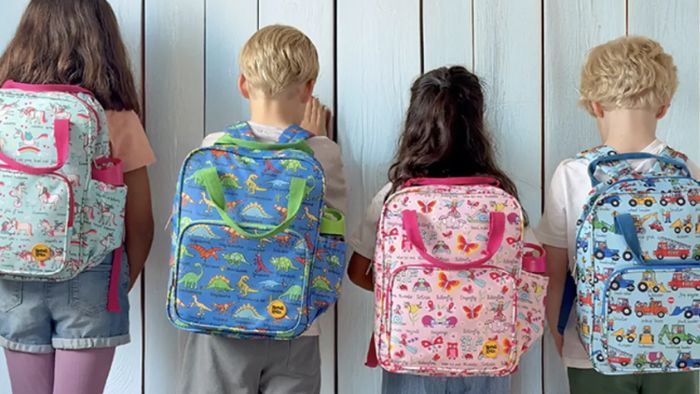
In a country where millions of children still walk to school with backpacks nearly half their size, Kerala is preparing to do something quietly radical. Beginning next academic year, the state will dismantle the traditional “backbench” classroom and introduce strict limits on the weight of schoolbags — a reform that education officials say is long overdue in a system that has long prized discipline over comfort.
The changes stem from a detailed study by the State Council of Educational Research and Training, which found that heavy bags and rigid seating arrangements were not only affecting children’s posture and health but also shaping how they participated in class. The council’s recommendation — that a schoolbag should weigh no more than 10 percent of a child’s body weight — aligns with global standards increasingly adopted across Europe and East Asia.
Kerala’s Education Minister, V. Sivankutty, described the shift as part of a broader effort to make classrooms “more democratic,” replacing long rows of benches with semi‑circular or cluster seating that allows every child to face the teacher and one another. Several schools have already piloted the new layouts, reporting livelier discussions and fewer students retreating into the anonymity of the back row.
The move comes at a moment when India is rethinking the physical and emotional architecture of its schools. The National Education Policy has encouraged states to experiment with flexible learning spaces, and Kerala — long regarded as a laboratory for social-sector innovation — has been among the first to translate those ideas into structural change.
For many parents, the promise of lighter bags is especially welcome. Studies across Indian cities have documented children carrying loads far above recommended limits, often leading to back pain, fatigue, and reduced concentration. By introducing scientific guidelines and reducing the number of books required each day, officials hope to ease a burden that has quietly shaped childhood for decades.
The state will publish the full set of recommendations for public feedback, inviting teachers, parents, and students to weigh in before the reforms are finalised. It is a characteristically Kerala approach: consultative, incremental, and rooted in the belief that small structural changes can produce long-term social dividends.
If successful, the initiative could offer a model for other Indian states — a reminder that educational reform does not always require sweeping legislation. Sometimes, it begins with something as simple as where a child sits, and how much weight they carry on the way to school.