

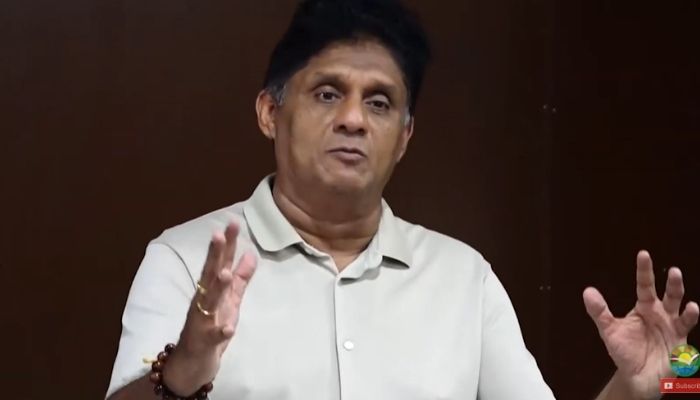
Opposition Leader Sajith Premadasa has warned that Sri Lanka is facing significant economic risks, accusing the government of misleading the public with inaccurate figures instead of transparently presenting the country’s financial position.
He made the remarks during a meeting with social media activists at the Samagi Jana Balawegaya (SJB) headquarters.
Premadasa said the government, led by the President, is not adequately informing the public about the risks and is instead projecting a false sense of stability, even as prices of essentials such as fuel and milk powder continue to rise.
He noted that international benchmarks recommend foreign reserves sufficient to cover at least three months of imports. While the President has stated reserves are around $7 billion, he said monthly import costs are about $2 billion, meaning roughly $6 billion is required for three months of cover.
He added that around $1.2 billion of reserves are held in Chinese yuan, which he claimed is not usable, leaving about $5.8 billion in effective reserves.
Premadasa further said that although foreign remittances have improved, instability in the Middle East could reduce inflows due to possible job losses, a risk he said has not been properly addressed by the government.
He warned that the end of the IMF programme in March 2027 could remove key stabilising support from international financial institutions. Combined with weaker remittances, rising fuel prices, and currency depreciation, he said this could lead to renewed economic instability.
He also noted that external debt repayments are expected to rise sharply from 2028, increasing from $1.5 billion to $3.5 billion. He said reserves therefore need to be strengthened, adding that while the IMF has indicated a target of $13.4–$14 billion, current levels are about half of that.
Premadasa further said that achieving this target would require monthly reserve accumulation of around $600 million, while current inflows are only about $60 million. (Newswire)