

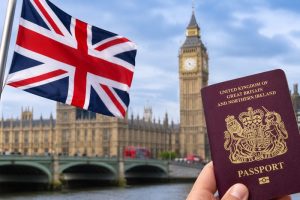
The United Kingdom has announced major immigration reforms that will require most foreign workers and other migrants to wait 10 years instead of five before becoming eligible for permanent residency.
Home Secretary Shabana Mahmood unveiled the government’s new Earned Settlement policy in Parliament on Monday (02), introducing stricter requirements for migrants seeking the right to live and work permanently in Britain.
Under the reforms, permanent settlement, officially known as Indefinite Leave to Remain (ILR), will no longer depend primarily on completing five years of residence. Instead, eligibility will be determined by factors including earnings, employment, English-language proficiency, immigration compliance and contributions to the country.
The changes, expected to be introduced during 2027, could affect Sri Lankan nationals currently living and working in the UK who have not yet obtained permanent residency.
Key changes under the new policy
The government has outlined different settlement periods depending on migrants’ circumstances.
* 10 years: The standard qualifying period for most migrants, including workers earning less than £50,000 annually.
* Five years: Higher earners on salaries above £50,000 and eligible public service workers, including doctors, nurses and teachers.
* Three years: Migrants earning more than £125,000 annually and those entering through certain highly skilled talent schemes.
* Up to 30 years: Refugees who entered the UK illegally, including through small-boat crossings.
* 20 years: Refugees who did not arrive through approved safe and legal routes, with possible reductions for those who work or study.
* Five years: Refugees arriving through Home Office-approved safe and legal routes.
Migrants who have breached immigration rules could also face a 20-year qualifying period.
Special provisions for care workers
The government has announced transitional arrangements for care workers who entered the UK before the publication of its immigration White Paper in May 2025.
Eligible care workers who complied with their visa conditions, including earning at least £25,000 annually in the social care sector, will retain the existing five-year settlement route.
Those who failed to meet the conditions will be offered an opportunity to apply for another five-year care visa, allowing them to continue working towards permanent residency.
The government said approximately 250,000 care workers and their dependants entered or switched to the social care route between 2022 and 2025.
Stricter English and financial requirements
Under the proposed rules, migrants seeking permanent residency will also have to meet four mandatory conditions.
These include having no criminal record, demonstrating a high standard of English equivalent to A-level English as a foreign language, owing no outstanding debts to the British taxpayer and having made at least three years of National Insurance contributions.
Migrants who have claimed welfare benefits will need to demonstrate five consecutive years without relying on benefits before applying for settlement.
More than 500,000 migrants could face longer waits
The UK Home Office estimates that more than 500,000 migrants will have to wait longer than five years to qualify for permanent residency under the reforms.
However, the government has said migrants will not automatically be required to leave Britain because of the longer qualifying period. Eligible individuals will be able to renew their temporary visas while working towards settlement.
The government has also confirmed that people who already hold permanent settlement status will not have that status withdrawn.
Family members of British citizens, Hong Kong British Nationals (Overseas) and members of the armed forces will retain their existing settlement pathways.
Mahmood said permanent settlement should reflect migrants’ contributions to the country rather than simply the number of years they have lived in Britain.
The proposals have drawn criticism from refugee organisations and migrant-rights groups, which have raised concerns about prolonged uncertainty for migrants and refugees.
What it means for Sri Lankans
The changes could have implications for Sri Lankan students, skilled workers, healthcare professionals and their families living in Britain, particularly those planning to apply for permanent residency in the coming years.
However, eligibility will depend on the visa category, employment, earnings and whether the applicant qualifies for any exemptions.
The government has indicated that the reforms will be implemented during 2027, with the detailed immigration rule changes still to be introduced.
Until those changes take effect, the existing settlement rules will continue to apply.
The announcement follows a public consultation that received more than 200,000 responses, with particular attention given to the position of care workers already living in the UK.
Source: UK Home Office and Home Secretary Shabana Mahmood’s statement to Parliament on November 2, 2026. (Newswire)