

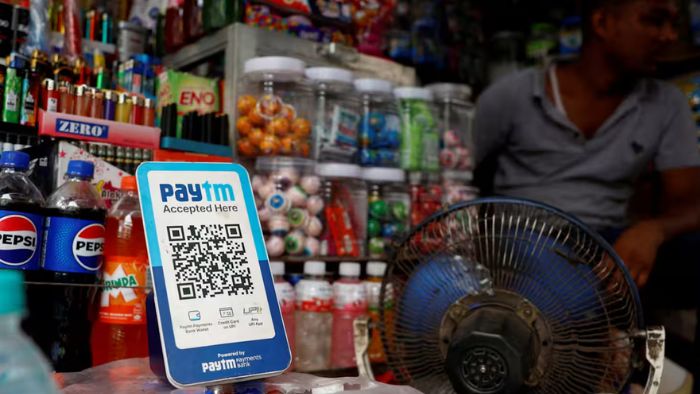
India’s QR code payment network is gaining footholds beyond its borders, with Japan among the countries looking to adopt the pioneering digital infrastructure to cater to the growing number of Indian tourists.
The United Payments Interface debuted in 2016 as a government-led initiative and has since become part of everyday life.
“I’ve started using UPI for even taxi rides and small purchases,” said a 39-year-old man in Mumbai. “I hardly ever carry cash.”
The service generally can be used for free by anyone with an Indian bank account. UPI allows for a single QR code to be used by any payment app.
UPI transactions jumped 42% in fiscal 2024 to 185.8 billion, according to National Payments Corp. of India (NPCI), the system’s developer and operator. In 2023, 49% of instant-payment transactions worldwide went through UPI, a U.S. payment app company reports. A June 2025 report from the International Monetary Fund called it the “world’s largest real-time payment system.”
The Indian government and NPCI have been working in recent years to export the payment infrastructure. Since UPI was launched in Bhutan in 2021, it has expanded to a total of eight countries including Singapore, France, Sri Lanka and the United Arab Emirates.
Japanese IT services company NTT Data is partnering with NPCI to enable acceptance of the payments system in Japan on a trial basis in fiscal 2026. The companies are considering ways to connect Japanese and Indian payment networks. When Indian tourists in Japan use UPI for payments, their bank account in India will be debited.
NTT Data offers payment terminals and processing for businesses in India and Southeast Asia. Around 6 million stores in India, including e-commerce businesses, use its services. In Japan, the company will promote UPI to merchants.
When Takeo Ueno, CEO of NTT Data Payment Services India, spoke at an event in November, he called UPI “innovative” and “state of the art.”

The hope is to tap spending by visiting Indian tourists. Japan saw 315,100 visitors from India in 2025, up 35% from 2024, the Japan National Tourism Organization reports.
Indians are traveling more worldwide. McKinsey has projected the number of outbound trips from India rising from 13 million in 2022 to 90 million in 2040, as growing middle-class incomes fuel an appetite for travel abroad.
Other players have introduced services that simplify international payments. China’s Ant Group is expanding Alipay+, which enables a single QR code to be used with multiple participating payment services at affiliated merchants in more than 100 countries and regions.
UPI took off in India because the government positioned it as a shared payment platform. Banks and fintech companies developed their payment apps with UPI as a common standard. The infrastructure also was helped along by New Delhi promoting adoption of its Aadhaar identification program, which encouraged even low-income earners to open bank accounts.
UPI accounted for 58% of in-store payments in India in 2024 and is expected to reach 76% in 2030, U.S. payments company Worldpay reports. Cash transactions are forecast to fall from 15% to 7% over that period.
NPCI also is helping nations such as Peru and Namibia develop their own payment infrastructure based on UPI. Many countries want UPI expertise and technology, said Ritesh Shukla, CEO of NPCI International Payments, adding that the company aims to expand digital payments worldwide. (Nikkei Asia)