

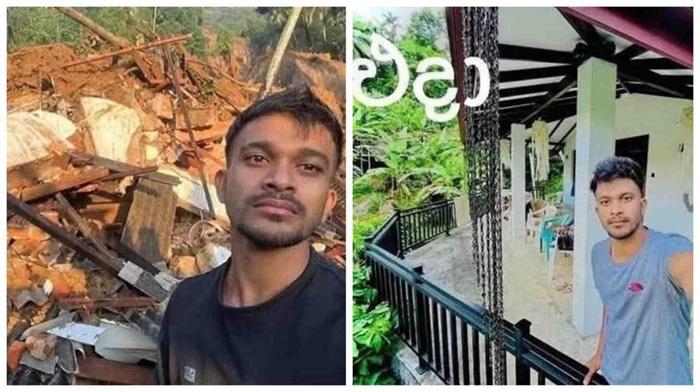
The United Nations Office for the Coordination of Humanitarian Affairs (OCHA) says initial assessments indicate that more than 15,000 homes have been destroyed due to the impact of Cyclone Ditwah.
The OCHA further said that over 200 roads remain impassable, at least 10 bridges have been damaged, and sections of the rail network and national power grid affected.
The initial assessments also report that 998,918 people across all 25 districts have now been affected, with 212 deaths reported and 218 people missing. More than 180,000 people from over 51,000 families are sheltering in 1,094 government-run safety centres as search and rescue efforts continue.
Cyclone Ditwah made landfall on 28 November before moving back over the Bay of Bengal, triggering some of the most severe flooding Sri Lanka has seen since the early 2000s.
The hardest-hit districts include Gampaha, Colombo, Puttalam and Mannar, as well as Trincomalee and Batticaloa, while deadly landslides in the central hill country have devastated Kandy, Badulla and Matale.
Severe disruption to electricity, mobile and communications, and transport networks are reported in northern districts such as Jaffna, with entire villages isolated.
Access to clean water also remains a major concern, with several areas reporting little or no supply.
Sri Lanka’s already fragile health system is under severe pressure, OCHA said.
Several district hospitals remain flooded and are receiving only limited supplies, with critically ill patients being airlifted to functioning facilities.
The World Health Organization (WHO) warned that floods significantly raise the risk of vector-borne, food-borne and water-borne diseases, urging communities to prevent mosquito bites, ensure food safety and use safe drinking water wherever possible.
The United Nations in Sri Lanka activated its emergency coordination system on Sunday to scale up a unified response with government agencies and humanitarian organizations.
Sector coordination has been set up across food security, health, water and sanitation (WASH), education, protection, shelter and early recovery, while a multi-sector needs assessment is under way with disaster management authorities to identify the most urgent gaps.
Full report: https://news.un.org/en/story/2025/11/1166474 (Newswire)