

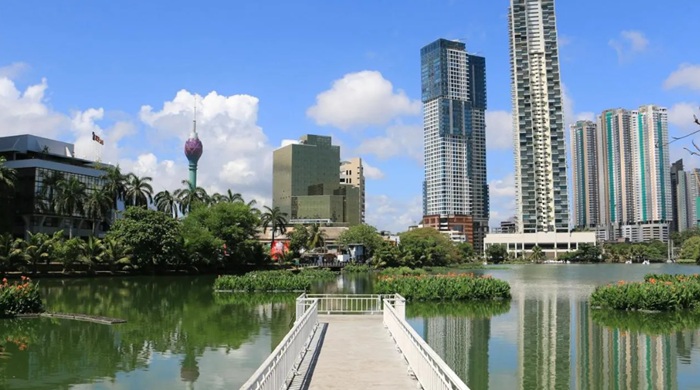
The University of Hull’s internationally recognised expertise in flood resilience and water management is extending its reach into South Asia, as Professor Stewart Mottram spearheads a new global research partnership focused on Colombo’s urban wetlands.
Backed by a £300,000 award under the British Academy’s International Interdisciplinary Research Projects 2026, the initiative will help Colombo’s communities reimagine and safeguard the wetlands they live alongside.
These vital ecosystems not only mitigate flood risks but also support biodiversity and strengthen urban resilience, positioning Colombo as a model for climate‑adaptive city planning.
Full statement from the University of Hull, UK:
University of Hull research expertise in flood resilience and living with water is going global, as Professor Stewart Mottram leads a new international research partnership focused on urban wetlands in Colombo, Sri Lanka.
The £300k award, announced as part of the British Academy’s International Interdisciplinary Research Projects 2026, will support Colombo communities to reimagine and safeguard the wetlands they live alongside – vital landscapes that play a crucial role in flood risk management, biodiversity and urban resilience.
The research builds directly on the University of Hull’s internationally recognised work on flooding, water cultures and community resilience. Professor Mottram and co-investigator Professor Briony McDonagh will apply to a global context methods developed through the AHRC-funded Risky Cities project, an earlier collaboration where they used histories and the creative arts to engage Hull communities in climate resilience.
The new project, Rewriting Colombo’s Wetlands: Harnessing stories, histories, and heritage for inclusive wetland management in Sri Lanka, brings together researchers from the University of Hull, the International Water Management Institute (IWMI) in Colombo, and the University of Kelaniya, Sri Lanka. Working in partnership with diverse local communities, the team will explore how cultural heritage, memory and storytelling can inform inclusive approaches to wetland management.
Stewart Mottram is Professor of Literature and Environment at the University of Hull, he said: “By reconnecting people with the histories and stories of their wetlands, we can help foster a sense of stewardship and understanding of the value of these biodiverse habitats.”
Hull and the wider Humber region have a long history of living with water – shaped by rivers, estuaries, wetlands and recurrent flooding. That experience has informed the University of Hull’s position as a national and international leader in interdisciplinary research on flood risk, climate adaptation and water heritage.
Colombo, Sri Lanka’s commercial capital, faces parallel challenges. Its wetlands are globally significant for biodiversity and play a vital role in absorbing floodwater, earning the city recognition as a UNESCO-designated ‘Wetland City’ under the Ramsar Convention. Yet rapid urban development, pollution and climate pressures are placing these wetlands under severe threat.
Professor Mottram’s involvement came after researchers from the International Water Management Institute in Colombo approached him about a potential collaboration, recognising the distinctive perspective Hull researchers bring to questions of water and climate adaptation.
Reflecting on the origins of the project, he said: “We were approached because of the work we’ve been doing at Hull on water, flooding and environmental humanities. What we realised very quickly was that the methods we developed with communities in the Humber could help inform approaches to a different cultural context, while still addressing the same fundamental challenge: how people live with water in places shaped by flooding.”
The project aims not only to benefit Colombo, but to develop transferable models for wetland stewardship that can be applied across Sri Lanka and the wider Global South. (Newswire/ University of Hull)