

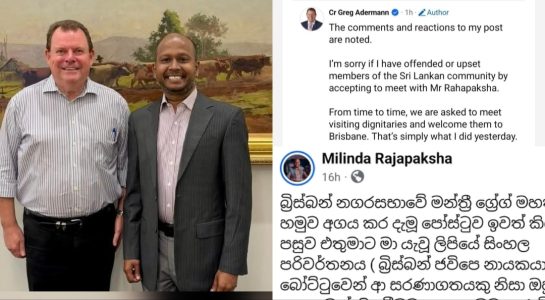
Sri Lanka Podujana Peramuna (SLPP) activist Milinda Rajapaksa has written a strongly worded letter to Brisbane City Councillor Greg Adermann after the Australian politician announced his decision to remove a Facebook post about their meeting following criticism from members of the Sri Lankan community.
Rajapaksa, who is currently visiting Australia and engaging with SLPP supporters, has also been raising concerns over what he describes as political injustice against opposition figures in Sri Lanka, including the arrest of SLPP MP Namal Rajapaksa.
The controversy began after Councillor Adermann shared a photograph of himself with Rajapaksa, welcoming the Sri Lankan politician to Brisbane.
In his original post, Adermann highlighted Rajapaksa’s political background, including his previous roles at the Colombo Municipal Council and the Government Information Department.
However, the post attracted critical comments from social media users, including members of the Sri Lankan community in Australia who questioned the councillor’s decision to meet the SLPP activist.
Responding to the criticism, Adermann apologised to those who had been offended or upset by the meeting.
“I’m sorry if I have offended or upset members of the Sri Lankan community by accepting to meet with Mr Rajapaksha,” he wrote.
The councillor explained that he occasionally meets visiting dignitaries and welcomes them to Brisbane, stressing that the meeting did not represent an endorsement of any political position in Sri Lanka.
He subsequently announced that he would delete the original post, describing the issue as emotional and divisive.
Following the development, Rajapaksa published a lengthy letter addressed to Adermann, thanking him for the meeting while strongly criticising the Sri Lankan government and supporters of the ruling National People’s Power (NPP).
In the letter, Rajapaksa alleged that individuals associated with the ruling party, including its supporters in Australia, had coordinated an online campaign targeting the councillor.
He claimed the campaign involved abusive comments, negative social media reactions, offensive images and threatening emails.
Rajapaksa further accused the Sri Lankan government of using intimidation and online harassment against political opponents, drawing comparisons with authoritarian political systems.
He expressed regret that Adermann had faced criticism simply for meeting him and argued that the actions of those involved did not represent the wider Sri Lankan community.
Rajapaksa also defended his political background, referring to his education, international experience and efforts to engage with political leaders and public officials overseas.
Despite the controversy, he thanked Adermann for the hospitality extended during their meeting and expressed hope that the councillor would visit Sri Lanka in the future.
The incident has generated political discussion on social media, highlighting divisions among Sri Lankans overseas over the Rajapaksa family and the country’s current political situation.
While Adermann has publicly clarified that the meeting did not amount to taking sides in Sri Lankan politics, Rajapaksa has portrayed the backlash as an example of what he alleges is political intolerance by supporters of the ruling party. (Newswire)