

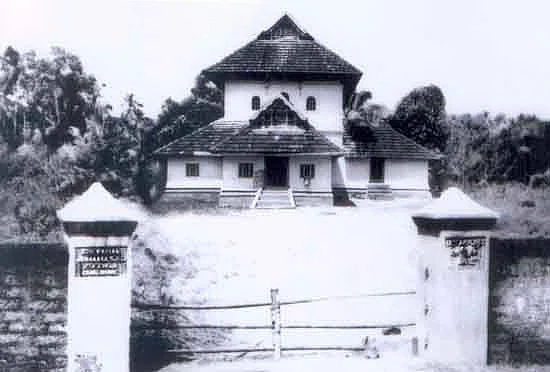
The Cheraman Juma mosque, located in Kodungallur, was built by the then king of Kerala when he embraced Islam
Cheraman Perumal, who was then the king of Kerala, with Kodungallur as its capital, embraced Islam and announced the construction of the Cheraman Juma mosque before heading for Mecca. The mosque, the first in India, was then built in 629 AD. He had also written to other chieftains and, eventually, mosques were built in different places.
Malik Bin Dinar, a Persian scholar and explorer, was involved in building the mosque. It is believed that the mosque was first renovated in the 11th century and again about 300 years ago. The last renovation was done in 1974 when an extension was constructed. The ancient part of the mosque was left untouched and is still preserved. Another extension was made in 1994 and later in 2001. Kodungallur is close to what was earlier known as Muziris, a bustling hub on the Malabar coast.
Kodungallur emerged as a major attraction following the Malabar rebellion of 1921, which impacted Islamic history in Kerala. The ulemas of Malabar sought refuge in Kodungallur to escape police atrocities. The Muslim Aikya Sangham was established there two years later; it expanded rapidly, setting up nearly 1,500 schools in Muslim-dominant areas of Cochin and Malabar. The Mappilas, as they are known, trace back to Arab traders who arrived on the Malabar Coast in the 7th century.
The mosque underwent a 30-month conservation and reopened in 2022. Renovation began in 2019 under the auspices of the Muziris Heritage Project, a government effort to protect Kerala’s historic and cultural landmarks. It aimed to restore the mosque’s traditional elegance.
The Muslims of Kerala had a major role in trade and anti-colonial resistance, according to a government official. “Their legacy endures in the state’s language, cuisine, and socio-political development, a vibrant reflection of the depth of their entrenchment in history.
According to a spokesperson of the mosque, offerings of Iftar during the fasting month of Ramadan are made by the non-Muslim communities as well. (Khaleej Times)