
The Sri Lankan government has rejected concerns raised by a United Nations Special Rapporteur over the proposed extension of judges’ retirement ages, insisting that the 22nd Amendment is part of broader judicial reforms and is not intended to prolong the tenure of particular judges.
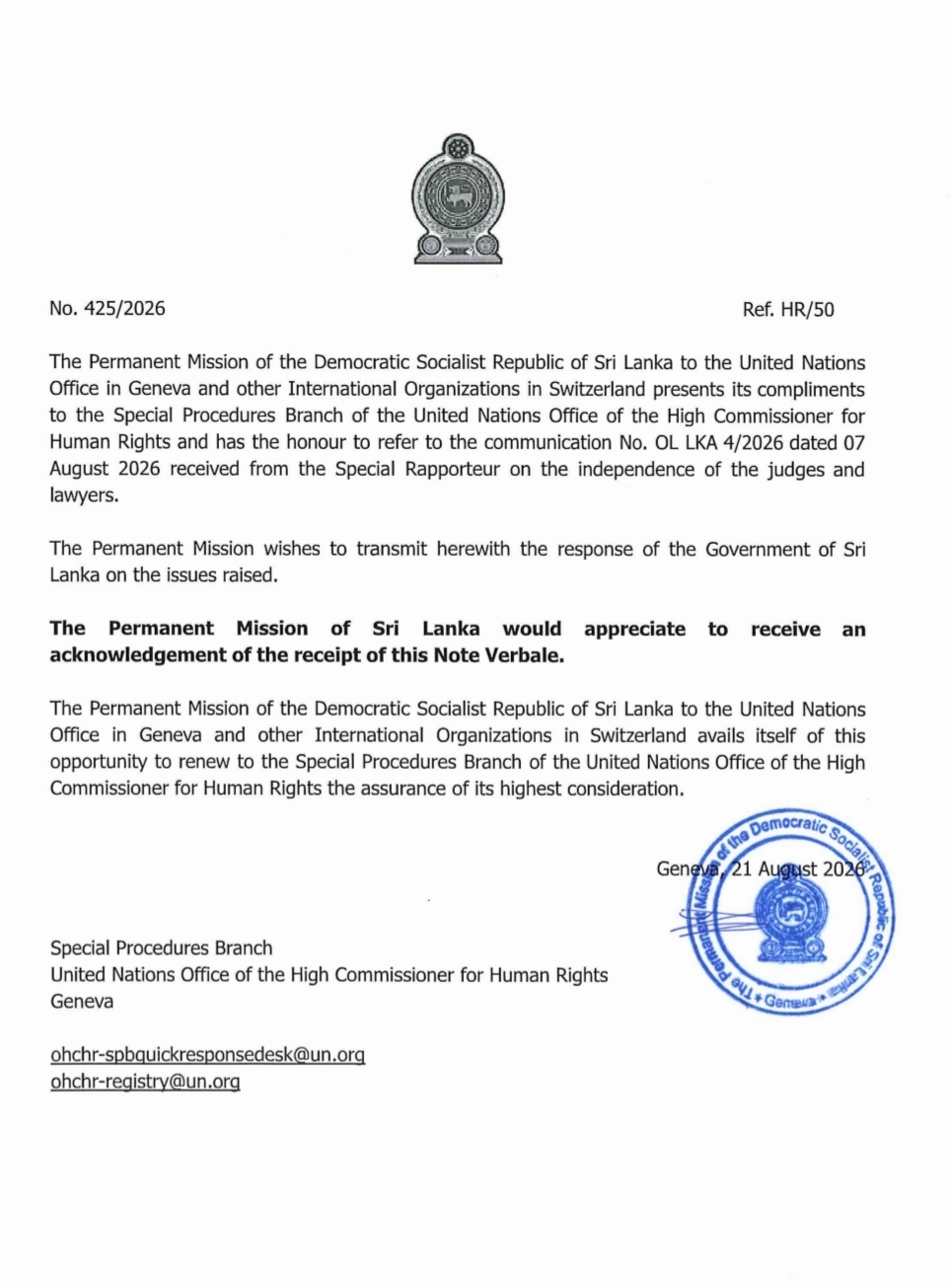
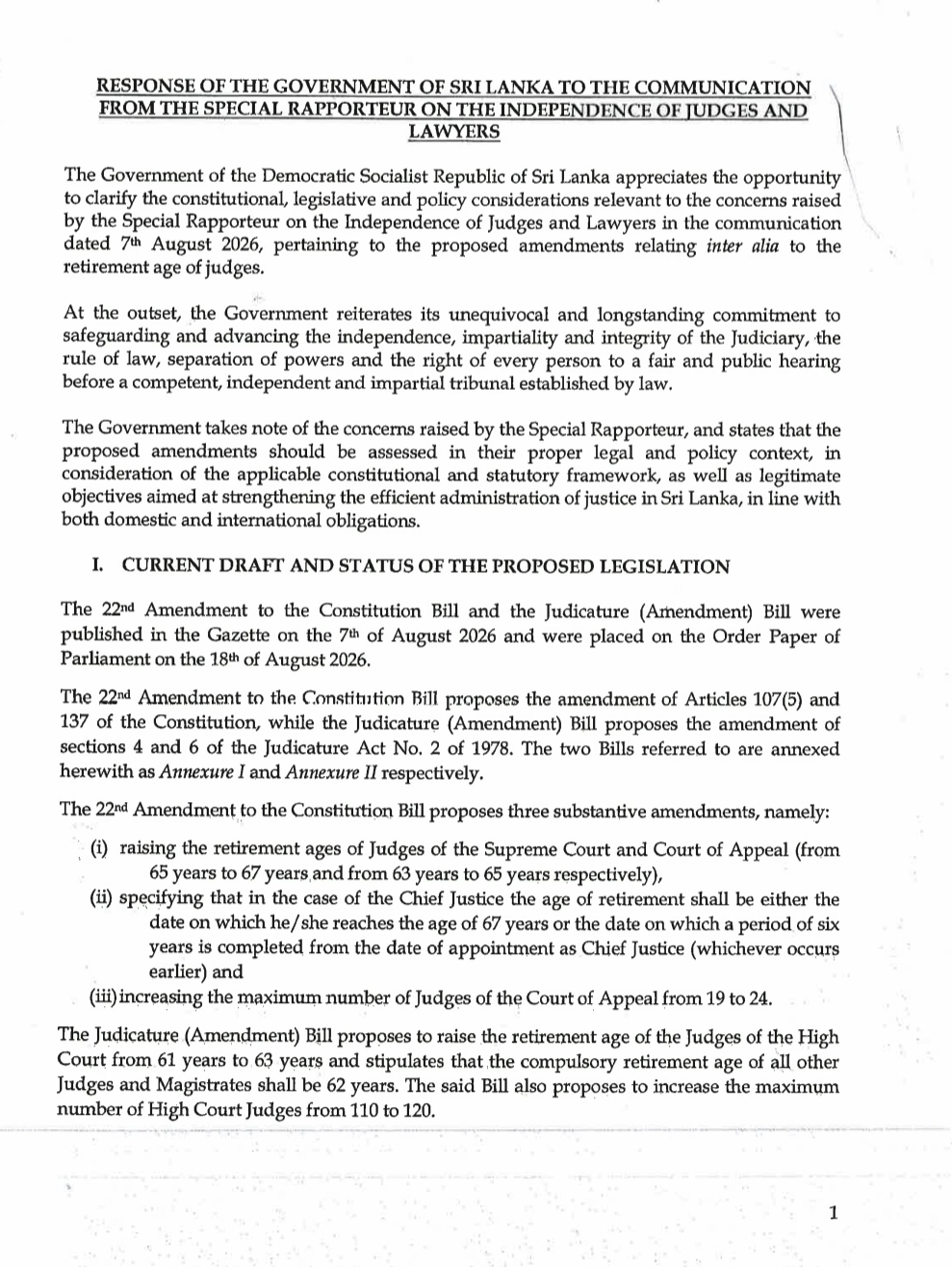
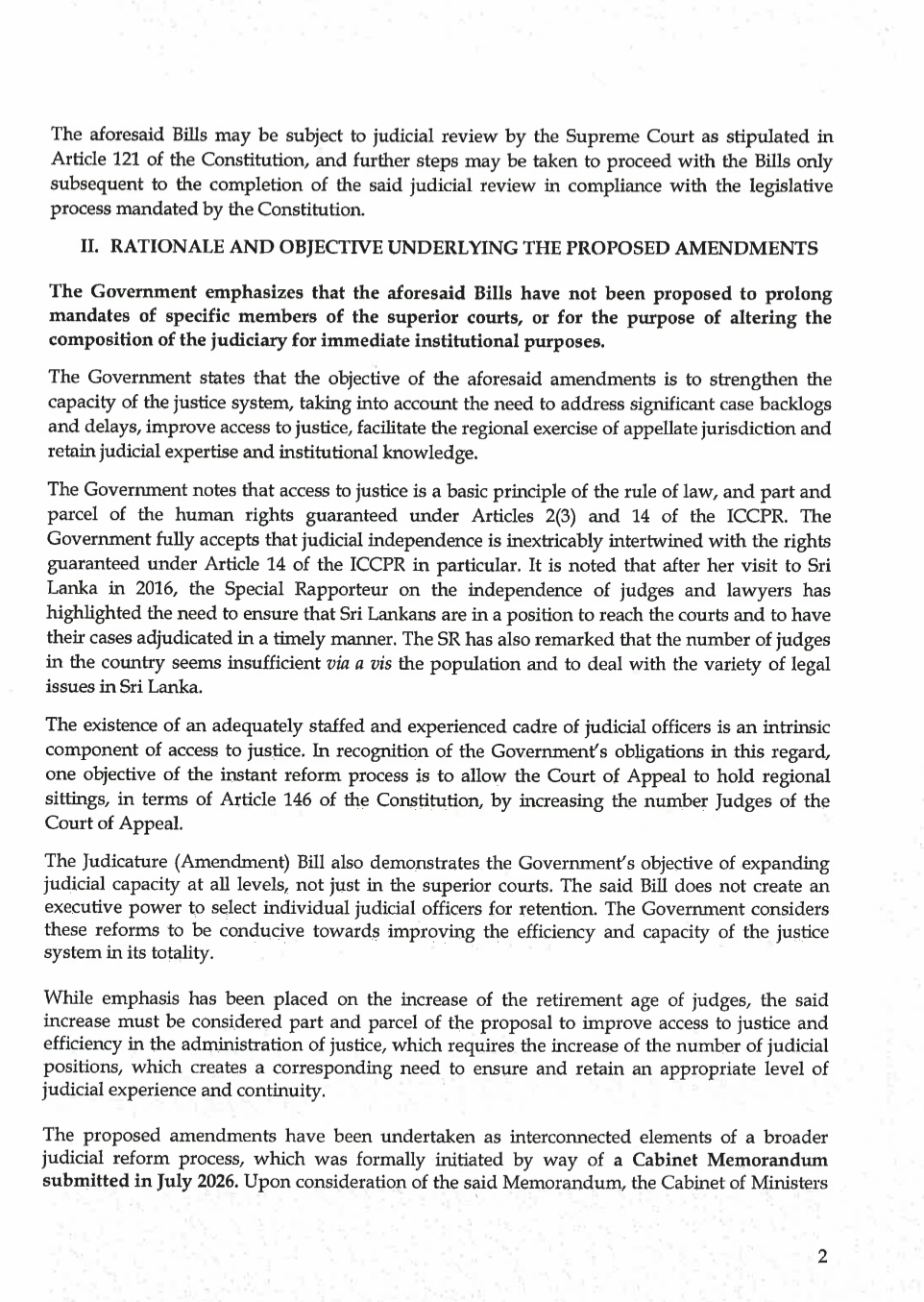
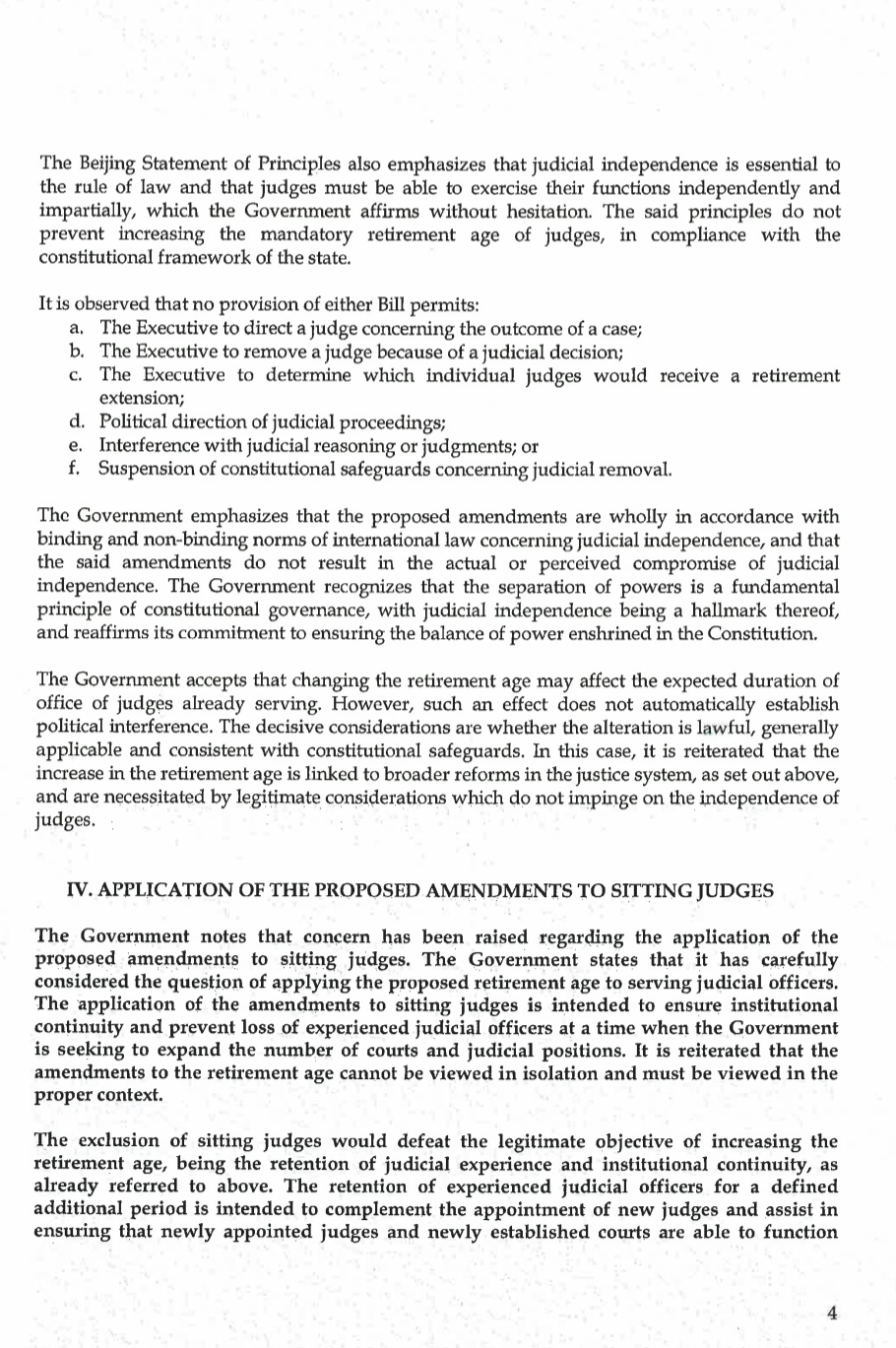
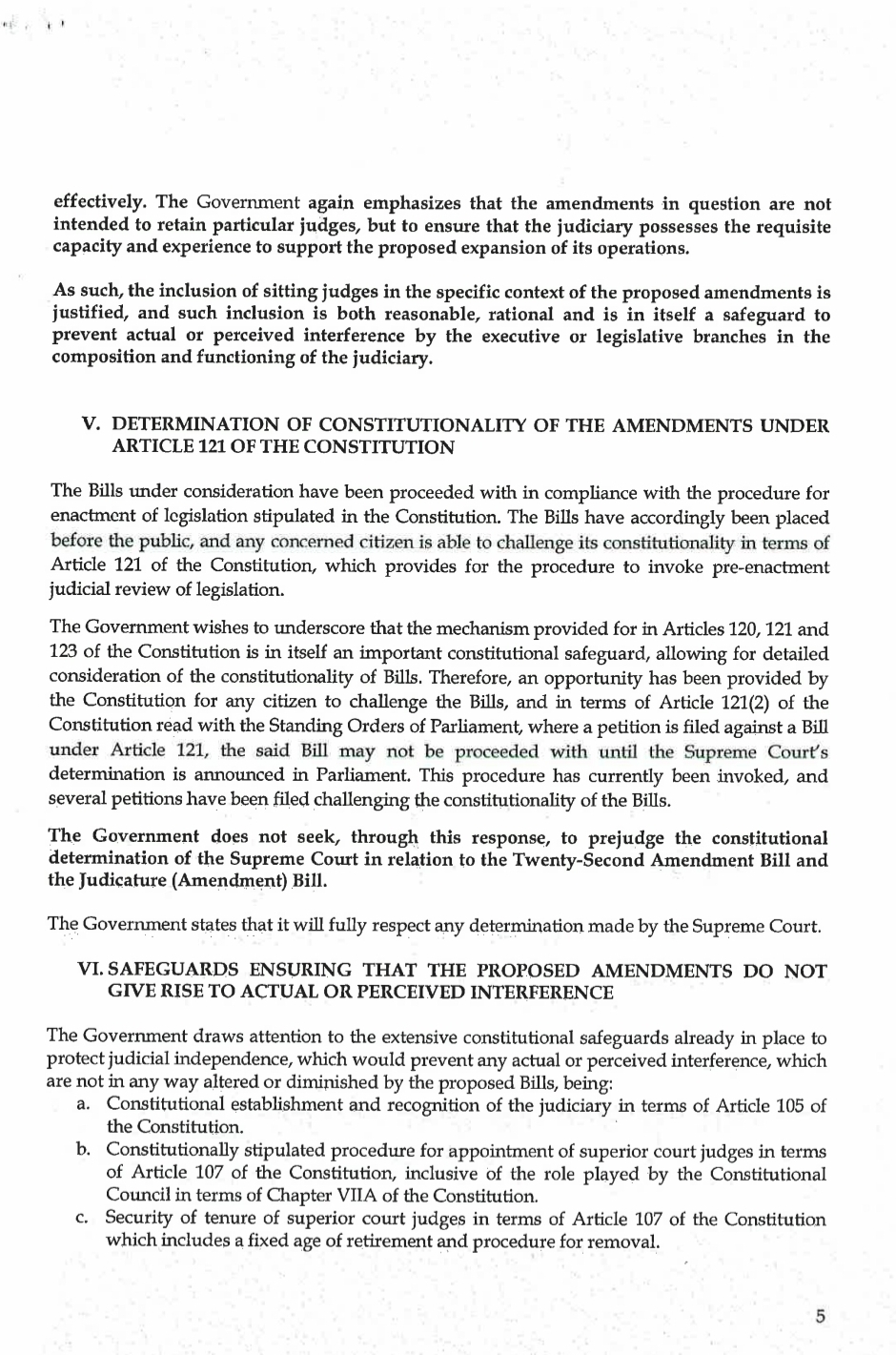
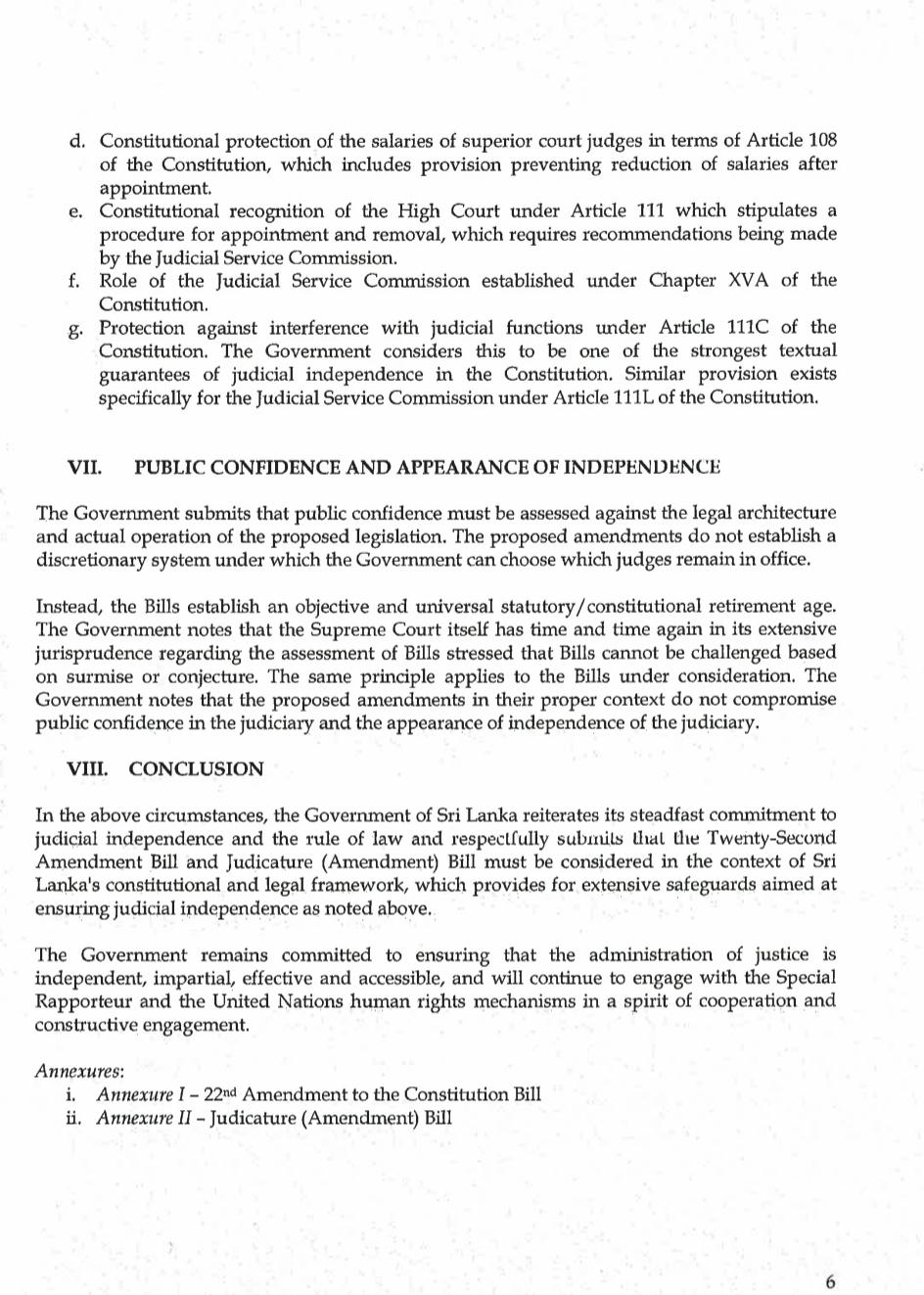
In a six-page response sent to the UN Office of the High Commissioner for Human Rights on August 21, the government said the proposed changes were aimed at addressing case backlogs and delays, improving access to justice and retaining judicial expertise and institutional knowledge.
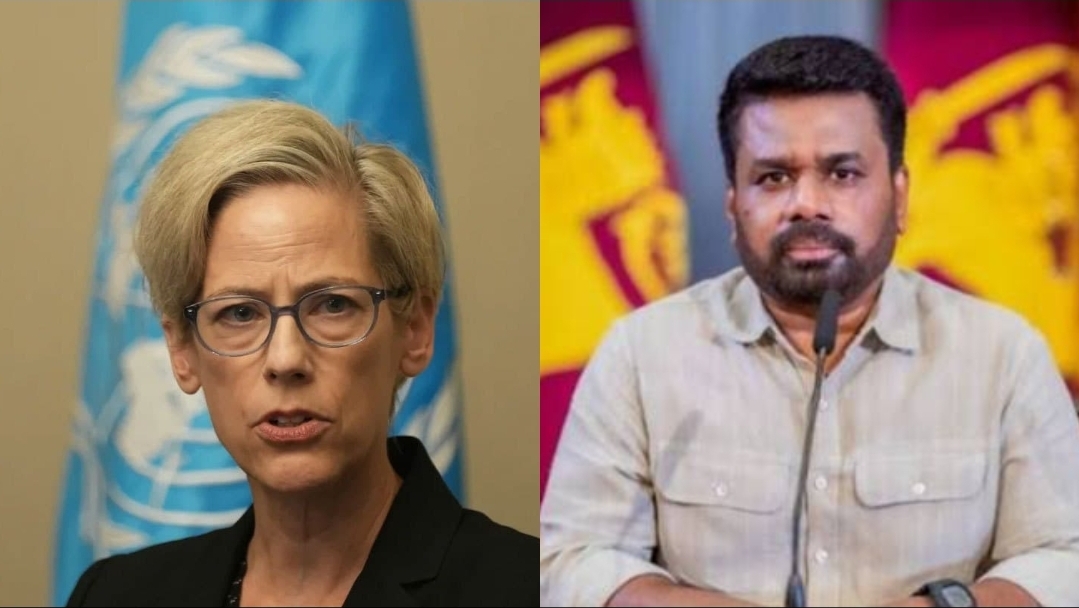
The response followed an August 7 communication from UN Special Rapporteur on the independence of judges and lawyers Margaret Satterthwaite, who warned that applying the changes to sitting judges could raise concerns over judicial independence, separation of powers and public confidence in the judiciary.
The government said the 22nd Amendment proposes increasing the retirement age of Supreme Court judges from 65 to 67 and Court of Appeal judges from 63 to 65.
It would also provide that the Chief Justice retires upon reaching 67 or after completing six years from the date of appointment as Chief Justice, whichever comes first.
The proposed amendment would further increase the maximum number of Court of Appeal judges from 19 to 24.
Separately, the Judicature (Amendment) Bill proposes raising the retirement age of High Court judges from 61 to 63, setting the compulsory retirement age of other judges and magistrates at 62, and increasing the maximum number of High Court judges from 110 to 120.
Both bills were presented to Parliament for their first reading on August 18.
Responding directly to concerns that the changes could benefit particular members of the judiciary, the government said the bills “have not been proposed to prolong mandates of specific members of the superior courts, or for the purpose of altering the composition of the judiciary for immediate institutional purposes.”
The government also defended its decision to apply the proposed retirement ages to currently serving judges, saying excluding them would undermine the objective of retaining experienced judicial officers while the number of courts and judicial positions is expanded.
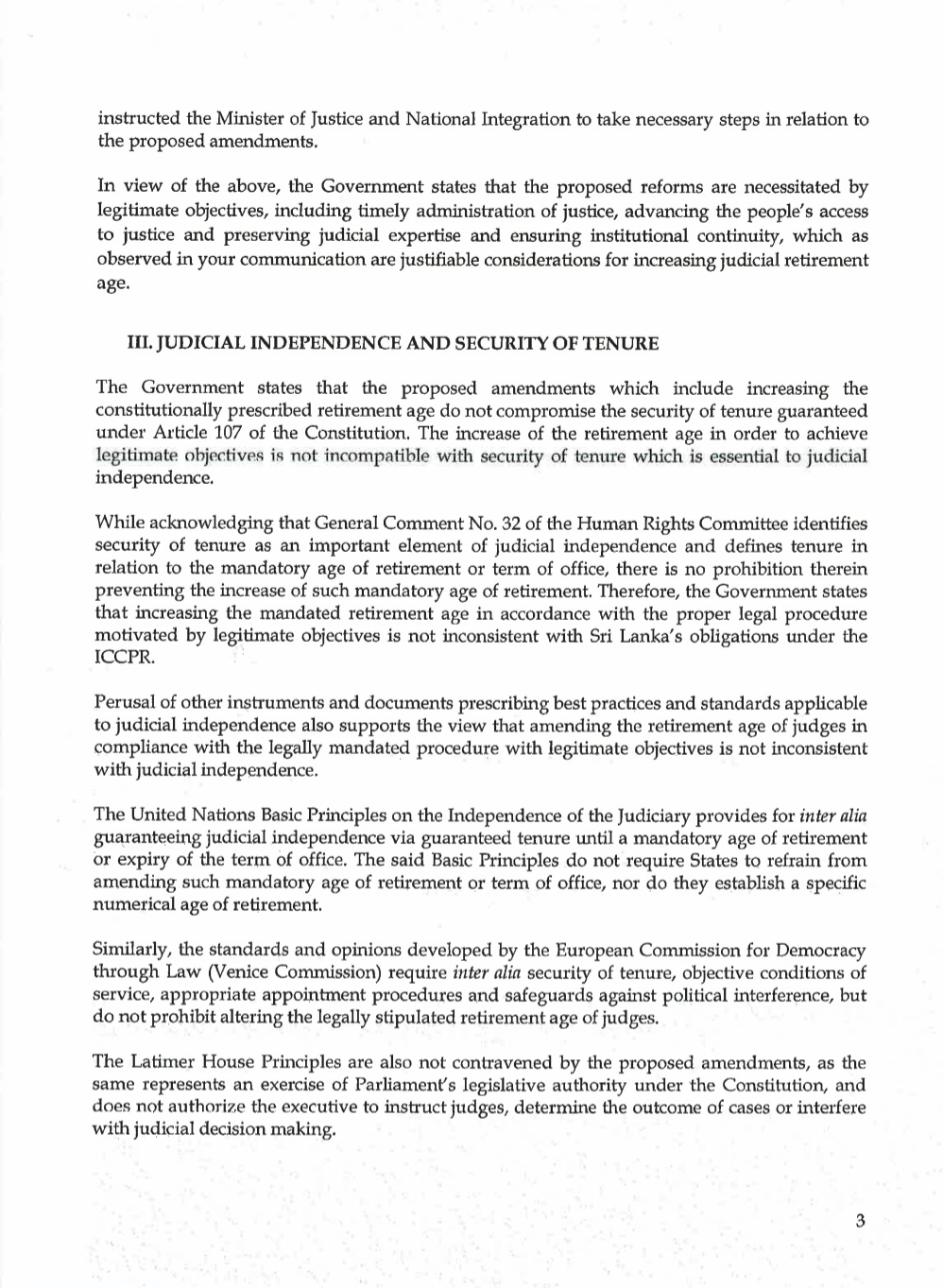
It argued that the proposed amendments do not give the executive authority to select which judges receive extended tenure, remove judges because of their decisions, direct judicial proceedings or interfere with judgments.
The government further maintained that changing the mandatory retirement age through the proper legal process is not inconsistent with Sri Lanka’s obligations under the International Covenant on Civil and Political Rights or international principles concerning judicial independence.
It acknowledged that changing the retirement age could affect the expected tenure of serving judges, but argued that this did not automatically amount to political interference.
Several petitions have meanwhile been filed before the Supreme Court challenging the constitutionality of the proposed legislation. The government told the UN that it would not seek to prejudge the court’s determination and would “fully respect” whatever decision the Supreme Court makes.
The controversy has intensified after the Bar Association of Sri Lanka opposed the proposed amendment, raising concerns over judicial independence and challenging its constitutionality before the Supreme Court.
The government concluded its response by reaffirming its commitment to judicial independence and the rule of law, while saying it would continue engaging with the UN Special Rapporteur and other UN human rights mechanisms. (Newswire)