

By Newswire Editorial
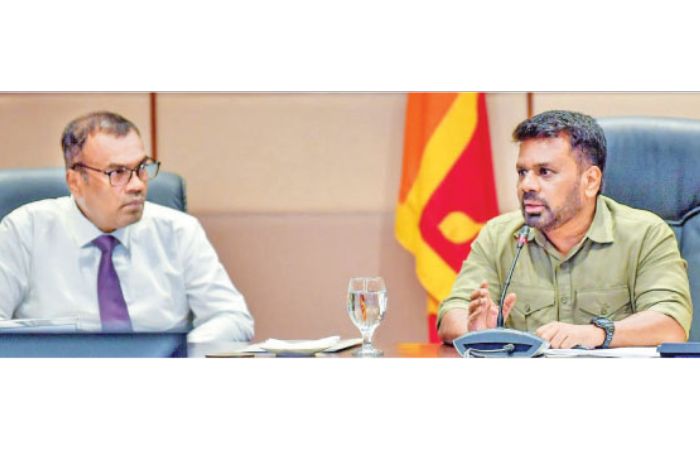
Deputy Minister of Finance and Planning Dr. Anil Jayantha Fernando has defended several tax changes introduced by the Government, rejecting claims that they have imposed an additional tax burden on the public.
In a statement issued by the Ministry of Finance, the Deputy Minister addressed eight tax-related measures, including increased duties on alcohol and cigarettes, higher taxes on vehicle imports, withholding tax on bank interest, and taxation of service exports and digital platforms.
He said the Government’s objective was to correct weaknesses in the existing tax structure, improve revenue collection and ensure a fairer distribution of tax obligations.
- 50% surcharge on vehicle imports
Explaining the 50% surcharge on customs duties applicable to private vehicle imports, Fernando said the measure was introduced temporarily to control foreign exchange outflows amid pressure on the economy caused by the conflict in the Middle East.
He said the surcharge was intended to protect foreign exchange reserves and prevent disruptions to essential imports rather than increase Government revenue.
- Higher taxes on electric vehicles
The Deputy Minister also defended changes to customs duties on electric vehicles, saying they were part of efforts to reform the existing tax structure.
He said the revisions were intended to ensure fairness, address shortcomings in the system and minimise revenue losses.
- Withholding tax on bank interest
Addressing the increase in withholding tax on interest income from 5% to 10%, Fernando said the revised system provides relief to individuals who are not liable to pay income tax.
He explained that eligible individuals can avoid the deduction by submitting the required declaration or affidavit confirming their tax-exempt status.
For taxpayers subject to income tax, the 10% deduction can be credited against their final annual tax liability.
- Alcohol and cigarette taxes
The Deputy Minister said the 6% increase in excise duties on selected products, including alcohol and cigarettes, in January 2025 was an adjustment under an existing inflation-linked tax formula.
He said the same mechanism had resulted in a 14% adjustment in 2024 under the previous administration.
According to Fernando, the Government subsequently decided against implementing a further adjustment in 2026, taking into account the economic impact of Cyclone Ditwah.
- Higher taxes on alcohol and tobacco companies
Fernando also defended increasing the tax rate on profits earned by alcohol and tobacco companies from 40% to 45%.
He said these industries have a greater capacity to generate profits and should therefore make a higher contribution to Government revenue without placing an unnecessary burden on the wider public.
- 15% tax on service exports
Addressing taxation of service exports, the Deputy Minister said some exporters had previously benefited from exemptions that created unequal treatment between different business sectors.
He said service exporters had now been brought within the income tax framework, with companies subject to a 15% rate instead of the 30% proposed by the previous Government.
The maximum tax rate applicable to individuals earning income from service exports has also been capped at 15%, compared with the higher rates that could otherwise apply under the income tax system.
- VAT on digital services
The Deputy Minister said the introduction of VAT on services supplied through digital platforms was intended to ensure equal treatment between conventional businesses and those operating through applications.
He cited transport and food delivery platforms as examples, arguing that businesses should not remain outside the VAT framework simply because their services are delivered digitally.
- 20.5% tax on financial services
Responding to claims that VAT on financial services had been increased to 20.5%, Fernando said the change involved consolidating two existing taxes.
He explained that financial services had previously been subject to 18% VAT and a 2.5% Social Security Contribution Levy, which were collected separately.
The combined 20.5% rate is now collected through a single mechanism to simplify tax administration.
- Government defends tax policy
Fernando said improvements in tax administration, compliance and collection efficiency had enabled Sri Lanka to generate more tax revenue in 2025 than initially anticipated.
He maintained that changes in individual tax rates should not be considered in isolation when assessing the overall tax burden.
The Deputy Minister also said the Government had maintained uninterrupted supplies of essential commodities, including fuel, fertiliser and medicines, despite economic pressures arising from the Middle East conflict.
He reiterated that the Government remained committed to maintaining essential public services, supporting development and ensuring that public funds were utilised without waste, fraud or corruption. (Newswire)