

By Newswire Editorial
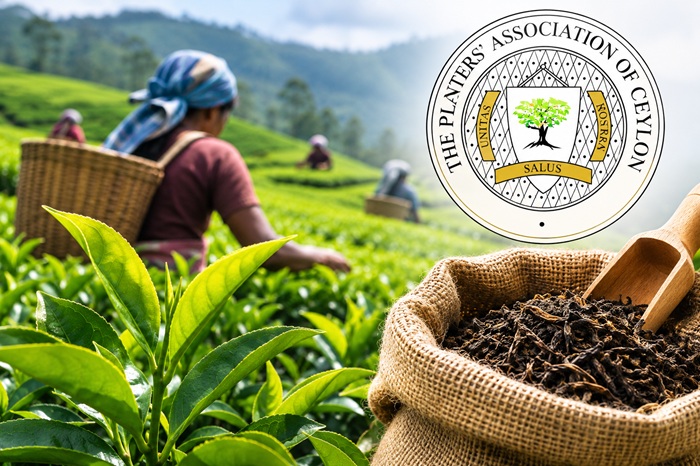
The Planters’ Association of Ceylon (PA) has warned that the unchecked importation of cheap foreign teas could lead to the collapse of Sri Lanka’s plantation economy, threatening the livelihoods of over 400,000 smallholder farming families and undermining the global reputation of Pure Ceylon Tea.
Issuing a statement on Wednesday (25), the Association said allowing low-cost foreign teas to be imported, blended and re-exported from Sri Lanka was eroding the value of Ceylon Tea, depressing local auction prices and severely affecting domestic producers.
The Association pointed out that Sri Lanka’s tea production costs are approximately 2.5 to 3.1 times higher than those of major competitors such as India and Kenya, while over 70% of the country’s tea production depends on smallholders.
According to the PA, Sri Lanka’s tea production cost averages over US$ 3.10 per kilogram, compared to US$ 1.00–1.25 in India and Kenya, while cheap foreign teas are being imported at around US$ 1.20 per kilogram for value addition.
The Association revealed that under normal market conditions, unsold tea at the Colombo Tea Auction accounts for approximately 5% to 8% of weekly offerings of between five and six million kilograms.
However, following the influx of cheaper imported teas, the percentage of unsold tea has increased to approximately 25%, with the impact being particularly pronounced in the CTC tea segment, it said.
The PA warned that declining auction prices directly affect green-leaf payments to smallholders, placing further financial pressure on farming families already struggling with rising labour, fertilizer and operational costs.
The Association also raised concerns over compliance with regulations governing the blending of imported and locally produced teas, calling on the Sri Lanka Tea Board (SLTB) to ensure imported teas remain a minority component in such blends.
It further warned that the influx of cheap foreign teas risks undermining the single-origin identity of Ceylon Tea, weakening international consumer confidence and jeopardizing the premium prices commanded by Sri Lankan tea.
The Association noted that declining returns could force more smallholders to abandon tea cultivation or switch to alternative crops, while Sri Lanka risks transforming from a tea-producing nation into a mere transit and repackaging hub for foreign teas.
The PA called on policymakers to urgently protect farm-gate prices, restrict loopholes in tea import regulations and reinvest in domestic tea replanting and productivity to safeguard the future of Sri Lanka’s plantation industry. (Newswire)