

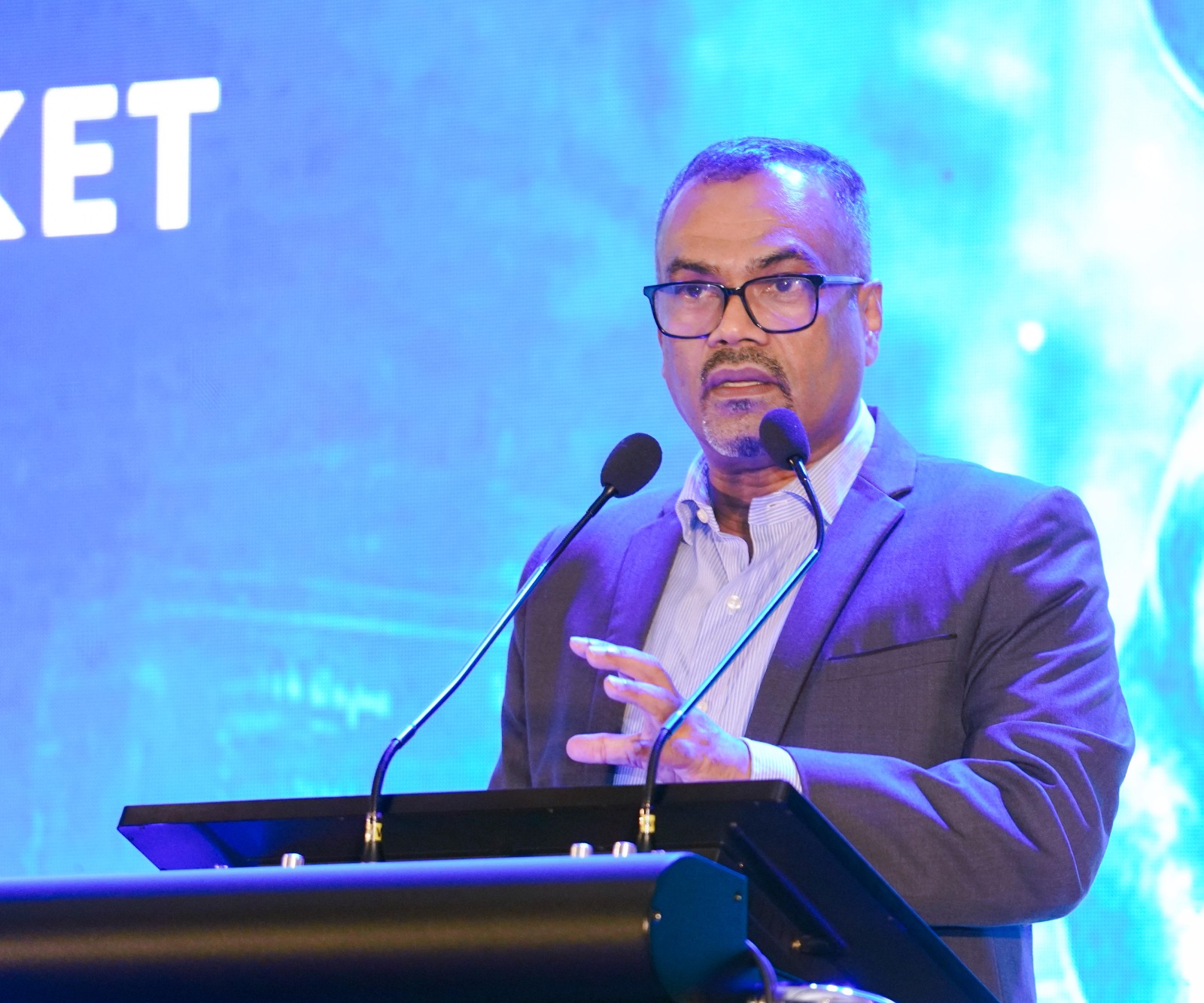
The government plans to place greater emphasis on capital market development in Budget 2027, while allocating Rs. 2 trillion for capital expenditure and introducing new legislation to restructure state-owned enterprises (SOEs).
Deputy Minister of Finance and Planning Dr. Anil Jayantha Fernando said the government’s next priority was to move Sri Lanka from macroeconomic stability towards economic transformation by strengthening investment and developing the capital market.
He made the remarks at the Institutional Investor Forum, “From Resilience to Sustainable Growth – Industry Forum 2026,” jointly organised by the Securities and Exchange Commission of Sri Lanka (SEC) and the Colombo Stock Exchange (CSE).
The 2027 Budget is scheduled to be presented on November 12.
The Deputy Minister said the Ministry of Finance had reviewed 12 capital market development proposals submitted by the SEC and reached agreement on the majority. Several proposals are expected to be included in the upcoming Budget.
He said the government expects to allocate Rs. 2 trillion for capital expenditure, prioritising roads, railways, rural connectivity, logistics, transport infrastructure and selected social development projects.
However, he acknowledged that bureaucratic procedures and resource constraints were delaying the implementation of capital expenditure projects.
Possible tax reforms
Dr. Fernando said government revenue had exceeded 16% of Gross Domestic Product (GDP) by the end of 2025, surpassing the initial target of 15.4% set for 2030.
He indicated that the government could consider changes to the existing tax structure once revenue targets were secured.
While acknowledging concerns over corporate and personal income taxes, he said reducing tax rates prematurely could affect revenue collection. However, reductions in indirect taxes could be considered in the future.
Restructuring state-owned enterprises
The Deputy Minister said Sri Lanka had 527 institutions classified as state-owned enterprises, although only a limited number were engaged in commercial activities.
He said the government intended to restructure and diversify selected SOEs while merging others.
A proposed new SOE Act is expected to establish a common legal framework, allowing certain state enterprises to operate as companies with greater decision-making autonomy.
Dr. Fernando said the government’s primary responsibility should be facilitating economic activity rather than directly engaging in ordinary trading and hotel operations.
However, state involvement could continue in selected energy-sector enterprises to prevent excessive market influence.
Investment and market reforms
The Deputy Minister also revealed that the technology-based Single Window Project, designed to provide investors with access to investment-related services through a single platform, was nearing completion.
He stressed the importance of maintaining investor confidence through transparency, fair market practices and preventing stock market manipulation and unequal access to inside information.
Dr. Fernando said the government would continue allowing market forces to determine the exchange rate rather than artificially controlling it.
He also identified global trade tensions, instability in the Middle East, natural disasters and climate change as potential risks to Sri Lanka’s economy.
Central Bank Governor Dr. P. Nandalal Weerasinghe, SEC Chairman Senior Professor D.B.P.H. Dissabandara and CSE Chairman Dimuthu Abeyesekera also addressed the forum. (Newswire)