

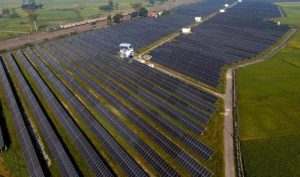
India’s energy needs are growing rapidly. As the economy expands — with 7.8% real GDP growth in the first quarter of 2026-27 — so does demand for electricity from factories, businesses, and households. In the first half of this year alone, electricity demand grew by 6%. By 2035-36, demand could reach 459 gigawatts, according to the Central Electricity Authority.
At the same time, renewable energy has moved from the margins of India’s power system to its centre. This reflects a long-term strategy that Prime Minister Narendra Modi has pursued since his years as chief minister of Gujarat, where he placed an early emphasis on solar energy, and transmission has been a central part of it.
India is developing a Green Energy Corridor to connect renewable-rich regions with centres of energy consumption. Its recently announced third phase, a $19.3-billion investment in storage and transmission infrastructure, will help integrate another 135 GW of renewable energy capacity into the grid. The need for it is already clear.
Last May, as temperatures soared across northern and central India, the country’s peak electricity demand reached a record 271 GW. Crucially, renewable energy met nearly one-third of that peak demand.
Air conditioners continued to run, fans kept turning, and homes and businesses stayed powered through one of the most demanding periods of the year.
A decade ago, such a surge in demand would have put far greater pressure on India’s power system. Today, the country is better equipped to absorb it, largely because it hit its clean energy capacity targets five years ahead of schedule. Now, India generates a similar share of its power from renewables as the US does. And round-the-clock renewable energy with storage now costs about ₹5.2 per kilowatt-hour, the cheapest form of new power available.
India’s renewable energy transition is crucial to supporting its next phase of economic growth, and progress has been accelerating. PM Modi’s Pradhan Mantri Surya Ghar program, launched in 2024, aims to bring rooftop solar to 10 million homes by March 2027 — and it has already surpassed 6 million. That has helped make the electrical grid more resilient, while also reducing household bills. Around 2.1 million households have received zero electricity bills in at least one billing cycle after installation of rooftop solar under the PM Surya Ghar scheme.
Setting and meeting those targets has also given investors confidence. Solar capacity in India has grown nearly twentyfold over the last 10 years, making it the world’s third-largest renewable energy market. India has also built a domestic ecosystem of developers, financial institutions, manufacturers, and service companies, creating jobs and attracting investment. It has topped BloombergNEF’s ClimateScope rankings of emerging economies for energy transition investment three years in a row. The lesson is clear: International capital followed because the domestic market proved the plan could work.
Bloomberg Philanthropies has helped bolster India’s solar progress by partnering with India’s ministry of new and renewable energy to map rooftop potential in 120 cities using satellite data, train nearly 9,500 vendors and installers, and reach nearly 1.4 million people through outreach. It used to take India 118 days to install solar on 100,000 rooftops. Now, thanks to this programme, it takes only six days.
Government, business, philanthropy, and civil society have all helped India lower electricity bills, clean the air, and create jobs. India now supports nearly 1.3 million renewable energy jobs, making it one of the world’s leading clean-energy employers, with even more jobs expected in the years ahead.
India used to be entirely reliant on coal to power its grid. Coal remains part of its energy mix, but the tide has turned. Clean energy is now cheaper to build, faster to deploy, and a source of jobs and energy independence. India has been making this transition because it serves its economic, strategic, and public health interests.
Other countries face the same problems India did a decade ago: rising demand, unreliable grids, and populations without access to affordable power. India’s example offers a potential roadmap for them, as they work to address those challenges.
Michael R Bloomberg is the founder of Bloomberg L.P. and Bloomberg Philanthropies. Pralhad Venkatesh Joshi is India’s minister of new and renewable energy. The views expressed are personal. (Hindustan Times)