

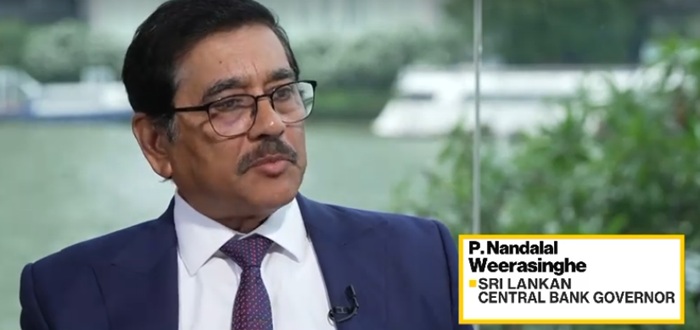
Sri Lanka’s Central Bank Governor Dr. Nandalal Weerasinghe says the country is better positioned to withstand global oil price shocks, with inflation currently at 1.6% compared to the 5% target set by the Central Bank.
During a televised interview with Bloomberg, speaking on the impact of rising petroleum prices, Dr. Weerasinghe noted that while higher oil costs could affect both inflation and the balance of payments, Sri Lanka has built stronger buffers than during the 2022–23 crisis, when inflation soared to 70%.
He explained that external reserves have now risen to over USD 7 billion from near zero levels, providing a cushion against external shocks.
The Central Bank’s inflation‑targeting framework also allows the exchange rate to act as a shock absorber, helping to manage demand and cost pressures.
Dr. Weerasinghe cautioned that prolonged geopolitical tensions, such as the ongoing war in the Middle East, could have wider global repercussions, including higher petroleum prices, disruptions to tourism, freight costs, and supply chains.
He emphasized that Sri Lanka must continue to prepare and strengthen buffers through monetary, fiscal, and external policies to mitigate potential risks.
Full interview: