

By Newswire Editorial
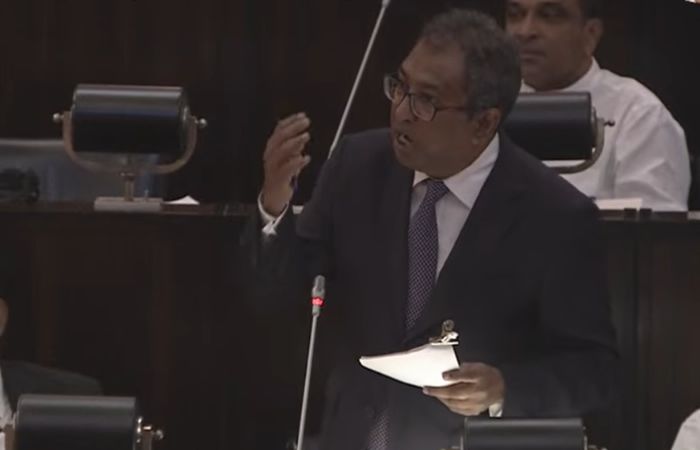
SJB MP Dr. Harsha de Silva has questioned whether the 2027 Budget provides practical solutions to the affordability of protein-rich food, arguing that tax measures on chicken and maize could affect access to affordable protein.
Referring to Agriculture Minister K.D. Lal Kantha’s recent comments on Sri Lankans consuming too much rice and needing more protein, de Silva said: “Although people laughed, Minister Lal Kantha is 100% correct. We eat too much rice and need more protein.”
He noted that although taxes on chicken had not been reduced, taxes on dried sprats had been lowered. However, he cautioned against relying heavily on dried sprats as a protein source because of their high salt content.
“Dried sprats contain a lot of salt, which can lead to high blood pressure and kidney problems,” he said.
De Silva also raised concerns about the cost of chicken production, pointing out that maize is a major ingredient in chicken feed. He said rice could also be used as animal feed, but industry representatives he had consulted indicated that it could affect the colour of egg yolks, making them paler.
He said Sri Lanka imports around 50% of its maize requirements and recalled that maize imports had previously been subject to a tax of Rs. 25 per kilogram.
“What did you do? In May, you doubled it and introduced a licensing system. On one side, you did not provide any relief to maize farmers, while on the other, you doubled the import tax,” he said.
De Silva further noted that the Government had retained the 18% tax on chicken and imposed an additional 2.5% levy.
“If that is the case, has the practical protein issue identified by Minister Lal Kantha been addressed through this Budget?” he questioned.
The SJB MP also criticised the continuation of the public-sector salary increment programme introduced under the previous Ranil Wickremesinghe administration. He argued that the economic conditions under which the increments were initially introduced differed from the current situation.
He pointed out that inflation stood at minus 0.4% at the time, compared with 8.3% currently, and said the difference should have been taken into consideration.
De Silva said the Budget had failed to adequately address the dietary and nutritional challenges faced by households. (Newswire)