

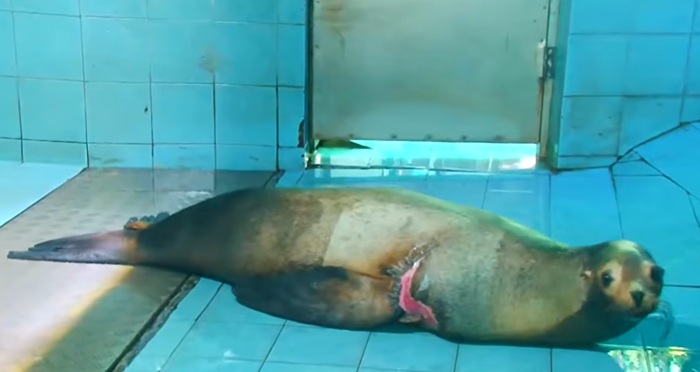
A 16-year-old sea lion at the Dehiwala National Zoological Gardens is recovering after undergoing surgery for cancer, Director General of the Department of National Zoological Gardens Chandana Rajapaksa said.
Rajapaksa said the sea lion, named “Bom,” had been suffering for an extended period from a wound that was difficult to heal. Examinations carried out by the zoo’s veterinary team subsequently revealed that the wound was linked to cancer.
Following the diagnosis, local veterinarians and foreign specialists were consulted to determine possible treatment options.
Rajapaksa said that animals facing similar conditions may in some circumstances be euthanised, but the zoo’s team explored alternatives in an effort to treat the sea lion.
Specialist veterinarians capable of carrying out the required surgery were subsequently identified, and a team comprising the specialists, veterinarians from the Dehiwala Zoo and experts from the University of Peradeniya decided to proceed with surgery.
The operation was successfully carried out at the zoo’s animal hospital around two months ago, and Bom is now recovering.
“The animal is gradually recovering. We are hopeful that once it makes a complete recovery, it will be possible to return it to the sea lion display,” Rajapaksa said.
The sea lion is currently not available for public viewing while veterinary teams continue to monitor its condition and provide treatment.
Rajapaksa said he could not provide an exact date for when Bom would return to public viewing but expressed confidence that it could happen once the animal’s recovery progresses sufficiently.
He said Bom is around 16 years old and is considered an elderly sea lion, noting that the lifespan of such animals is around 20 years.
Responding to criticism over keeping animals in zoos, Rajapaksa said the National Zoological Gardens focuses on animal welfare, conservation and education, while providing animals with the maximum space and care possible within its facilities.
He said the zoo also plays a role in conserving rare species and providing opportunities for students and the public to learn about animals and wildlife conservation. (Newswire)