
The Collective for Social Media Declaration (CSMD) has raised serious concerns over the proposed Protection of the State from Terrorism Act, No. of 2026 (PSTA), warning it poses significant threats to freedom of expression, privacy, and democratic accountability.
Issuing a statement the CSMD criticized the bill for replicating the core elements of the existing Prevention of Terrorism Act (PTA), which has long been condemned by rights groups. These include broad administrative detention powers, enhanced executive authority, and vaguely defined speech-related offenses.
The group said that while the PSTA is presented as a human rights improvement, it instead creates parallel criminal frameworks with reduced safeguards, enabling prolonged detention without charge and expanded military and police powers with limited judicial oversight.
Of particular concern are provisions such as Section 78, which broadly defines “confidential information,” potentially criminalizing online content, social media posts, and documentation of military activity. Section 15, which mandates reporting of suspected terrorism-related information, could place professionals like journalists, lawyers, and doctors at legal risk for not disclosing confidential information.
The CSMD also warned that surveillance and decryption clauses in the bill could undermine end-to-end encrypted communications, threatening privacy and exposing individuals to arbitrary monitoring. They expressed alarm over extended detention powers and military involvement in law enforcement, particularly regarding risks to Tamil communities.
Calling the bill’s framing overly focused on protecting the state rather than citizens, the CSMD urged the government to withdraw the legislation, engage in public consultation, and craft laws that meet international human rights standards while addressing legitimate security needs. (Newswire)
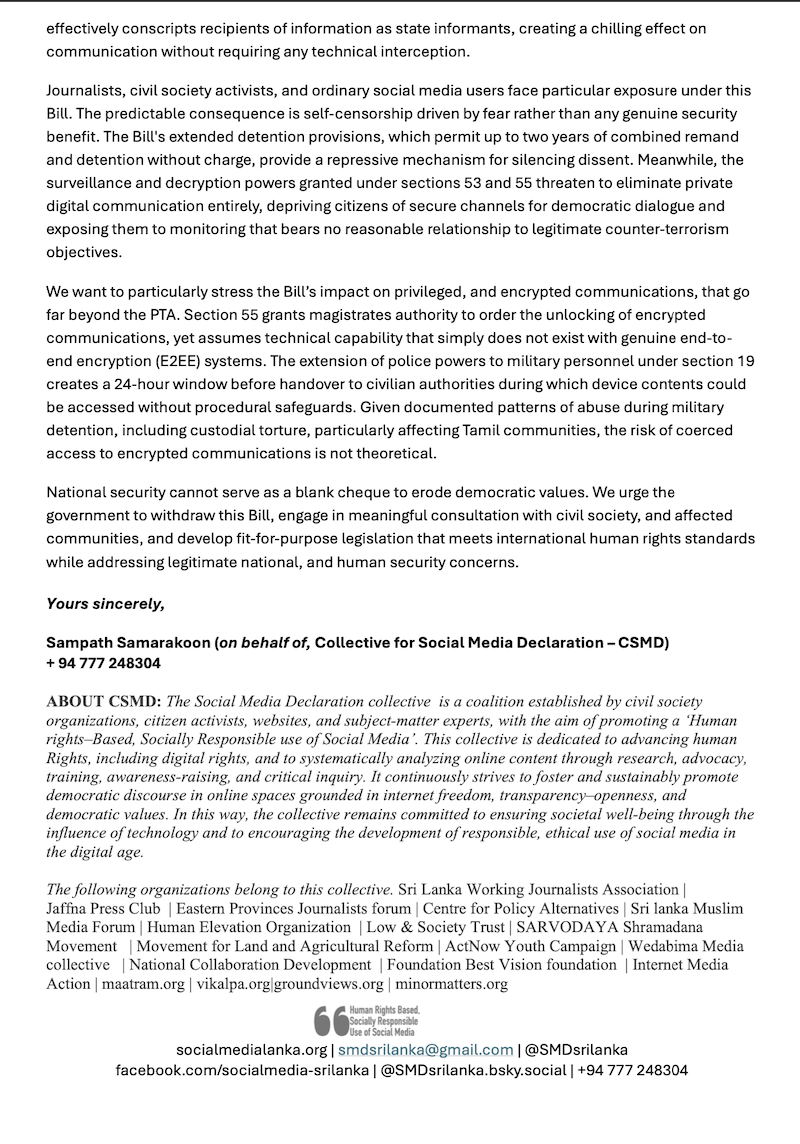
The full statement