

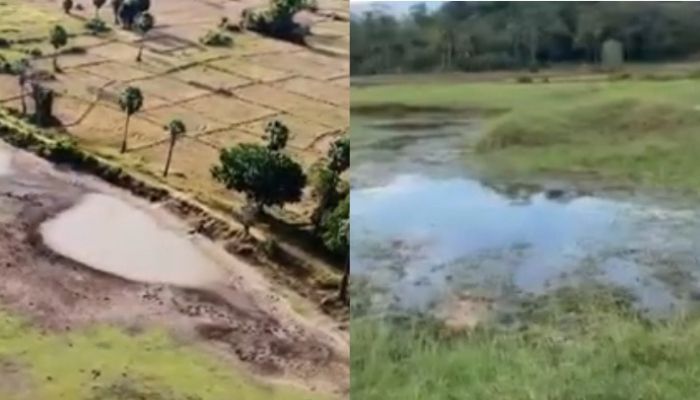
Several areas in the Northern, North Central, Eastern and Uva provinces are facing drinking water shortages as dry weather continues, with several reservoirs and small tanks either drying up or recording sharp declines in water levels, affecting communities, agriculture and livestock.
In the Kotiyagala area of the Siyambalanduwa Divisional Secretariat Division in Monaragala, several tanks have completely dried up. The Kotagala Maha Wewa, which previously held water across an area of about 300 acres, now has water remaining in less than half an acre, according to reports from the area.
Water levels at the Diyulgaskanda Wewa in Wellawaya have also fallen sharply, while the decline in water levels in smaller tanks has affected agriculture and livestock farming.
Several small tanks in the Mihintale Divisional Secretariat Division, including Puthana Wewa, Surukkulama Wewa, Mihintale Kone Wewa and Weruppankulama Temple Wewa, have also recorded significant declines in water levels.
Residents in Medirigiriya’s Kumbukunawala area are facing difficulties after the local tank dried up. Villagers said the drying of grasslands has also left dairy cattle facing shortages of feed.
In Polonnaruwa’s Hatharakotuwa area, the drying of Makula Wewa has affected about 25 acres of paddy cultivation, according to residents. As wells have also dried up, villagers have been digging pits along canals to find water.
Minister of Housing Construction and Water Supply Susil Ranasinghe said drinking water is being supplied by bowsers to affected areas in Batticaloa, Ampara, Monaragala and Ratnapura districts through the Disaster Management Centre.
Ranasinghe said the government is preparing for further deterioration of the situation and that a ministerial subcommittee will meet again on Aug. 17 to review the needs of affected communities and determine further relief measures.
Meanwhile, the Department of Meteorology has warned that the heat index in parts of Vavuniya, Mullaitivu, Trincomalee, Polonnaruwa, Batticaloa, Ampara and Monaragala districts could reach levels requiring attention during the daytime tomorrow (15).
The department said temperatures felt by the human body in some areas could range between 39 and 45 degrees Celsius.
Dr. Hansamal Weerasuriya, assistant secretary of the Government Medical Officers’ Association (GMOA), urged the public to drink adequate amounts of clean water and protect themselves from direct exposure to intense sunlight.
He warned that heat exhaustion and heatstroke could occur due to dehydration and advised people experiencing sudden headaches, dizziness, fainting or other complications to seek medical attention at the nearest hospital or from a doctor. (Newswire)