
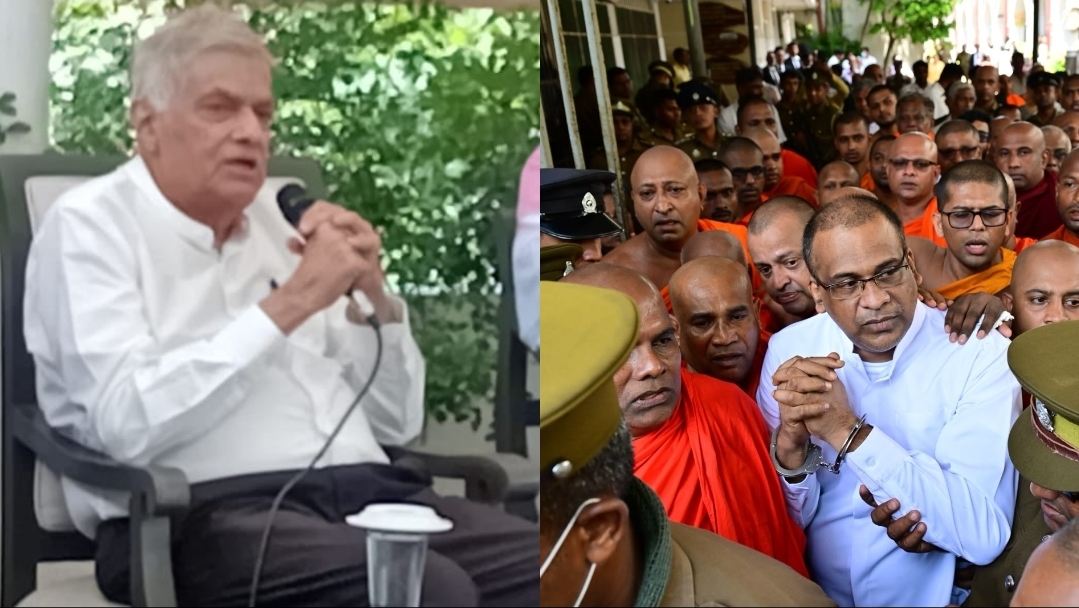
Former President Ranil Wickremesinghe has defended the decision to grant a presidential pardon to Ven. Galagoda Aththe Gnanasara Thera in 2019, saying it followed discussions over the religious implications of removing the Buddhist monk’s robes while he was serving a prison sentence.
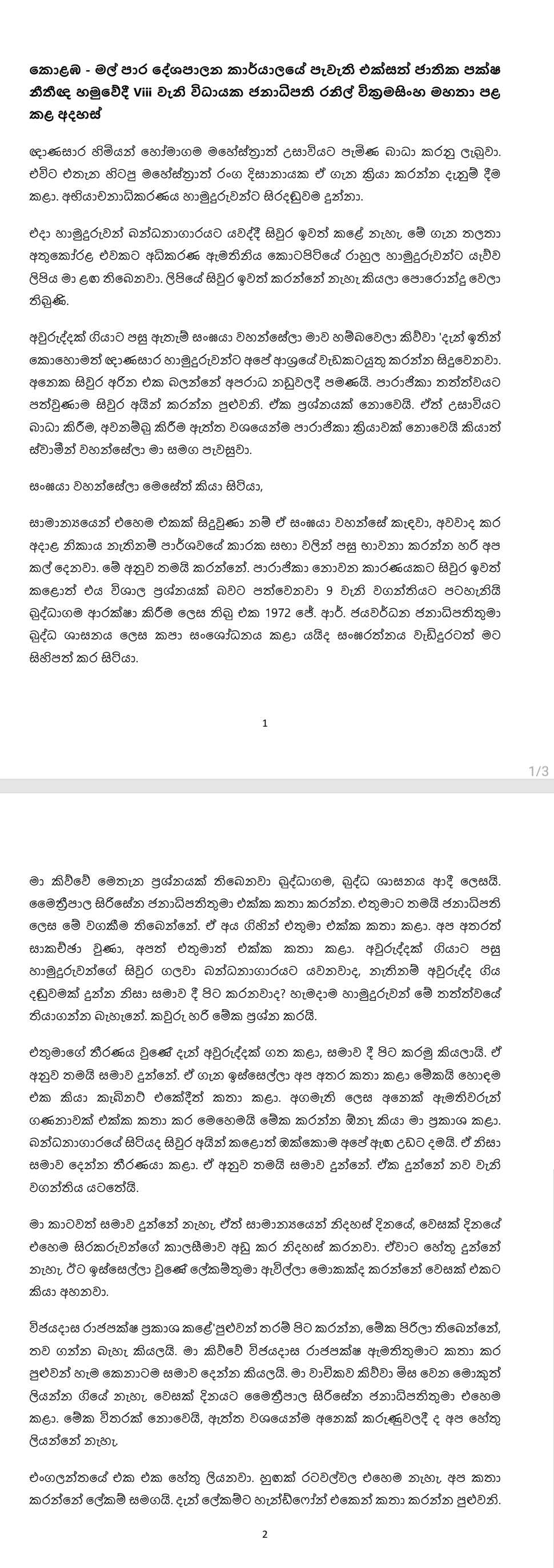
Speaking at a United National Party lawyers’ meeting at the party’s political office on Flower Road, Colombo, Wickremesinghe said Gnanasara Thera had been sentenced to prison for contempt of court following an incident at the Homagama Magistrate’s Court in 2018.
He said the monk was initially allowed to retain his robes in prison, citing a letter issued by then-Justice Minister Thalatha Athukorala assuring Buddhist religious leaders that his robes would not be removed.
According to Wickremesinghe, several senior Buddhist monks subsequently raised concerns that removing the robes for an offence that did not constitute a violation warranting expulsion under Buddhist monastic discipline would create a serious religious controversy.
He said the matter was discussed with then-President Maithripala Sirisena, who eventually decided to grant Gnanasara Thera a pardon after he had served approximately one year in prison.
Wickremesinghe said he had discussed the issue with several Cabinet ministers while serving as prime minister and supported the decision to grant the pardon.
He argued that the issue had evolved beyond the original court conviction into a question concerning Buddhist religious discipline and the state’s constitutional responsibility to protect Buddhism under Article 9.
The former president also defended the practice of granting presidential pardons without detailed written explanations, saying such decisions had historically been made following discussions between presidents, ministers and officials.
Referring to the controversy surrounding the pardon, Wickremesinghe criticised the Centre for Policy Alternatives (CPA), questioning its opposition to a decision he described as involving religious considerations. (Newswire)