

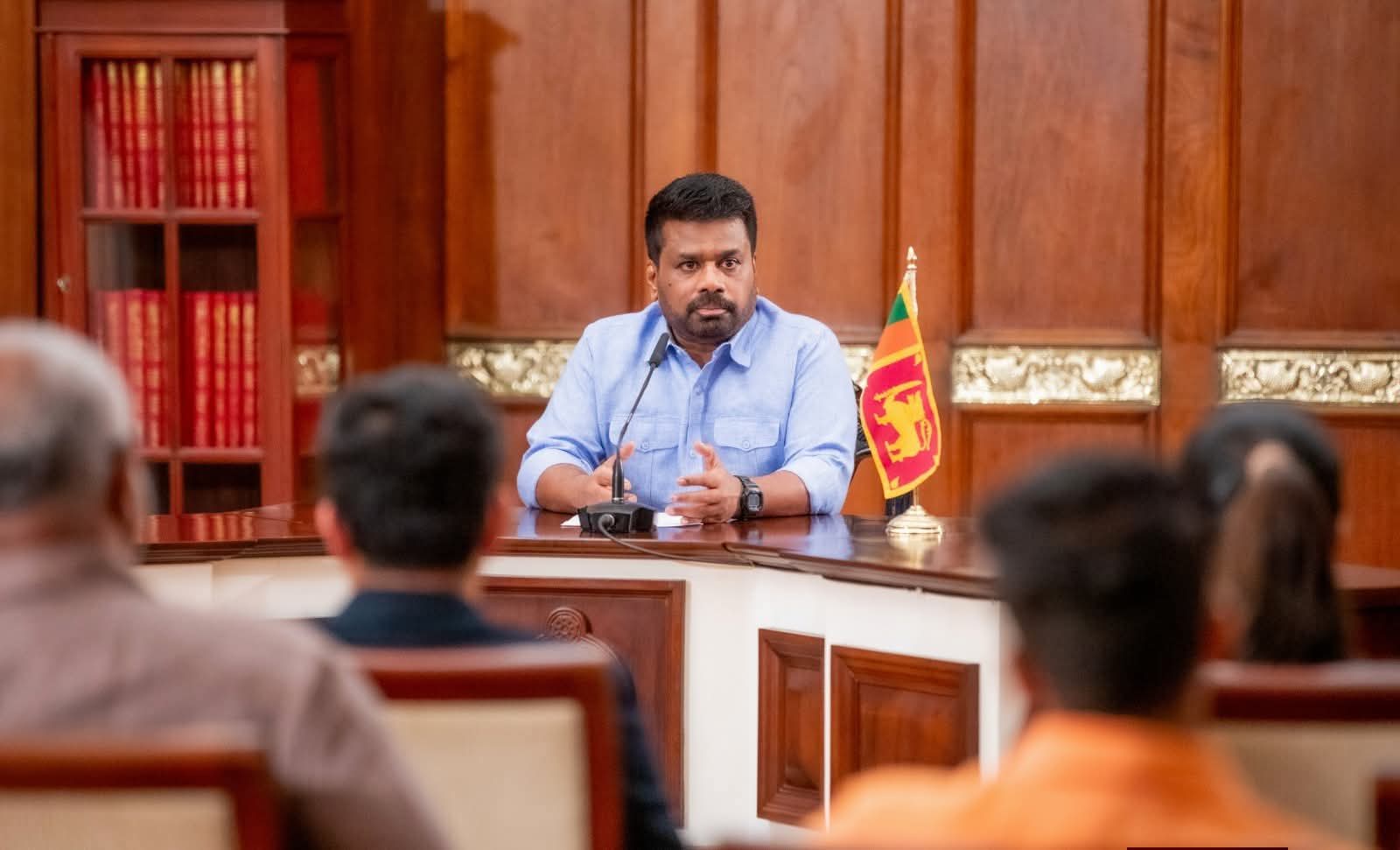
Statement made by President Anura Kumara Dissanayake at a special media briefing held at the Presidential Secretariat on 17 March, 2026
Due to the on-going conflict in the Middle East, a feeling of anxiety and uncertainty has developed among the citizens of our nation. There are worries regarding their ability to implement economic plans, send their children to educational institutions, or secure daily essential food items. This sense of uncertainty is justifiable, considering that our people have recently faced troubling consequences during comparable crises. As a result, the public’s concerns are both understandable and reasonable.
In the face of this conflict, as a government and as a nation, we have made our position exceptionally clear. Our stance in this war is one of neutrality. All our statements, actions and forthcoming engagements are guided by the objective of safeguarding this neutrality. I believe that, as a result of maintaining this position, we have gained international recognition and trust. Therefore, regardless of how the conflict unfolds, we will not act in any way that compromises our neutrality.
Furthermore, we must build an economy that can withstand any shocks while ensuring that the livelihoods of ordinary citizens remain protected. We know that economic disruptions arise in two ways, one of which is internal shocks. A recent example of such an internal shock was cyclone Ditwah we faced in late November, which caused approximately USD 4.1 billion in damage to our economy. However, owing to our financial stability and the resilience of our economy, we were able to successfully confront this shock and restore normalcy to the lives of our citizens and the functioning of economic activities within a very short period.
The success of these efforts is reflected in our economic data for January and February. During just these two months, the Central Bank purchased approximately USD 700 million from the market, the largest such purchase in recent history. At the same time, the Inland Revenue Department, Excise Department and Customs Department all met and even exceeded their revenue targets. This enabled us to effectively withstand that internal shock. Today, however, we are confronted with an external shock.
We must also structure our economy to withstand this external shock and we possess both the capability and the confidence to do so. However, the nature of this war is such that all parties involved have carefully chosen their own limits and targets. Their objectives include altering control and disrupting entire supply chains. Actions such as blocking the Strait of Hormuz, attacking oil storage facilities, targeting oil transport vessels and striking ports have led to a crisis of international-scale in the energy market.
Whether such action is right or wrong, or justifiable, is a separate question. In this context, production, storage, distribution and supply chains in the energy market have been deliberately affected. Anyone with even a basic understanding of global affairs will recognise this. Today, production is constrained, storage is disrupted and supply networks are impaired. Consequently, the energy sector has become the focal point of this crisis. Within this war, there is an internal conflict embedded in these dynamics and we must fully understand it.
Our primary energy sources are fuel, gas and coal. We have secured long-term tenders for fuel supply; however, we are currently unable to receive the two vessels carrying 90,000 metric tonnes of crude oil within the scheduled timeframe. We have been informed that these shipments will be delayed. In addition, private sector fuel distributors are also involved and reports indicate that even one of their scheduled shipments has not arrived as planned. Consequently, there is a shortfall in the fuel supply required to meet our needs.
When a vessel arrives at a port, there is a carefully managed system governing the pumping of oil into storage tanks, the time the vessel remains at the port, the quantity available in the storage and the scheduling of subsequent vessels. Even a single delay can disrupt the entire network, because we manage this energy sector with limited resources. As a result, the fuel supply we had planned and scheduled according to our targets may not materialise. This raises the question: how do we find solutions under these circumstances?
The year 2025 recorded some of the most remarkable economic data in Sri Lanka’s history. This represents a significant economic achievement for our country in 2025. Our challenge is how to confront this current crisis while maintaining the continuity of these economic gains. At the same time, ordinary citizens have experienced noticeable improvements in their daily lives compared to previous years. Ensuring that this progress in people’s livelihoods continues uninterrupted is also a key focus. It is on the basis of these considerations that we are seeking solutions to the challenges emerging in the energy sector.
We are intervening with the primary aim of ensuring that the economic gains we have achieved continue uninterrupted and that the daily lives of the people are not adversely affected. To this end, we established an Economic Monitoring Committee from the outset. This committee convenes frequently to review the evolving situation and assess necessary measures. Additionally, the Central Bank provides updated reports on the circumstances and recommended actions, sometimes once in two days. These reports are thoroughly discussed within the Economic Monitoring Committee, enabling us to make well-informed and timely decisions.
Decisions must not be delayed. Likewise, there are critical decisions that need to be made at the appropriate time based on careful analysis of the data. In addition, the intervention of the Economic Monitoring Committee facilitates informed decision-making across several other sectors as well.
Intervention to ensure a successful energy supply takes precedence. To that end, we have already implemented several measures. At the governmental level, we are engaged in very close discussions with friendly states and I am pleased to report that these have achieved considerable progress.
Secondly, we have placed several expedited tenders. Today, we opened one such tender, which attracted highly reliable suppliers for diesel, crude oil, lubricant and petrol. We expect to award these tenders to those suppliers promptly. Our aim is to cover any potential delays. Additionally, there is always a risk that a fuel-supplying vessel may encounter difficulties while en route. To mitigate this, we have taken extra measures, including issuing additional tenders. Today, we have successfully completed one such tender, and we expect to issue another diesel tender tomorrow. For that tender as well, we are confident that a reliable supplier will participate. At this stage, securing trustworthy suppliers is essential and we have taken the necessary steps to ensure this. Upon reviewing the tender, we have observed a slight increase in prices. The standard premium value was previously below three US dollars, whereas in this instance, the premium exceeds three US dollars.
Despite this price increase, our primary objective remains ensuring an uninterrupted supply of energy.
At times like this, we are aware that a black market tends to emerge globally. Vessels at sea are diverted for private sale, often with multiple agents presenting themselves for a single ship. This is the nature of the situation during such a crisis. Unlike the private sector, the state cannot engage in such instantaneous procurement. Therefore, to enable rapid decision-making and immediate purchase, a committee composed of highly competent officials has been appointed by the Cabinet. All procurement in Sri Lanka falls under the purview of the National Procurement Commission and the committee has obtained the necessary approvals from this Commission. Decisions made by the committee are subsequently ratified by the Cabinet. This mechanism is specifically designed to ensure the swift supply of fuel and we are strictly following this procedure.
Next, regarding the private sector, exporters and particularly those involved in the tourism industry who conducts business in US Dollars requested permission to import the fuel they require. We have temporarily granted them this facility. Approximately 30 exporters have registered for this scheme and arrangements are ready to extend it to the tourism sector as well. These parties are importing and distributing fuel in US Dollars. From tomorrow morning, fuel will be supplied to the exporters’ sectors. They have already secured the fuel, which is available in their storage facilities. Consequently, from tomorrow morning, private companies will begin supplying the fuel to exporters and those engaged in the tourism industry.
Accordingly, we are intervening through multiple such mechanisms to ensure the country’s energy requirements are met.
With regard to gas, the requirement for March was 33,000 metric tonnes. However, due to a disruption in supply by a private company, we increased our order to 38,000 metric tonnes. The additional requirement has been met through imports by the state-owned Litro Company and the full 38,000 metric tonnes have now been received. A portion of this has already been released to the market, while some remains in domestic storage facilities. The balance has been stored in floating storage facilities in the Maldives. In addition, we have placed an order for another shipment, which is expected to arrive tomorrow or the day after, carrying 33,000 metric tonnes. Accordingly, there is no risk of a crisis in the gas market. The next scheduled supply is expected between 21 and 23 April and we are confident that it will be delivered as planned. Therefore, the likelihood of any disruption in the gas market remains low.
Next, we dispatched 23 ships to our coal suppliers. At present, 13 of these vessels have arrived in Sri Lanka, while there are issues regarding the arrival of the remaining 12 ships. Recently, we called for an urgent procurement tender and the report on this was submitted to the Cabinet yesterday. The Cabinet approved the award of the tender to a supplier, who will deliver five of the vessels. We have full confidence in this supplier’s reliability. Once this delivery is secured, we will be able to prevent a crisis in the coal sector.
In addition, we are actively working to secure gas, coal and fuel supplies particularly through our diplomatic relations. Necessary correspondence and documentation are currently being exchanged and discussions are ongoing regarding certain agreements. We are also exploring all possible assistance from our partner countries. Through these coordinated efforts, we are taking every possible step to prevent any crisis in the country’s energy sector.
Next, to manage the utilisation of our current energy supplies, we introduced a QR code system. We are aware that certain challenges exist with this system. In fact, at the outset, we consulted with voluntary organisations, such as Dialog and the MIT institute and our advisors on the digital economy, including Mr. Hans Wijesuriya and the Deputy Minister, to determine the best way to implement it. Some proposals suggested temporarily shutting down the system for two days to launch it, as had been done previously when the system was rolled out; citizens were given two weeks to obtain the QR codes before being able to access fuel. However, we cannot adopt that approach this time.
This economy must continue to operate smoothly. With a clear understanding that certain challenges may arise, we decided to implement the QR code system. That is why Sunday was chosen as the launch day. To date, approximately five million QR codes have been registered. The existing issues are expected to be resolved very quickly. This is the first time the QR system is being used at the point of fuel distribution. Two expert companies in Sri Lanka voluntarily assisted with this initiative, providing guidance and leadership throughout the process. It is necessary to manage the available fuel carefully; we do not expect the current supply to last indefinitely. However, if the planned supply is successfully executed, we can very rapidly assess and adjust the situation. We are continuing to pay close attention to this matter.
However, it is acknowledged that the issuance of this QR code may potentially cause some disruption to certain essential sectors. We aim to implement the QR code system in a manner that ensures no such disruption occurs in these critical areas.
First and foremost, this concerns the health sector. According to the report presented by the Secretary of Health, if the currently allocated fuel supply reaches its end date, provisions have been made to maintain a secure reserve for an additional six weeks. Typically, if the fuel supply is sufficient for one month, we ensure a two-month reserve specifically for health services. These secure reserves are stored for essential operations such as hospitals, ports and airports. This has been planned as part of our pre-emptive preparedness measures.
Next, we are fully aware that the livelihoods of those engaged in agriculture, fisheries, industry and small-scale enterprises are directly linked to transportation and fuel availability. Consequently, we convened all relevant Ministries. The Ministry of Industry has prepared a programme to ensure uninterrupted fuel supply to industrialists. Similarly, the Ministry of Agriculture has already developed plans, given that this is the paddy harvesting season and planting will commence shortly. Therefore, a fuel allocation is essential. The amount of fuel currently available through the QR code system is insufficient for harvesting or for subsequent replanting. As a result, we have decided to increase the allocated fuel supply.
Similarly, in the fisheries sector, for multi-day fishing trawlers, we are able to monitor the distance travelled and accordingly manage the fuel supply. In addition, there are approximately 30,000 small boats operating from fishing harbours that do not refuel at the harbours. We are taking steps to ensure that these small boats also receive the necessary fuel.
We are specifically examining the food supply chain. Ahead of the upcoming festive period, importers need to stock sufficient quantities. Some goods are stocked for around two weeks, while others can be stored for up to three months. We have held discussions with teams capable of maintaining stocks for such periods and they have confirmed that adequate quantities are available. For those managing two-week stocks, challenges may arise during import operations. To address this, goods are being distributed through established channels such as Sathosa and cooperative supply organisations. This ensures that there will be no shortage of essential food items. Additionally, the distribution network has been systematically organized and the necessary fuel supply has been allocated to support it. Consequently, the food supply chain remains uninterrupted and all necessary measures are in place to provide the public with the essential food items they require.
We have assigned a target to every Ministry to reduce fuel consumption within their respective sectors. Accordingly, a plan has been developed to cut fuel usage across public sector institutions by at least 25 per cent. As part of this plan, it has been decided to designate one day as a government holiday.
As you are aware, most public sector institutions do not yet provide services through online systems and citizens are generally required to visit offices in person to access services. Consequently, the use of digital technology within the public service remains limited. We have, however, granted authority to heads of institutions to allow work-from-home arrangements in divisions where online systems are already in use. At the same time, we recognise that there is an established culture within the public sector where citizens regularly visit offices to obtain services. Therefore, in order to manage this while maintaining service delivery, we have planned to designate Wednesday as a public holiday.
Our objective is to maintain continuity. If the public service were to remain inactive for three consecutive days, that period would be excessively long and could lead to a disruption in its functioning. Therefore, a system has been introduced whereby two working days are followed by one day of leave, ensuring continuous operation. In line with this, a committee has been appointed under the leadership of the Prime Minister to examine the necessary reforms within the public service. The committee is conducting a thorough review and is providing us with guidance on the appropriate measures to be taken.
Furthermore, if this wartime situation persists over a prolonged period, those engaged in related sectors of the economy may face significant economic hardship. Issues may arise concerning insurance and loan repayments, as well as broader challenges related to livelihoods. It is therefore essential to establish a structured mechanism to address these concerns. Accordingly, a special committee has been appointed under the leadership of the Minister of Social Security, Upali Pannilage. This committee meets regularly to assess the economic impact and to identify the necessary measures to support the public in sustaining their livelihoods.
We have entrusted the committee with the responsibility of assessing whether assistance should be provided in the form of subsidies or interest-free loans.
Accordingly, we are intervening across four key sectors, the energy sector, the public service, the provision of essential services and the delivery of relief to vulnerable groups. Our primary objective is to ensure that the country continues to function without disruption. This is not something the Government can achieve alone. It requires the collective support of public sector and private sector employees, journalists and the general public. We are confident that all of you will extend your cooperation in this effort.
We are confident that we can overcome this challenge. A robust mechanism is already in place and we are continuously monitoring the situation. Accordingly, we believe we will be able to respond to these circumstances effectively.
President’s Media Division (PMD)
17.03.2026