

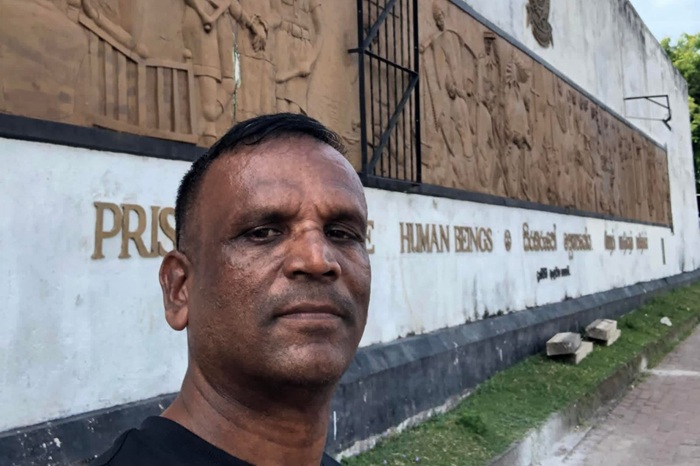
Retired Major and Attorney-at-Law Ajith Prasanna has spoken publicly for the first time about his three-and-a-half years in prison, describing overcrowding, poor living conditions, inadequate healthcare and a lack of rehabilitation within Sri Lanka’s prison system following his release.
In a lengthy social media post, Prasanna said he was first imprisoned on February 24, 2023, after being sentenced to four years by the Supreme Court for contempt of court over media statements criticizing court rulings. He said he later received two additional six-month prison sentences from the Court of Appeal and the Colombo High Court on similar charges.
Sharing his experience at the Welikada Prison, Prasanna said inmates housed in cell blocks were locked inside their cells from around 5.30 p.m. until 6.00 a.m. the following day.
“We were unable to use the toilets during the night and had to relieve ourselves into tins kept inside the cells,” he claimed.
Prasanna also described the daily routine, saying prisoners queued for meals which were often bland and lacked sufficient spices and coconut milk. He said inmates slept on mats spread across the floor with only a small space for personal belongings and were required to wear white prison uniforms, keep their hair short and remain clean-shaven.
He said convicted prisoners, except those on death row or with pending appeals, were required to work from 7.30 a.m. to 3.00 p.m. in areas such as carpentry, masonry, tailoring, farming and soap production. Prasanna said he worked in the tailoring section during his imprisonment.
According to Prasanna, prisoners were allowed to receive home-cooked meals from their families only on a handful of special days each year, including Prisoners’ Day, Christmas, Independence Day, Sinhala and Tamil New Year and Vesak.
He claimed many inmates had no visitors and depended on fellow prisoners for essentials such as soap, toothpaste and medicine.
“Some prisoners do not receive even a bar of soap from the prison for six months,” he alleged.
Prasanna further claimed that inmates suffering from illnesses often failed to receive proper medical treatment.
“Many sick prisoners die inside prison because they do not receive adequate medical care,” he alleged.
He also claimed there was no proper rehabilitation programme, saying, “Those who change, change on their own. Those who don’t, remain the same.”
Prasanna alleged that newly admitted prisoners were subjected to strip searches by prison officers instead of being screened using scanning equipment.
“They are asked to remove their clothes and squat while naked. This is a violation of human rights,” he claimed.
Commenting on prison conditions, Prasanna said Sri Lanka’s prison population had increased from around 27,000 when he entered prison to more than 44,000 today.
“Prisoners now sleep packed together like canned fish. They even fight over space to bathe or wash their clothes,” he claimed.
Prasanna attributed much of the overcrowding to delays in granting bail, prolonged Government Analyst reports in narcotics cases and the imprisonment of drug addicts instead of providing rehabilitation.
He also alleged corruption within parts of the prison system, claiming some prison officers earned money by providing illegal privileges to inmates, including access to mobile phones and narcotics, while poorer prisoners received little support.
Calling for urgent reforms, Prasanna urged authorities to improve prison conditions, expand rehabilitation programmes, speed up forensic testing in drug cases and make greater use of bail to reduce overcrowding.
He added that he intends to dedicate much of his future work to advocating for prisoners’ rights and the welfare of prisoners’ families. (Newswire)