

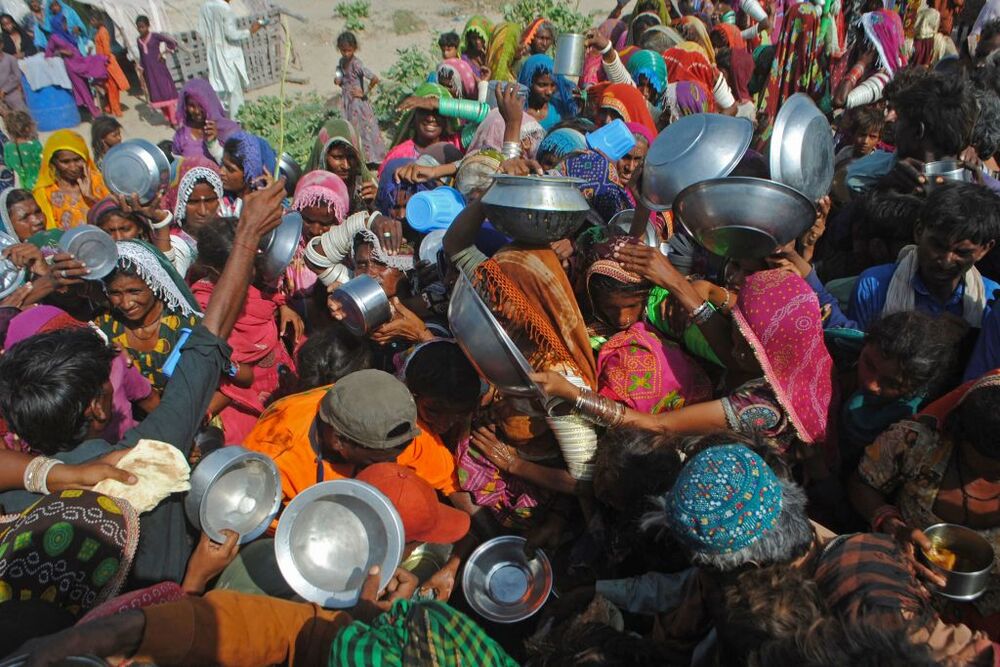
Food inflation in Pakistan is increasingly becoming a story about much more than expensive wheat, sugar or cooking oil.
The latest warning from the State Bank of Pakistan (SBP) has exposed how quickly an external shock can travel through a fragile agricultural system and reach the kitchen table.
Energy prices rise, fertiliser becomes more expensive, transport costs climb, farm production becomes costlier, and food prices follow. But the vulnerability itself is not new.
For decades, Pakistan has struggled with inefficient irrigation, weak water management, low farm productivity, inadequate storage, distorted commodity markets and an agricultural model heavily dependent on a narrow range of crops.
Climate shocks have repeatedly magnified those weaknesses. The result is an economy that can produce substantial quantities of food while still leaving millions of people exposed to shortages, price spikes and declining purchasing power.
The SBP’s August 2026 monetary policy report has now placed that structural weakness against a worsening international backdrop. The central bank warned that food prices could rise more than previously expected as energy, fertiliser and freight costs increase.
The warning comes as global fertiliser prices have already risen sharply and the prospect of another El Niño episode threatens additional pressure on agricultural production.
Global shock, local vulnerability
Pakistan cannot control wars, international energy prices or disruptions to global shipping routes. Yet the impact of those shocks depends heavily on the strength of domestic food systems.
The SBP has identified a clear chain of transmission. Higher energy prices raise the cost of fertiliser production and transportation. More expensive fertiliser increases farmers’ input costs, while higher fuel prices raise the cost of moving crops from farms to markets. Freight disruptions can then tighten supplies further.
That pressure is already visible in wheat markets. The Food and Agriculture Organisation reported in July that Pakistani wheat flour prices increased month-on-month in June despite an above-average 2026 wheat harvest.
Production costs remained elevated, while limited carryover stocks and weaker output in some rainfed areas constrained supplies. Transport costs also remained high. Wheat flour prices in June were between 50 and 75 percent higher than a year earlier.
This is precisely what makes Pakistan’s food inflation problem more serious than a temporary price disturbance. When production costs remain structurally high, even a reasonably good harvest cannot guarantee affordable food.
Wheat exposes policy failures
Few commodities illustrate Pakistan’s agricultural instability more clearly than wheat.
The SBP’s half-yearly report found that food inflation during the first half of FY2026 was driven particularly by wheat and wheat-related products, sugar, rice and edible oils.
Wheat production had fallen by around 11 percent during the Rabi 2024-25 season after farmers reduced the area planted, while flood-related losses and market shortages compounded the supply problem. The report noted that around 201,000 tonnes of wheat stocks were damaged by floods.
The disruption followed a major change in the government’s wheat procurement system. The traditional state-backed procurement mechanism had involved government agencies buying millions of tonnes directly from farmers. Its withdrawal altered the market just as farmers faced uncertainty over prices and demand.
The consequences were visible in subsequent price movements. FAO reported that wheat flour prices surged between July 2025 and January 2026, reaching near-record levels in many markets.
Floods and landslides had damaged stocks and disrupted markets, while the decline in wheat production and strong domestic demand added further pressure.
The episode demonstrated how quickly a policy transition can become a food-price crisis when storage, market coordination and supply chains are insufficiently resilient.
Floods turned structural weakness into immediate scarcity
Pakistan’s agricultural difficulties cannot be separated from its growing exposure to extreme weather.
The devastating 2025 floods damaged major agricultural areas, particularly in Punjab and Sindh.
Rice, cotton and maize were among the crops affected, while damage to farmland, livestock and stored food created further pressure on rural livelihoods and domestic supplies. Reuters reported that more than 1.8 million acres of farmland were submerged, with crop losses estimated at billions of dollars.
The consequences did not end when floodwaters receded. Damaged roads and disrupted transport affected the movement of food. Lost stocks reduced market availability. Farmers who lost seeds and productive assets faced difficulties in preparing for subsequent planting seasons.
The SBP subsequently identified flood-induced production losses and domestic supply-chain constraints among the factors behind higher food prices. That is significant because it shows that climate disasters are no longer isolated agricultural events. They are becoming macroeconomic shocks.
Irrigation system under growing pressure
Pakistan’s agricultural economy remains heavily dependent on irrigation, yet the water system itself has long suffered from inefficiencies.
The problem is particularly serious because the country continues to rely heavily on water-intensive crops while facing growing climate variability and pressure on water resources. Inefficient irrigation means that a large volume of water fails to translate into equivalent agricultural output.
The World Bank’s latest regional assessment underlines the scale of the challenge.
It estimates that food demand across the Middle East, North Africa, Afghanistan and Pakistan region will rise by 67 percent by 2050, while highlighting the importance of water efficiency and agricultural productivity amid increasing pressure on natural resources.
For Pakistan, the contradiction is increasingly stark: agriculture remains central to the economy and employment, yet the foundations supporting agricultural production remain vulnerable.
FAO estimates that agriculture contributes around 23 percent of Pakistan’s GDP and employs about 37.4 percent of the national labour force. Around 70 percent of the country’s exports are directly or indirectly derived from agriculture.
A weak agricultural sector does not simply create expensive food. It also weakens export earnings, rural incomes and the country’s external position.
Export problem worsening food equation
Pakistan’s agricultural weakness is increasingly visible in its trade figures.
The Pakistan Economic Survey 2025-26 reported that food exports fell sharply during July-March FY2026.
Food exports stood at about US$3.8 billion, down 33.9 percent from the previous year, with rice accounting for most of the decline. Rice export values and volumes came under pressure as international supplies normalised and competition from other major exporters increased.
This creates a difficult equation. Pakistan needs agricultural exports to generate foreign exchange, but weaker agricultural competitiveness reduces those earnings.
At the same time, food imports remain substantial. FAO puts Pakistan’s food import bill at around US$9 billion, with edible oil accounting for roughly half of it.
The country remains exposed on both sides: agricultural exports can weaken when international prices and competitiveness deteriorate, while imported food and farm inputs become more expensive when global markets are disrupted.
That vulnerability becomes particularly dangerous when foreign-exchange pressures restrict the room to absorb higher import costs.
Crisis is already reaching vulnerable households
Food inflation has consequences that headline inflation figures cannot fully capture.
The SBP reported that food inflation accounted for nearly one-fourth of urban inflation and around two-fifths of rural inflation during the first half of FY2026. Rural households face particular exposure because agriculture determines both their income and, directly or indirectly, their food costs.
The latest food-security assessments underline the human cost. An IPC analysis projected that around 6.7 million people in the analysed rural population could face acute food insecurity at Crisis level or worse between April and September 2026.
The figure cited in recent debate over Pakistan’s food crisis has also reached much higher levels when broader measures of hunger and food insecurity are considered. The SBP has warned that 46 percent of the population is facing hunger-like conditions.
For households already spending a large share of their income on food, even moderate increases in staple prices can mean reduced consumption, lower spending on healthcare and education, and greater indebtedness.
Another climate shock could deepen the problem
The next threat is already emerging on the horizon.
The World Bank’s June 2026 food-security update said global fertiliser prices had risen 35 percent in the first five months of 2026 compared with the same period a year earlier.
It also put the probability of El Niño emerging by mid-2026 and persisting into 2027 at between 61 and 87 percent. Such a development could have serious implications for cereal production across vulnerable regions, including South Asia.
At the same time, global grain markets remain exposed to geopolitical disruption. Attacks on Black Sea grain infrastructure in August pushed wheat futures sharply higher and raised concerns about supply and shipping disruptions during a critical export period.
Pakistan is confronting a combination of external price pressures and internal agricultural weaknesses. The distinction matters because global shocks are temporary and unpredictable, while the domestic vulnerabilities have accumulated over decades.
Food crisis rooted in deeper agricultural breakdown
Pakistan’s present food inflation problem cannot be explained solely by the latest regional conflict, high energy prices or climate disasters. Those events have exposed weaknesses that were already embedded in the agricultural economy.
The recurring pattern is now familiar: a flood destroys crops, transport networks are disrupted, commodity stocks tighten, farmers face higher input costs, markets become volatile and consumers absorb the increase.
A global energy shock adds another layer. A weaker harvest increases import requirements. Lower agricultural exports reduce foreign-exchange earnings. The same cycle then begins again.
The latest SBP warning is less a prediction of one more period of expensive food than an indication of how vulnerable Pakistan has become to shocks it cannot control.
The country’s agricultural sector remains large, but size has not translated into resilience.
An economy that employs more than a third of its workforce in agriculture and derives a major share of its export earnings from the sector remains exposed to inefficient water use, climate volatility, weak storage, unstable commodity policies and high dependence on imported inputs.
The price of that structural weakness is ultimately paid in the food market. And when staples become unaffordable, agricultural failure ceases to be a problem confined to farms and becomes a direct measure of economic insecurity. (Maldives Insight)