

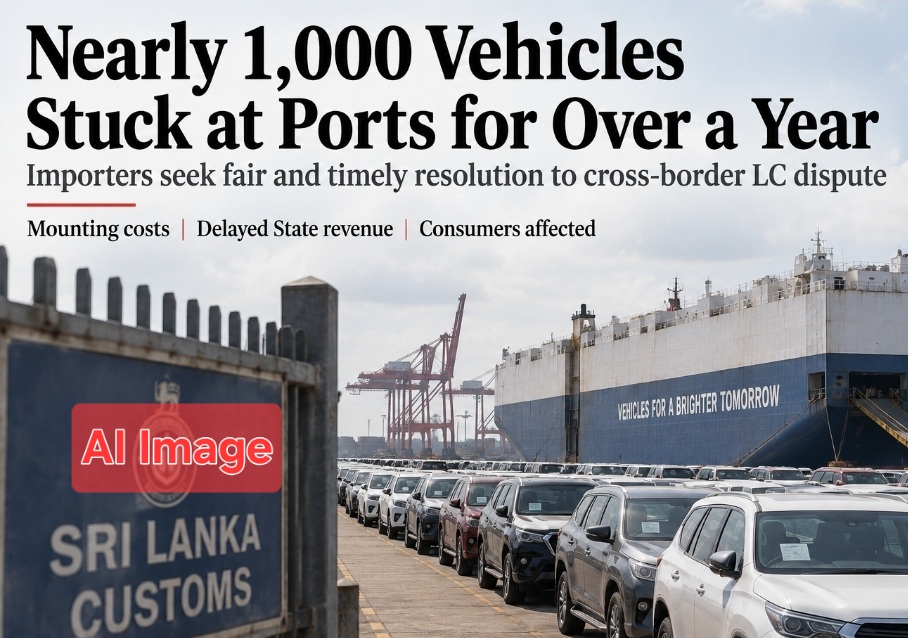
Importers affected by the continuing dispute over vehicles brought into Sri Lanka through cross-border Letters of Credit (LCs) have called for a fair and timely resolution, saying nearly 1,000 vehicles have remained uncleared at ports for more than a year.
Thabith Naja of Providence Auto said the prolonged detention of the vehicles was resulting in mounting demurrage, storage, financing and depreciation costs while also delaying the collection of Customs duties and taxes by the State.
He said that in many of the transactions under scrutiny, LCs had already been honoured and overseas suppliers paid, meaning the foreign exchange had already left Sri Lanka.
“Continued detention cannot reverse those payments or restore the foreign exchange to the country,” Naja said, arguing that further delays would only increase losses to businesses and postpone tax revenue to the Government.
Explaining the transactions, Naja said a cross-border LC could involve a supplier receiving payment in one country while the vehicle itself is exported from another. He described such arrangements as a feature of international trade involving suppliers, trading companies and banks operating across different jurisdictions.
According to Naja, the LCs relating to the disputed vehicles were opened through licensed commercial banks in Sri Lanka before shipment, while payments were also made through the formal banking system.
He said affected importers maintain that they did not conceal the origin of the vehicles, bypass the banking system or seek to avoid taxation.
Naja said the dispute principally concerns the interpretation and authentication of certain trade documents, including issues arising where overseas banks do not physically stamp documentation.
He also rejected suggestions that using a cross-border LC inherently provides importers with a Customs valuation or tax advantage.
According to Naja, Customs valuation of an imported vehicle is determined separately under the applicable valuation methodology, irrespective of whether the LC beneficiary is based in the country from which the vehicle is physically shipped.
He said the affected importers were not seeking tax exemptions, preferential valuations or an amnesty, but wanted their transactions assessed consistently under the legal, regulatory and banking framework applicable at the time.
Naja warned that the continued detention was also having wider economic consequences, with working capital tied up in vehicles that cannot be cleared, registered or sold.
He said businesses were continuing to incur port storage, demurrage and financing costs, while funds that could otherwise circulate through dealerships, workshops, logistics companies, finance providers and insurers remained immobilised.
The delay was also restricting vehicle supply to consumers and preventing the State from collecting duties and taxes that would become payable if the vehicles were cleared, he said.
Naja acknowledged that any concerns over document authenticity, valuation or regulatory compliance should be investigated, but said such scrutiny should be proportionate, consistent and completed within a reasonable period.
The dispute is currently before the Courts, with the final interpretation of the applicable law to be determined through the judicial process.
Naja said the importers were not seeking special treatment but a “lawful, consistent and final resolution” that would address compliance concerns, allow the State to collect taxes properly due and end the mounting economic losses caused by the prolonged dispute.
Thabith Naja is the CEO of Providence Auto and is involved in international vehicle trading, including cross-border vehicle transactions. (Newswire)