

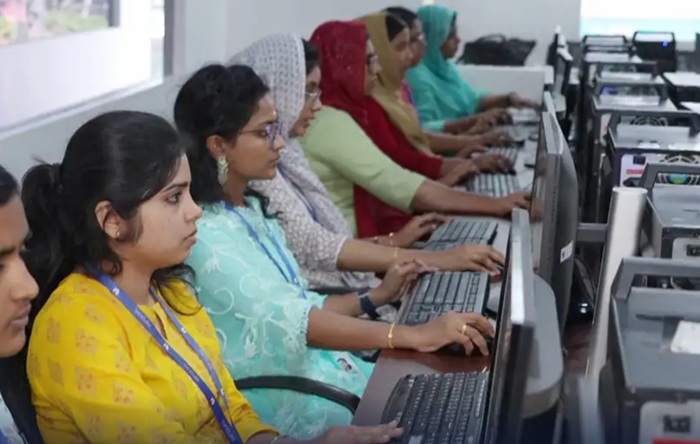
Artificial intelligence is creating new employment opportunities for women in Kerala, India, as demand grows for workers to label and annotate the vast amounts of data needed to train AI systems, although concerns remain over limited alternative employment opportunities for some rural workers.
For Roshni M, working in data annotation has provided not only a source of income but also a greater sense of financial independence.
Following the death of her father, Roshni took up employment to help support her family. She is now among hundreds of employees at Infolks, a Kerala-based technology company that collects and labels data used to train artificial intelligence systems.
“I feel like an individual. I’m earning now, I’m self-dependent, and I have freedom,” Roshni said. “Financial freedom is something different.”
Founded by Mujeeb Kolasseri in 2016, Infolks is part of Kerala’s growing technology sector, which is creating employment opportunities outside India’s traditional urban technology hubs.
Data annotation plays a key role in the development of AI systems by teaching machines to identify and distinguish objects and other information.
For instance, autonomous vehicles need to recognise roads, other vehicles, pedestrians and various objects in their surroundings. Data annotation workers label these elements in images and other datasets, allowing AI systems to learn how to recognise them.
The industry has also provided opportunities for educated women who may otherwise have limited avenues to enter the technology workforce.
Roshni said attitudes towards women pursuing education and employment have changed significantly compared with the experiences of previous generations.
“When we look at the stories of our mothers or any women related to our family and friends, we can see that they have struggled a lot just to learn or to go to work,” she said. “But the infrastructure has changed a lot and people’s mentality has also changed.”
However, employment opportunities and working conditions remain limited for some women in rural areas. Workers with few alternative employment options may also be reluctant to raise concerns about salaries or workplace conditions due to fears of losing their jobs. (Newswire)